Unreal Gold
Playtime: 16.2 Hours
Finished 15 September 2026.Bought it on GOG a very long time ago, before the game was completely unlisted from all storefronts; game was run with the 227 community patch including lots of fixes and improved renderers, resolution support, etc. I'm using the "experimental" build 227j; all downloads can be found here.
I played through both the base game and the expansion (Return to Na Pali) together, both on Hard mode.
The original Unreal games have always been in kind of a blind spot in my library. Until I actually played it, I mostly knew about it from the line of widely-used game engines it spawned and a few of the more iconic guns like the ASML, but not for the original game itself. There was also a really neat Flash game that was basically a 2D demake of one of the Unreal Tournament games; I remember playing that a ton as a kid. (It's actually still available here - it rules!) After finally giving it a chance recently, I can see what made it such a hit when it came out but some of the gameplay elements aren't quite to my liking.
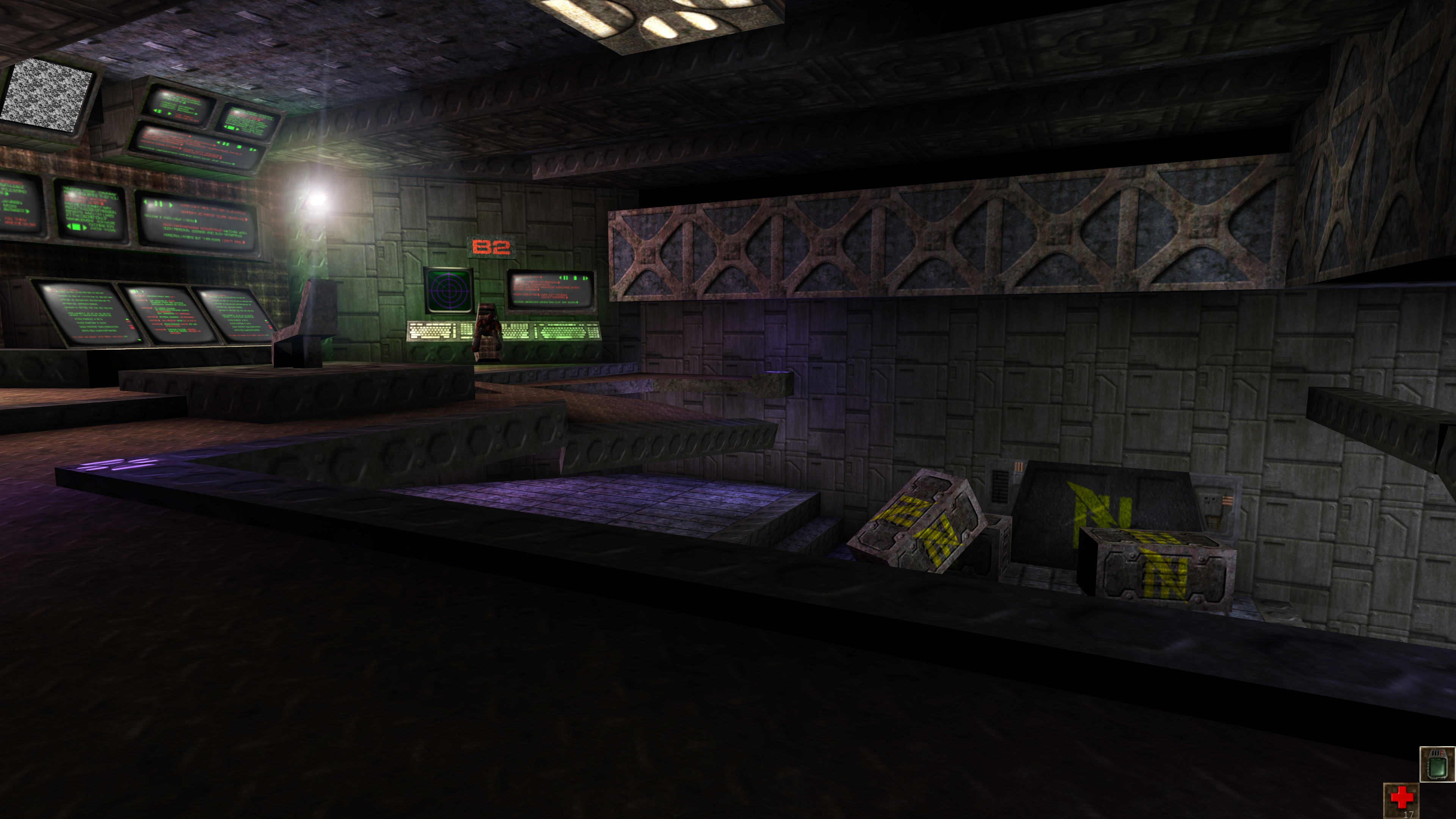
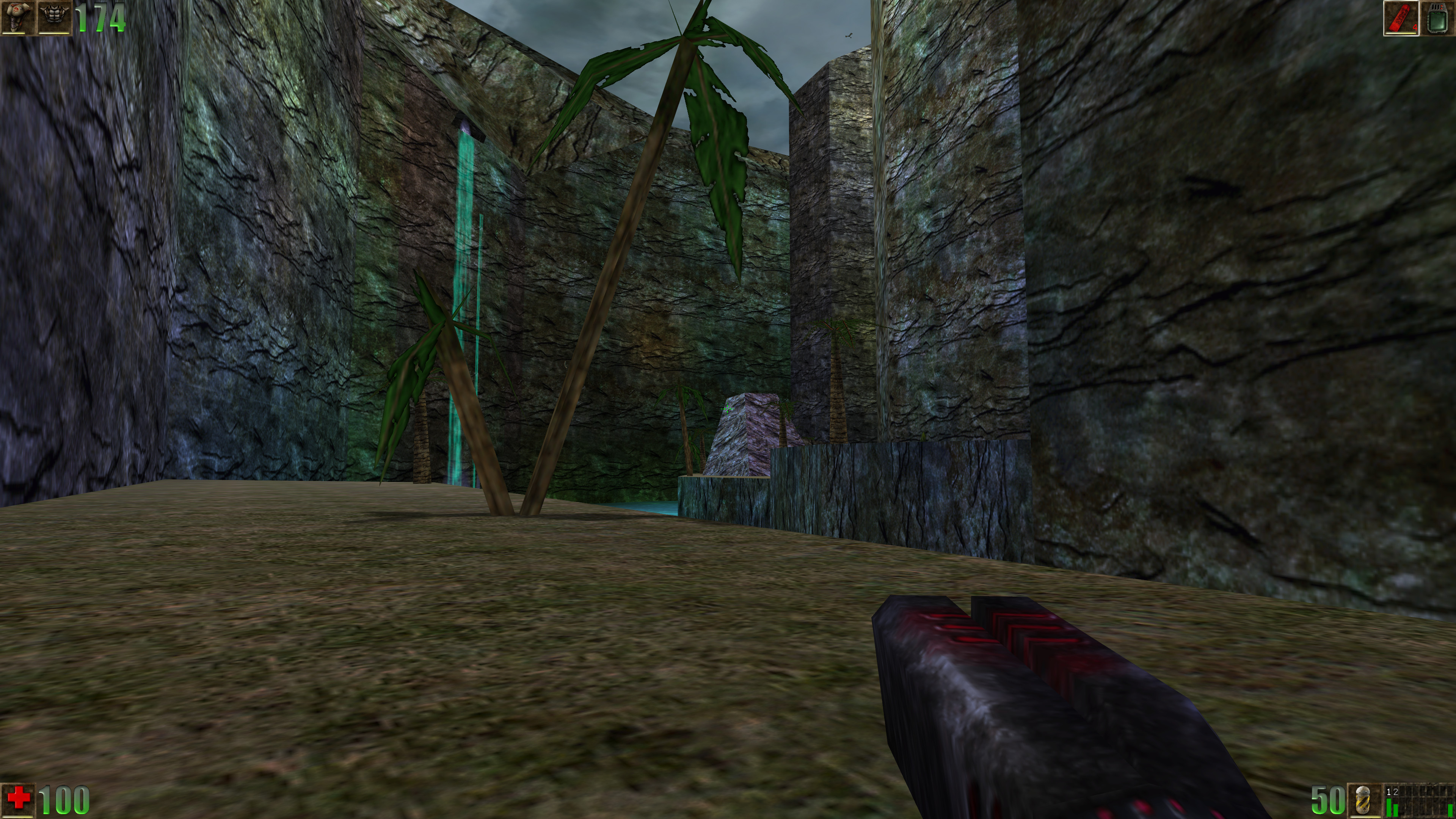
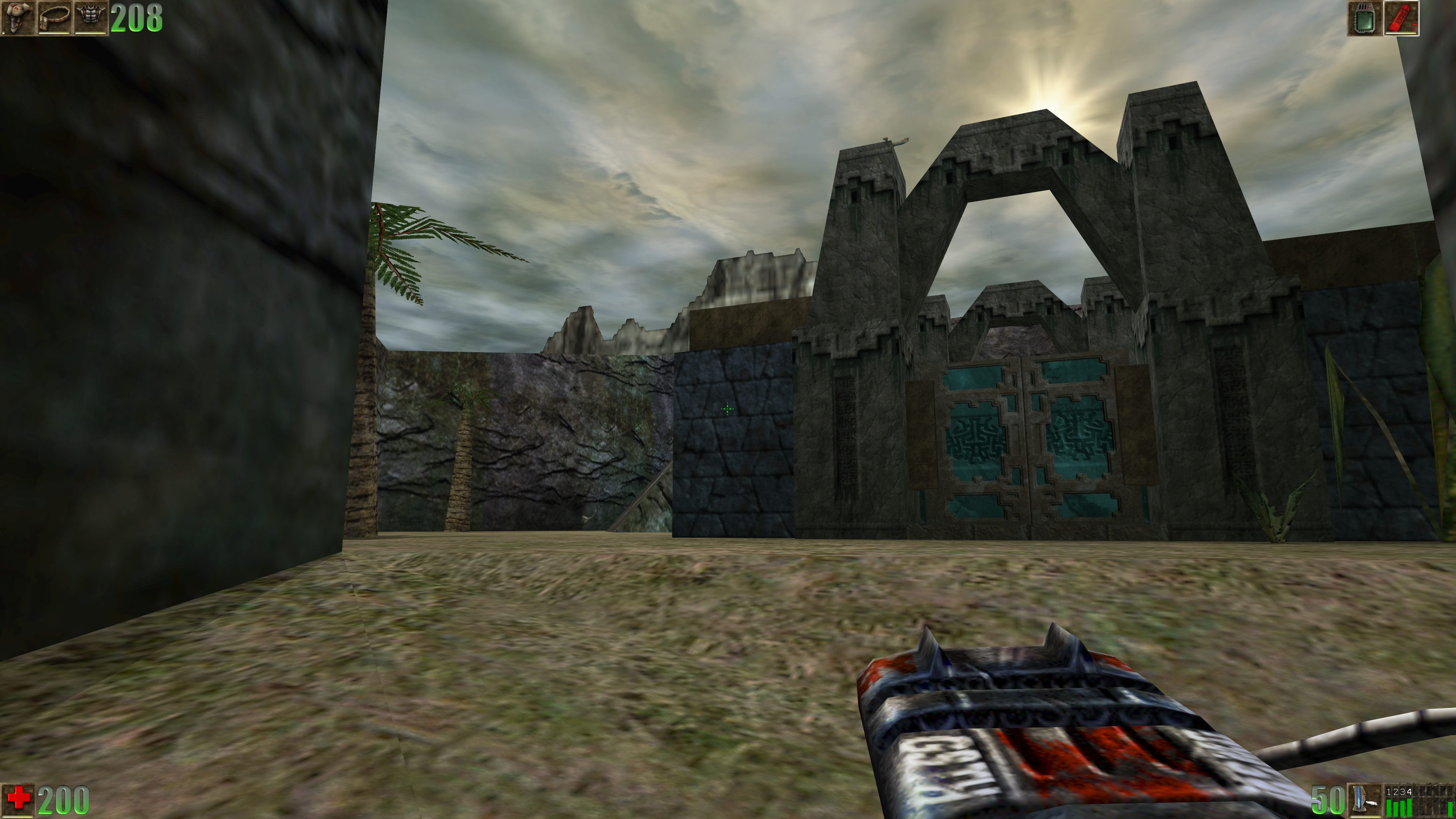
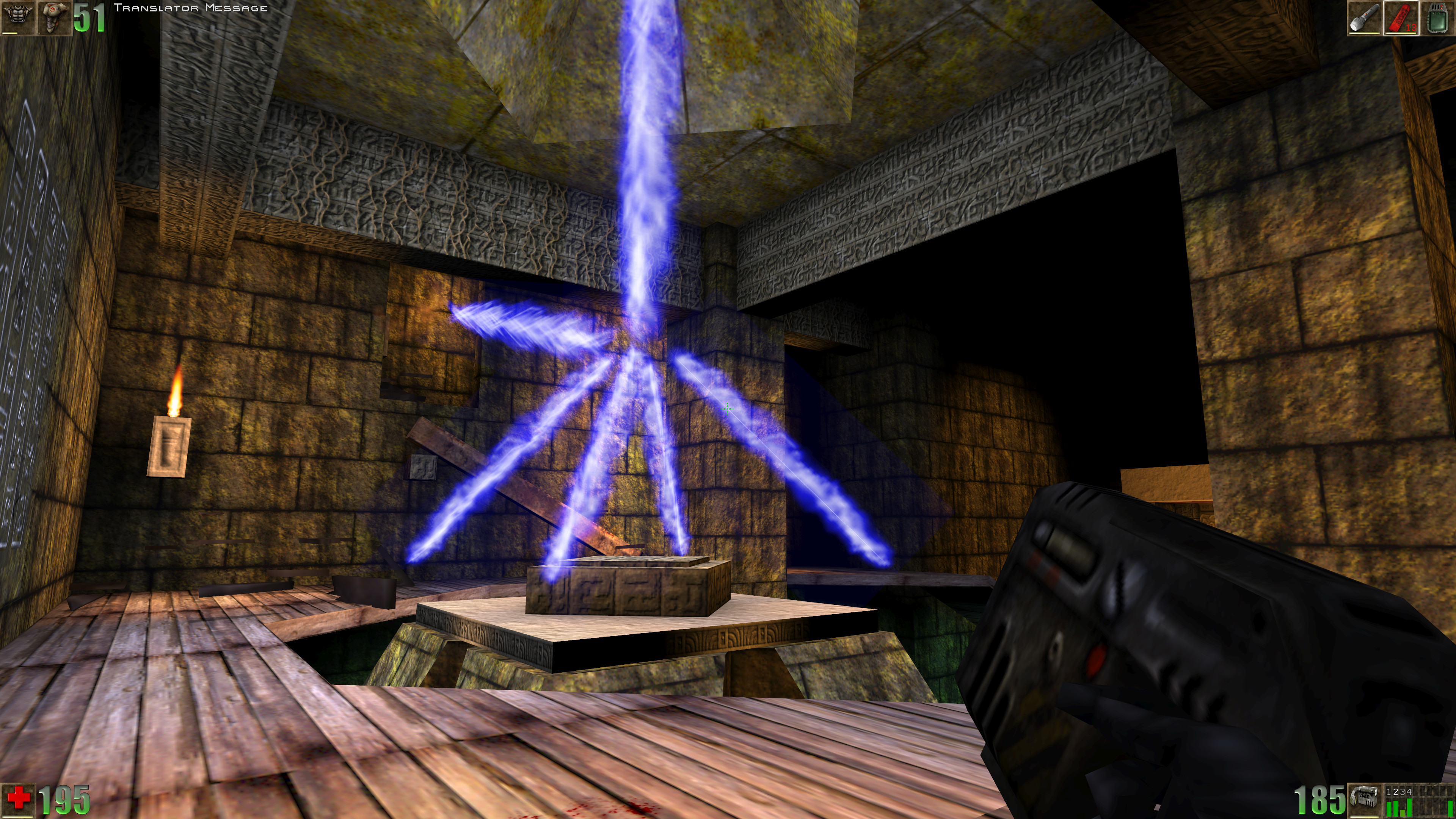
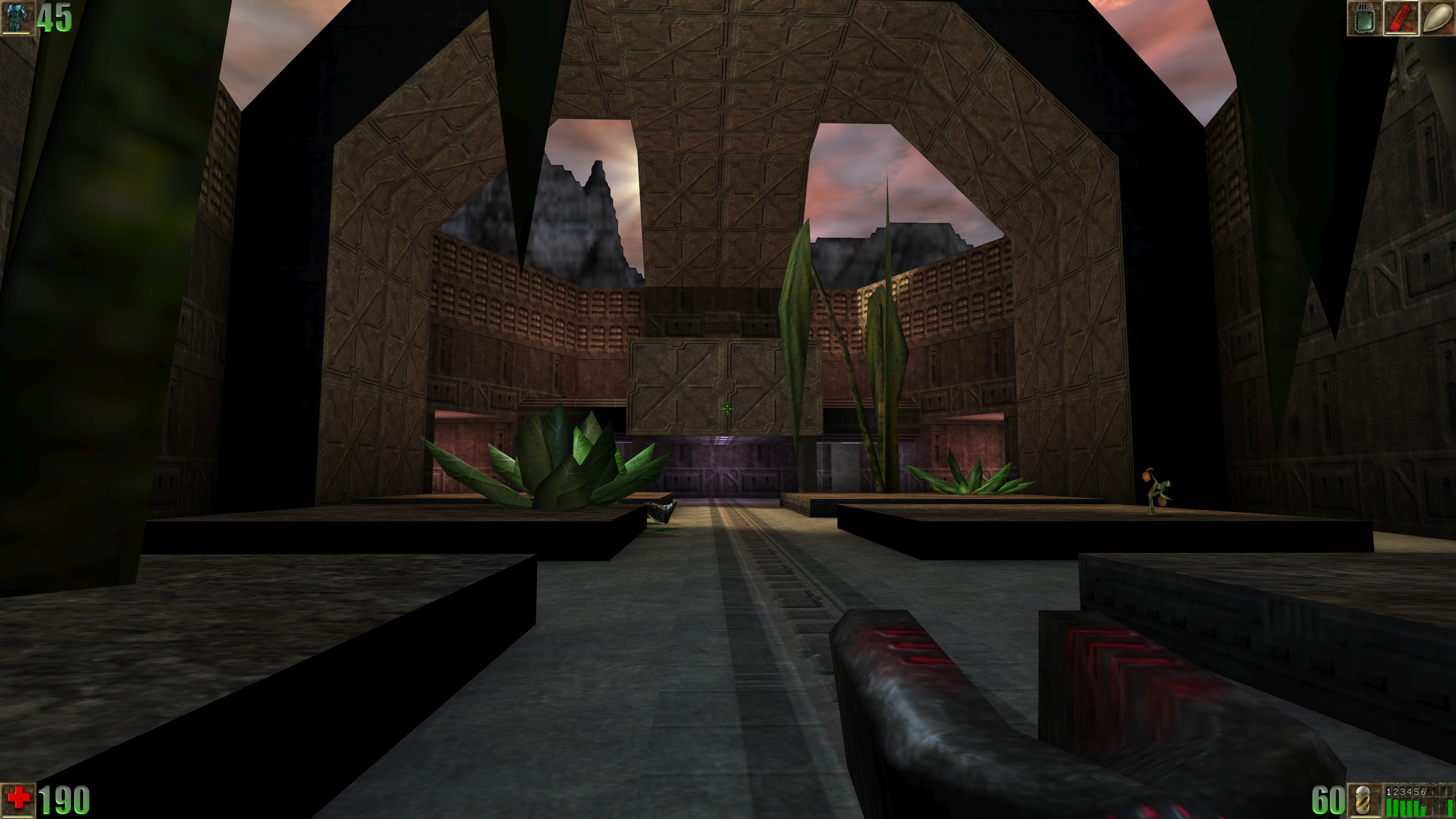
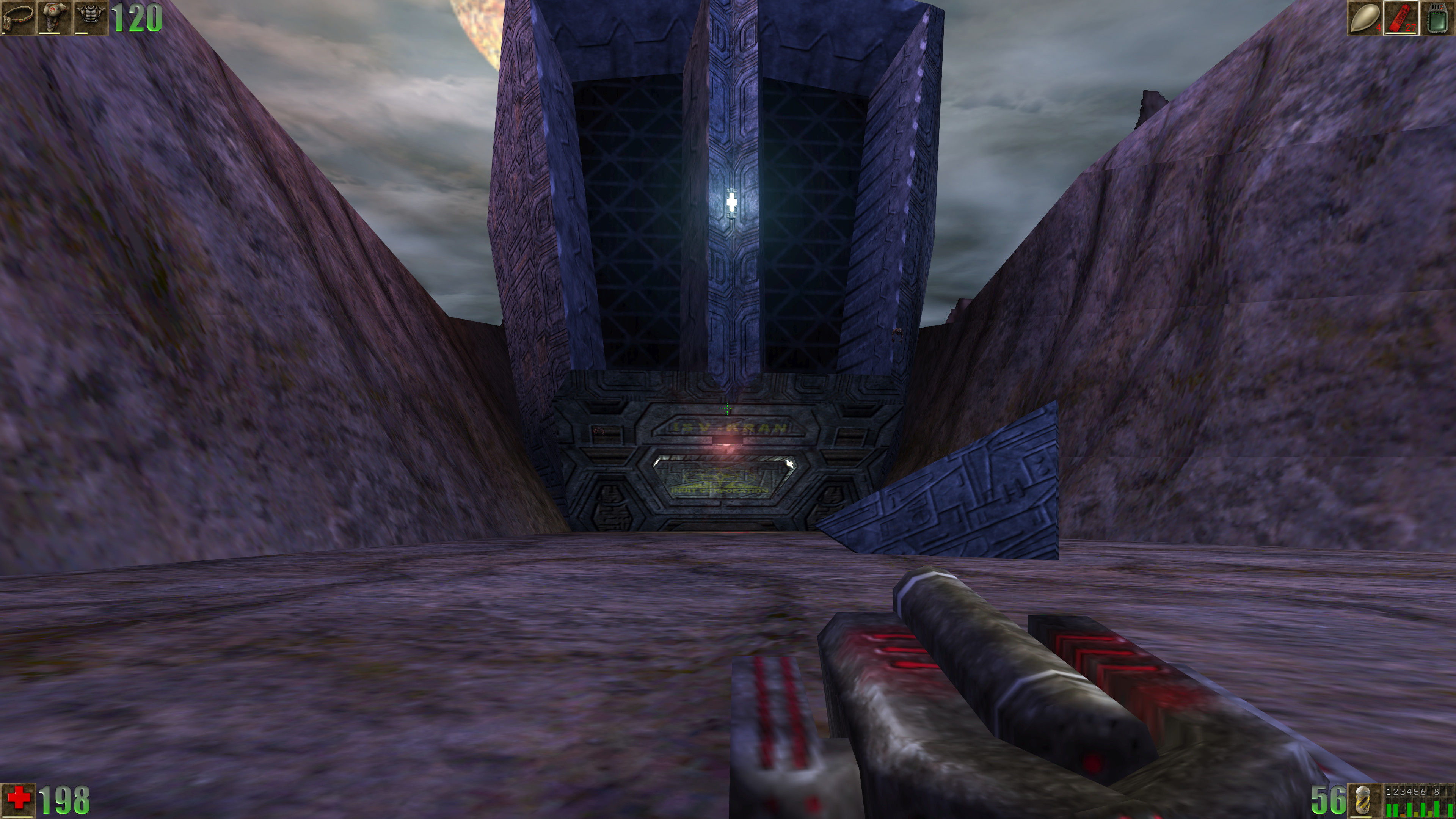
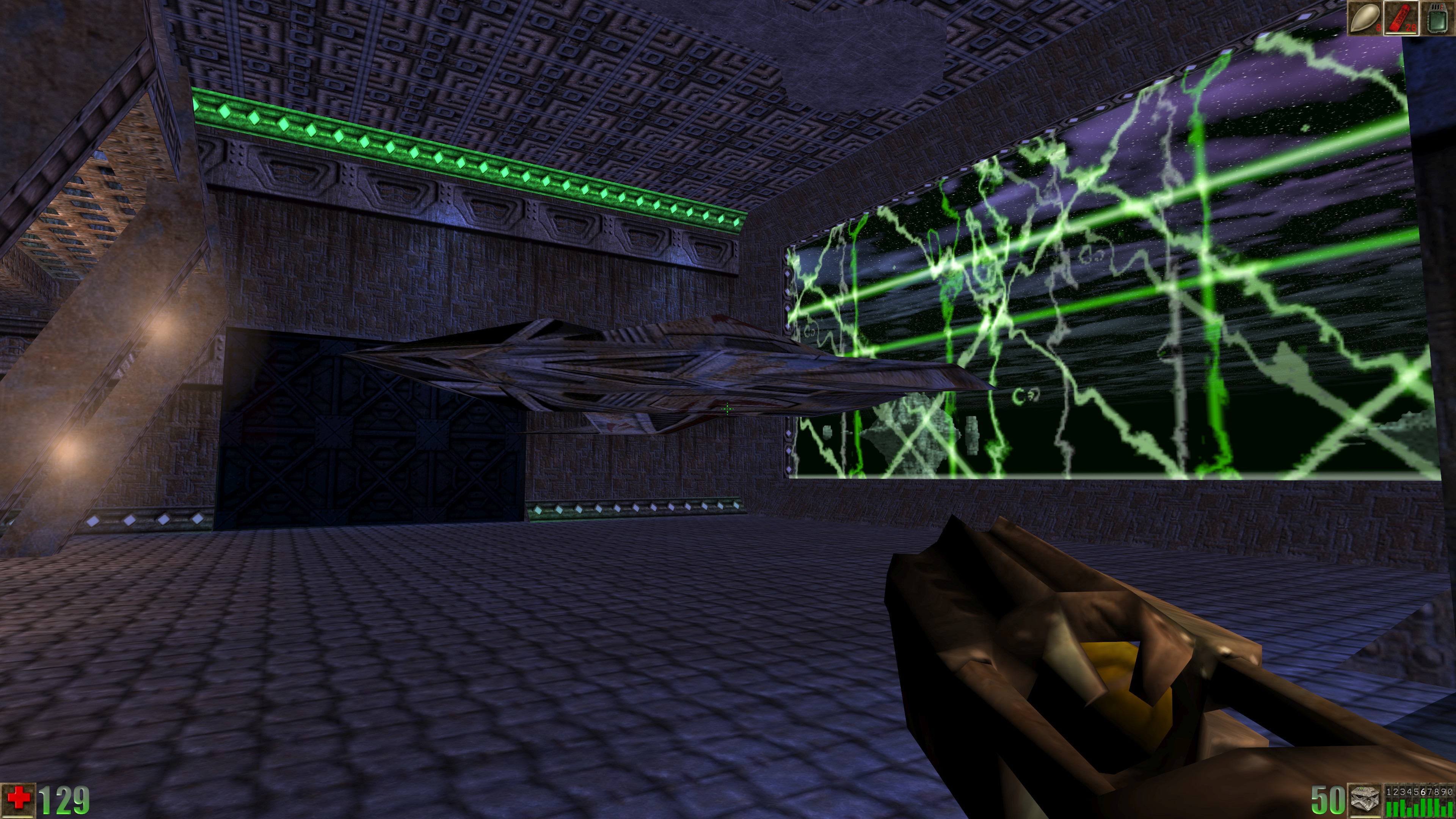
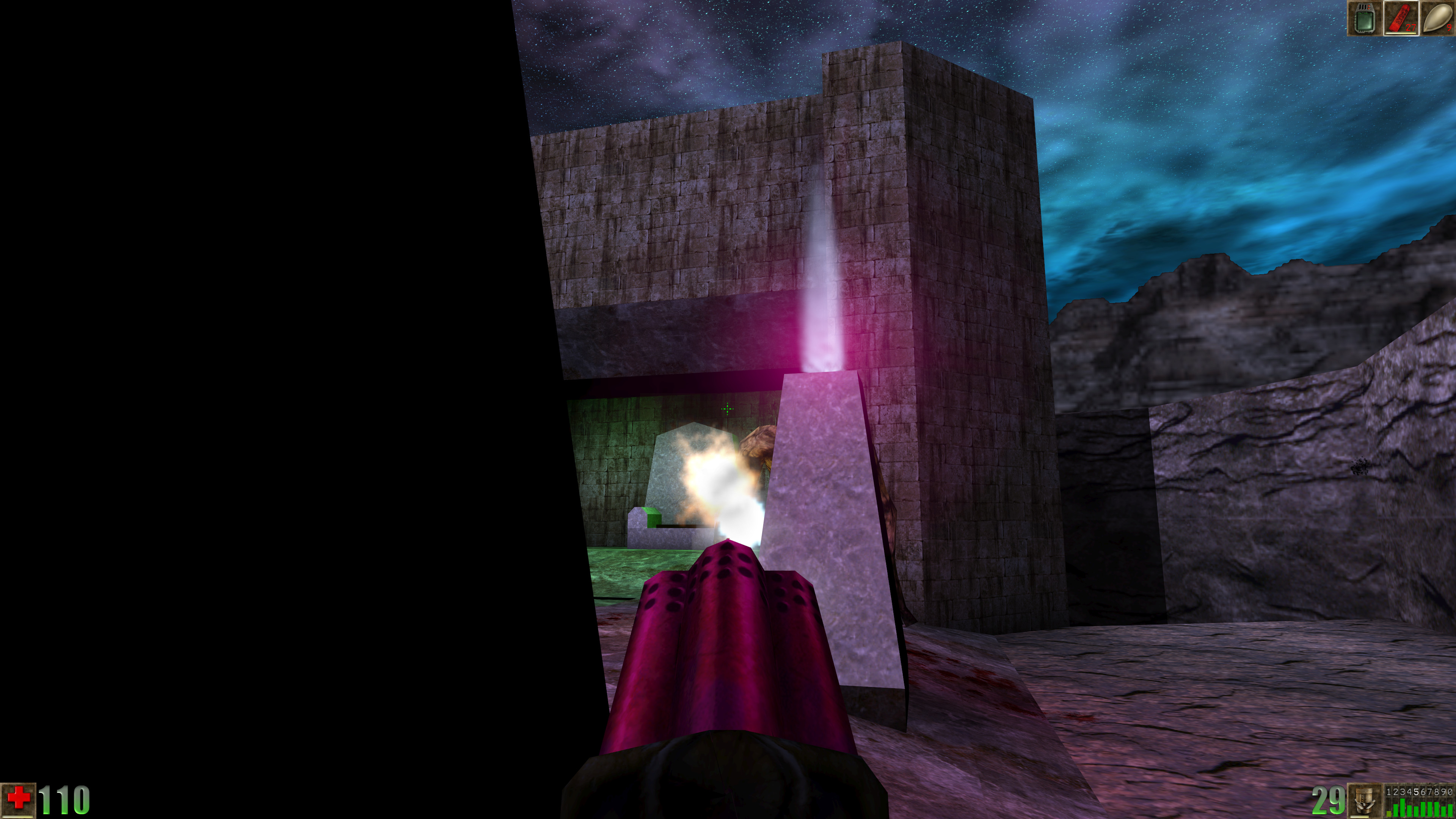
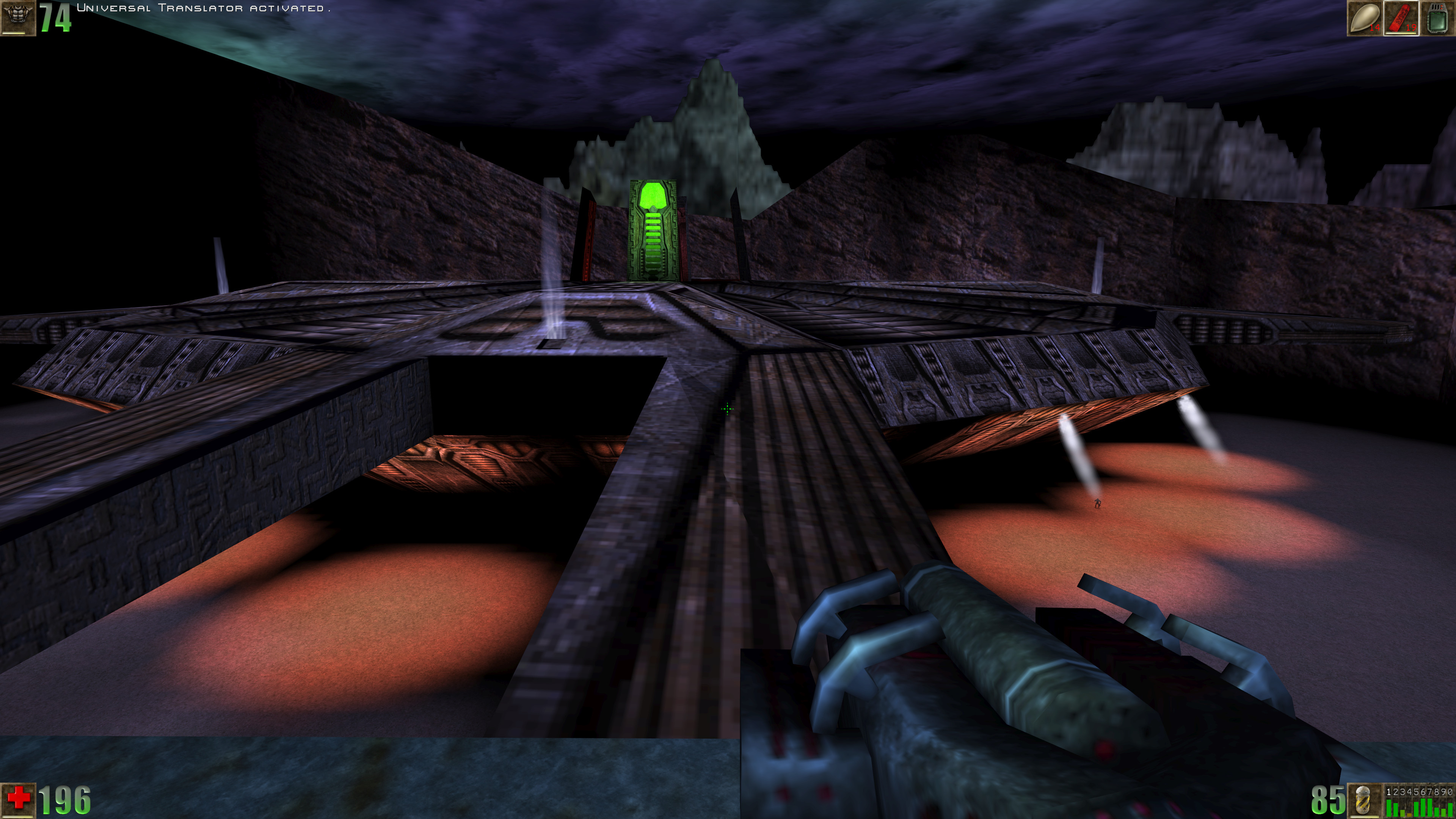
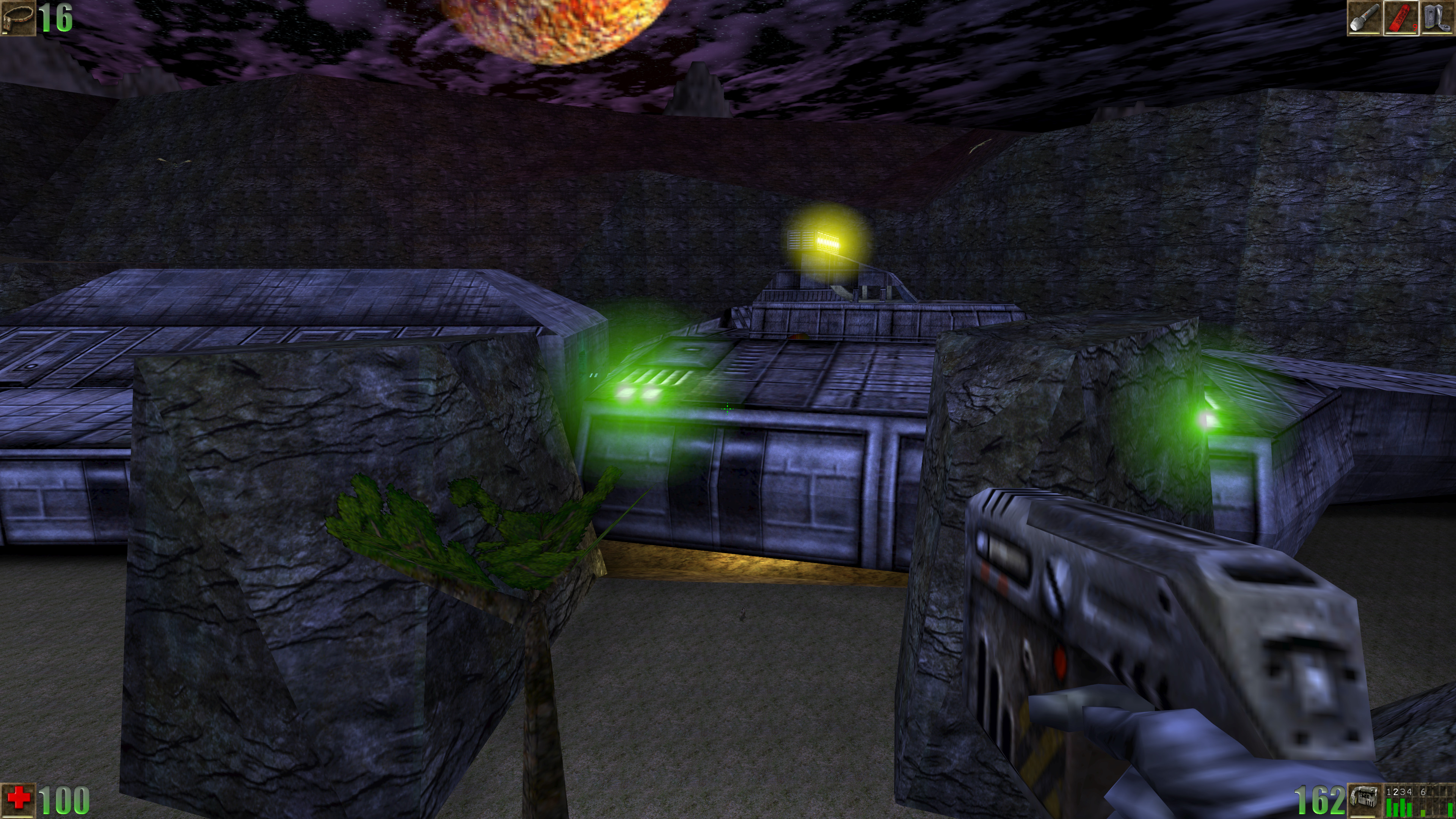
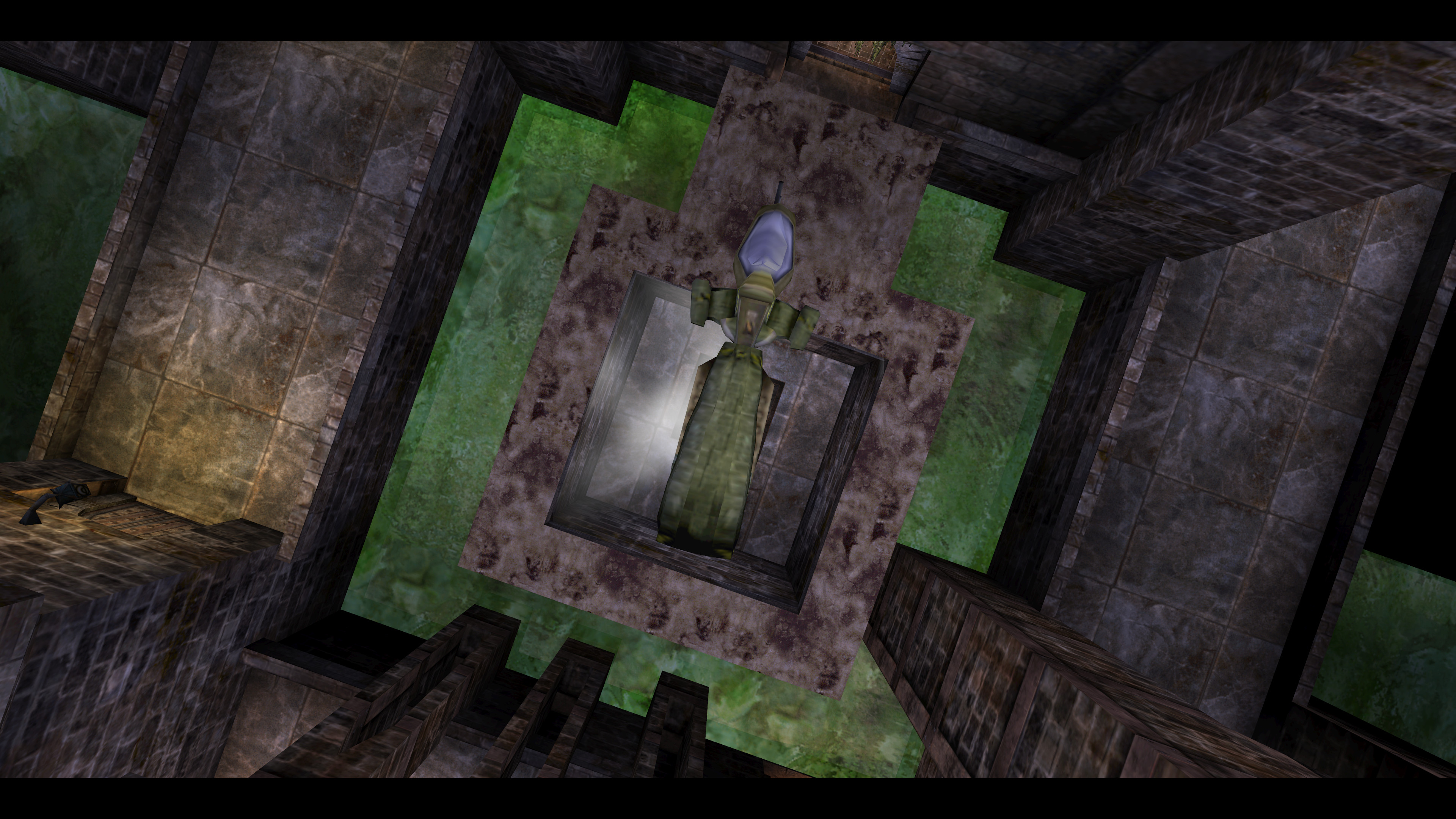
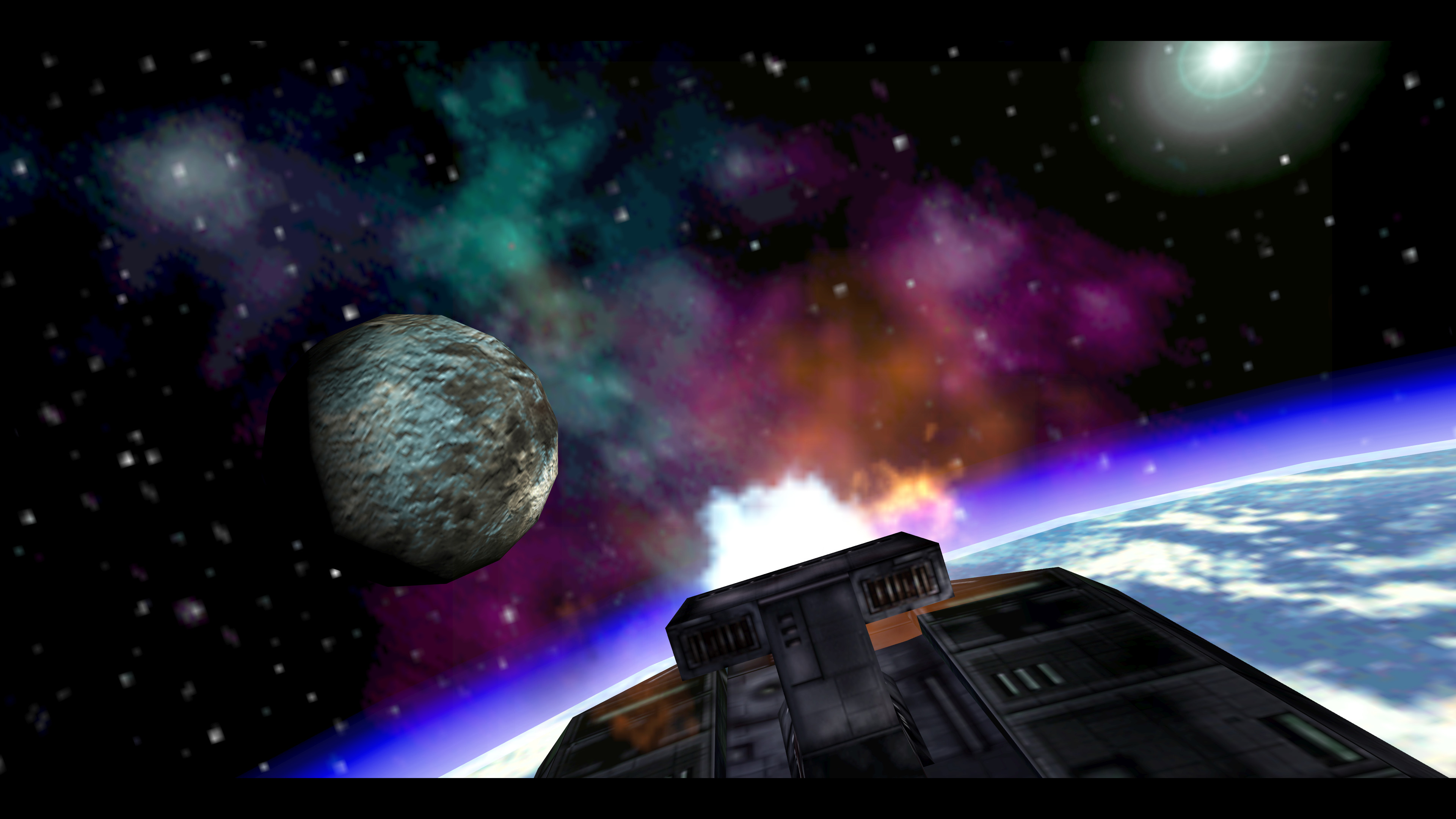
For its time, this game was gorgeous - even now, the environmental design is amazing and the diversity of the levels far outstrips many of its contemporaries. Levels are large and environments are detailed, taking you from primitive huts to massive stone temples and futuristic spaceships and bases. The quality of the visual effects, ranging from lighting, shading, reflections and special effects are incomparably better to anything else coming around at that same time, and all of this is backed with fantastic sound design, with great ambience to draw you into the world paired with a legendary soundtrack by Alexander Brandon and several other composers that would later work on Deus Ex.
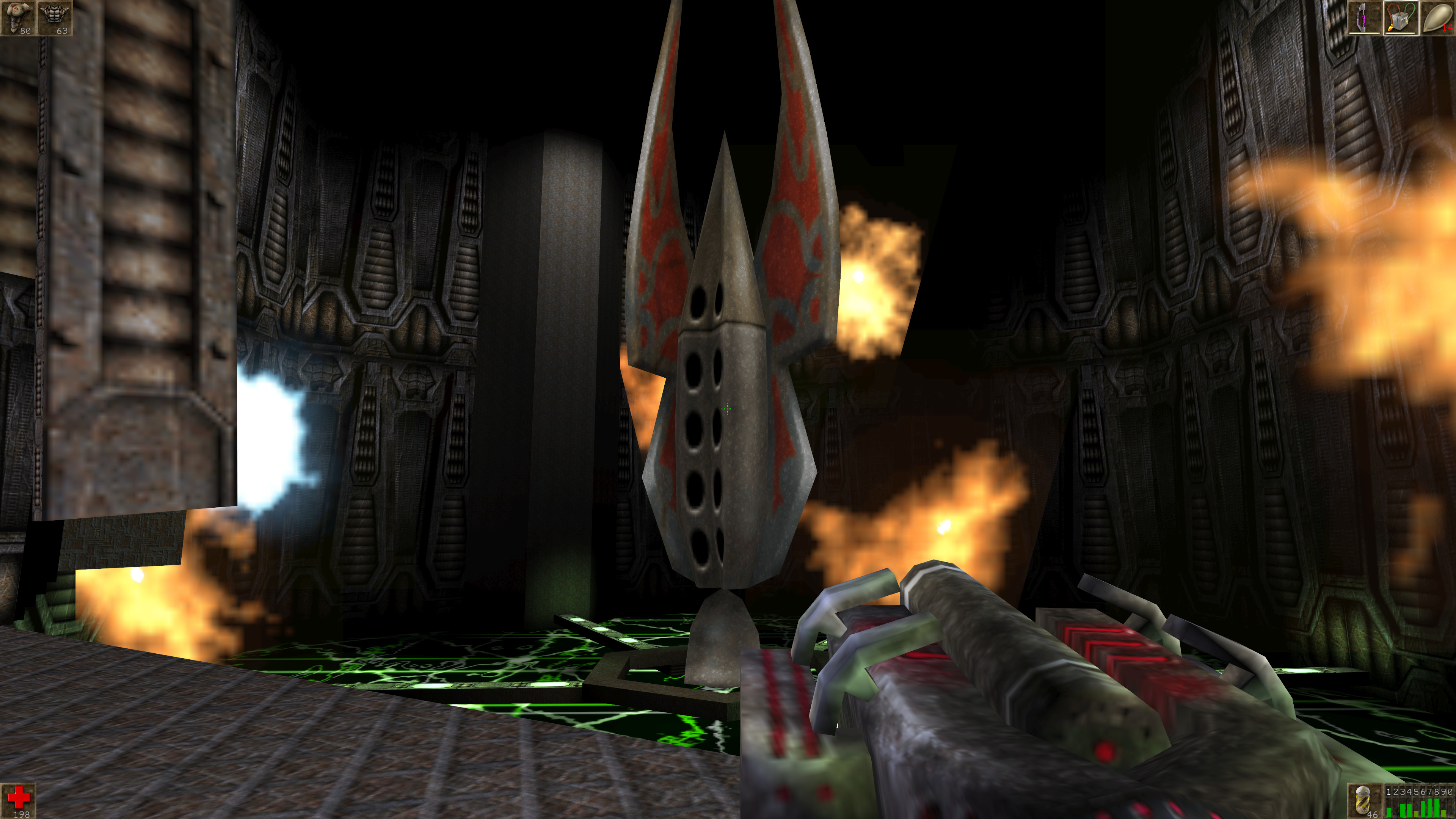
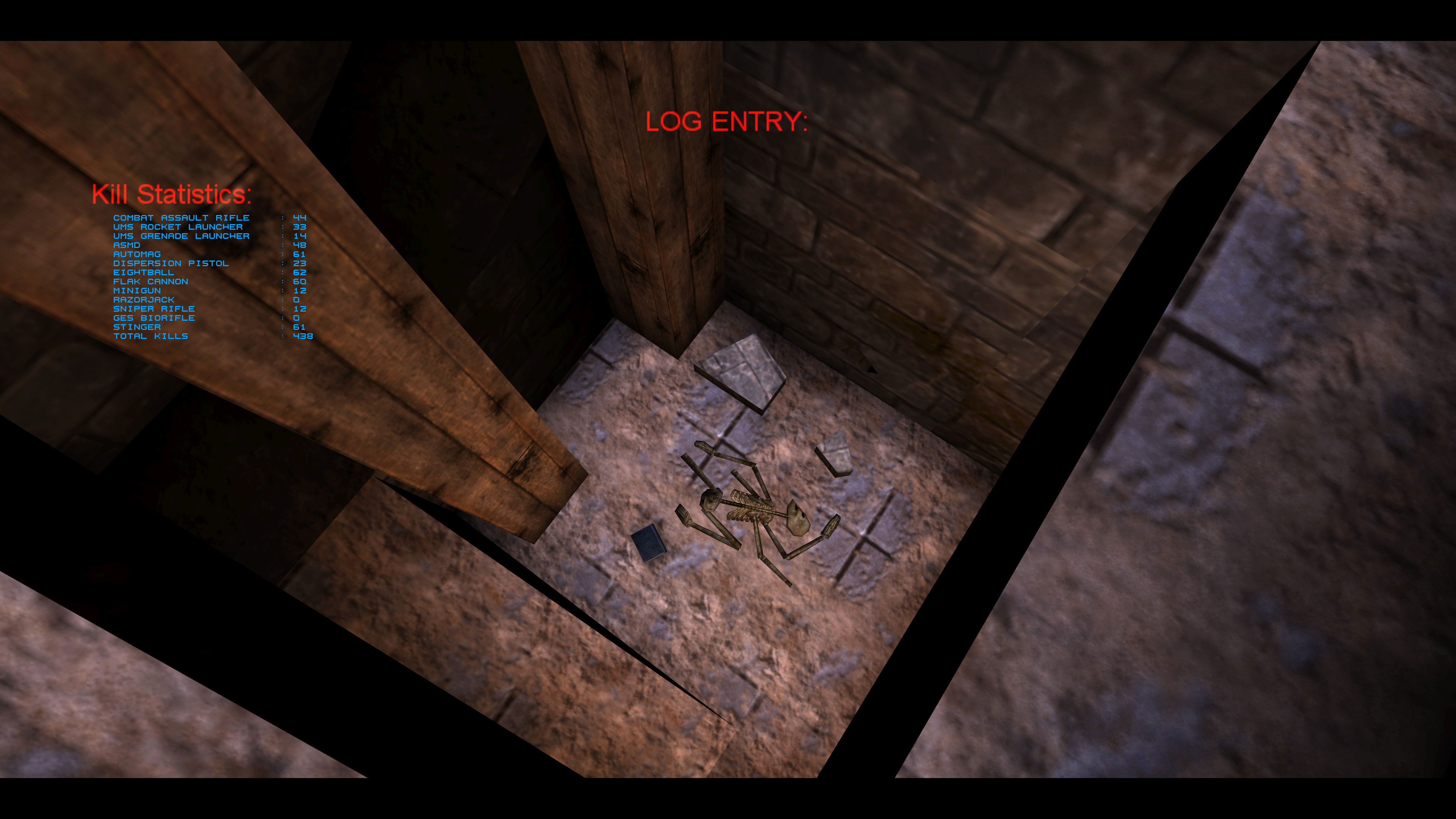
Gameplay feel is very good as well; controls aren't floaty and don't have excessive inertia (lead block on a ski), though I really wish there was some kind of advanced movement to make traversal more interesting. Weapon variety is one of the best of the era; not only are there ~10 different weapons with drastically different functions, they all have an additional alt-fire mode to shake things up even further. Rather than a generic assault rifle & shotgun, Unreal gives you a Stinger (a crystal-based minigun with an alt-fire shotgun mode) and the Flak Cannon (a bouncing-flak launcher with an alt-fire grenade). Most of them are also viable in one way or another - the goo launcher is surprisingly good for zoning out enemies, and weapons like the Eightball Gun are great for massive burst damage potential. In general, the only big downside is that projectile speeds in this game are ludicrously slow. It almost feels like you can outrun your own eightball rockets sometimes, which ends up making the combat feel sluggish and less responsive with those weapons than I'd like. It also has an additional unfortunate effect of centralizing the game on the hitscan or spash-damage weapons, as other projectile weapons (namely the Ripper) are essentially worthless; this is further exacerbated by the enemy design, mentioned below. Limited exceptions (like the expansion's rocket launcher) don't quite make up for this problem.
Encounters and enemy design are where my opinions are the most mixed. In terms of fundamental gameplay design, this game has another big break from its contemporaries in that the enemies feel less like meat for the grinder, and encounters are set up more like proper deathmatches. Rather than waltzing into a room full of bad guys to shred, you might find yourself pitted against 1 or 2 Skaarj at a time - to balance this out, each enemy has a boatload of health and they're extremely mobile, liberally using strafing, dodging, even occasional jumping to avoid your attacks. Their attacks are also aimed intelligently, targeting both your current position and leading your movements to force dynamic movement and dodging on your end. No lazy cover shooting or circle-strafing here!
While I love the concept of the behaviors, I'll say that the game is quite frustrating to actually play sometimes because they're a bit too consistent. The deathmatch setting is great, but when enemies are consistently surviving bursts of 4+ eightball rockets because they can roll 50 feet in half a second things tend to get old. Skaarj can spam dodge rolls faster than you can fire rockets, making them (and many other projectile weapons) often almost completely worthless in a fight - exactly my complaint about the projectile weapon implementation from earlier. Even when scoring direct hits, the "low enemy count, high health" approach to game balance really isn't to my liking either - you have to mag dump an uncomfortable amount of ammunition into every enemy. For example, I remember it taking almost 75% of my full ammunition stack for the assault rifle (in the DLC) to kill just 2 Skaarj. Ammo availability isn't a huge problem in itself, but it never feels good to have to shoot 150+ bullets into every single guy, and the game just feels sluggish at times because of it.
The story and campaign aren't really anything to write home about; there's in-universe justification for taking you on a journey across Na Pali but it's kind of like Quake's story to me. You see signs of Skaarj occupation and Nali enslavement alongside crashed human ships but all of this is just an excuse to show you what kinds of beautiful environments Unreal's engine can render. Level design starts out solid (in my opinion) and never really drops off too much. The expansion (Return to Na Pali) is included in the Gold edition of the game, and is really just more of the same with a few added weapons, both in the good and in the bad. While I remember being quite frustrated at times during my actual playthrough, I've definitely warmed up to it more and more since actually finishing the game - I feel like I can appreciate a lot of the deviations from the "industry standard" shooter design that this game introduced to the genre on its release.