Soul Hackers 2
Playtime: 54.8 Hours
Finished 02 December 2025.Played through the game on Hard difficulty with the "True" Ending (based on a 100 Soul Level requirement), with most of the impactful DLC (specifically: Lost Numbers, Demons, Accessories, and Money cheats). The DLC demons are great and slightly broken but not too absurd, and I decided to leave the Money cheat on so I didn't spend a lot of time grinding out boring fights to get the money I needed for fusions or gear upgrades. I left the EXP & Incense cheats off since those are obviously significantly more broken. I will say the Apron accessory that gives you constant SP regen is very potent and maybe a little too good by endgame, but many of the other stat-increasing accessories have their own benefits so I feel like it's more reasonable.
I tried to do pretty much everything I could in this run; I got everyone's Soul Level above 100, which is the final reachable benchmark (for all 3 characters) in a single playthrough. Accordingly, I finished the 4F dungeon in all Matrices and accessed 5F; I can't make any progress in the "postgame" floor since I'm blocked by the first gate, which requires 125 Soul Level. I've also finished all of the Aion Directives from 1F thru 4F, all doable NG requests, and the main Lost Numbers storyline. I've fused almost every demon up to Level 69 (heh), which is where I finished the game; this includes all special fusions (with DLC), all Frosts, and some of the Mitamas; the demons that I've missed off the top of my head are Neko Shogun, Thoth, Kusi Mitama, and Nigi Mitama. Everyone's COMPs are also fully upgraded outside of a number of affinity upgrades; I couldn't find enough low-level chips and didn't care since I don't really swap Mystiques.
Things are technically in a good place for a theoretical NG+ playthrough; all I really have left to do is to finish the Matrices' 5F dungeons and requests, one final DLC quest for the superboss (which seems to actually require Lv.95-99), and some more time spent fleshing out the compendium. That said, I feel like my playthrough was honestly complete enough that I don't really care to go back to this again; I'm already very happy with the time & enjoyment I got out of this.
I was really concerned with a lot of the initial marketing and promotion for SH2 before it came out. There were tons of typical Atlus red flags: day 1 story & demon DLC, awkward character & world design on top of an overall aesthetic that felt very far divorced from what made the original game so iconic. (Not to mention, it dropped the Devil Summoner tagline!) When it came out to mediocre, even negative reception panning basically every aspect of the game I was suspicious of, I kind of wrote it off for years, and didn't think about it until years later after it was relegated to the bargain bin. I think that was a blessing in disguise; since I ended up getting it for around $15 (including all DLC) after all of the post-release fixes and patches. My initial expectations were still very low and I fully anticipated dropping it after a session or two, but SH2 really ended up being much more fun than I expected.
It's worth noting that my experience was very heavily affected by the patches & DLC. The original gameplay was super sluggish; slow move speed, slow and unskippable animations, questionable performance. On a patched version of the PS5 copy, the new options to speed up movement & combat animations came in handy for the more tedious segments of the game, and it ran very well in general. Additionally, the DLC demons were quite powerful but fun to use, and the money cheats were really useful to eliminate almost all grinding that would have otherwise been necessary for more interesting demon fusions and COMP upgrades. All of these streamlined an experience that would have otherwise included an extra ~15 hours of mindless grinding; I spent pretty much the entire listed playtime doing the different requests, exploring areas, and completing (most) of the accessible compendium.
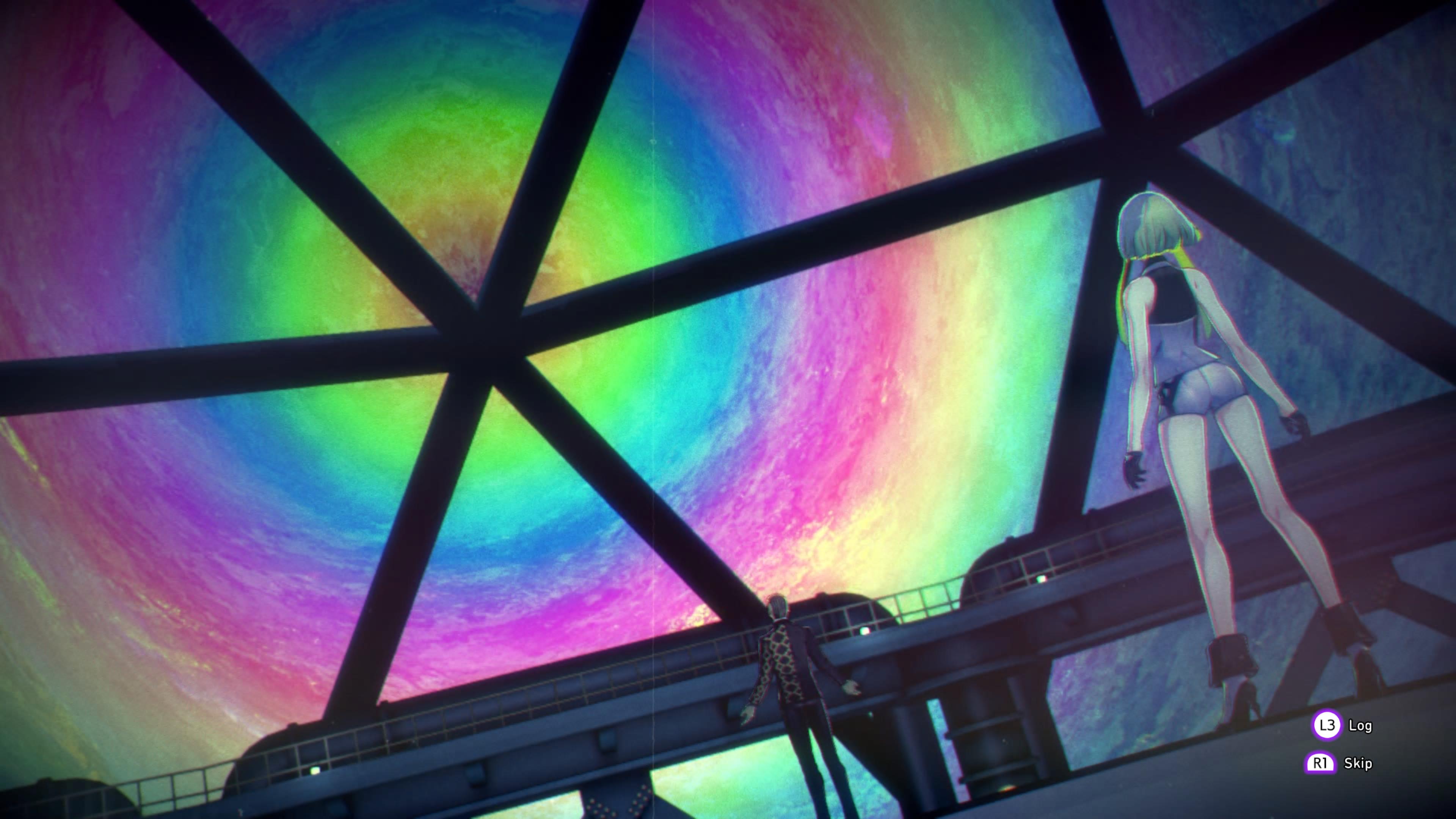
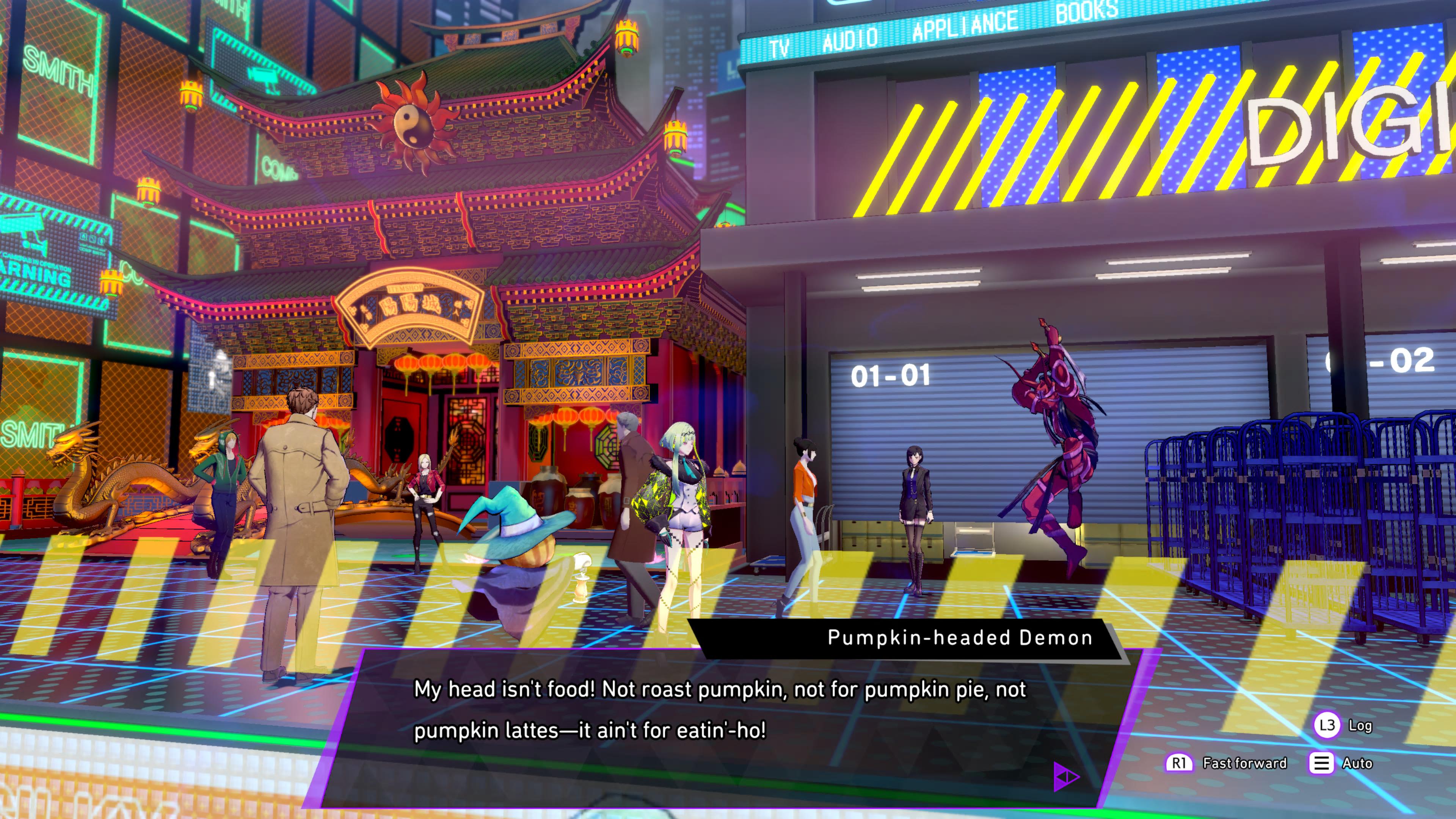
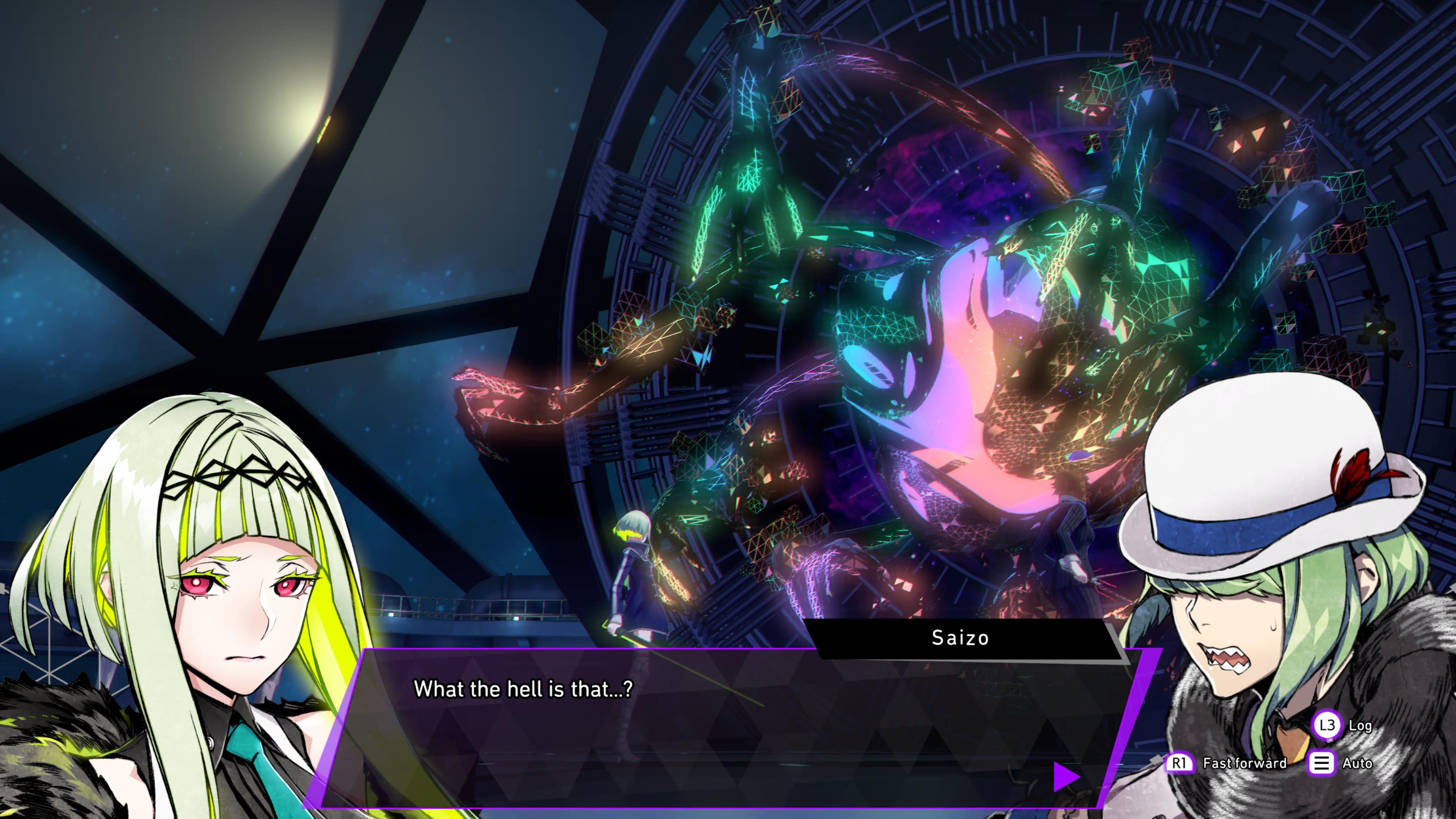
It's patently obvious that this game is a much cheaper, low budget title. Despite some of the flashy presentation, the bright neon cities barely obscure the very traditional DRPG lurking beneath. While the city hub environments are eye-catching and decently themed, almost all of the dungeons take you to mundane locations with none of the same charm, and even share the same visual theming. When I first started the game, I was fine with the shipping district - I thought it was similar to one of the first dungeons in the original SH where you have to crawl through 3 refrigerated warehouses. Then I learned that there are multiple shipping district dungeons, as well as multiple subway tunnel dungeons; the two subway dungeons are even back-to-back in the story! For variety, you get a dungeon set in an abandoned office building made up of visually indistinct corridors using asset-flip level textures & models. Only the final dungeon had a distinct visual identity, set in a weird reality-warped tower; the first part looking almost like a coral reef, and the second part themed as a giant bony structure serving as a final trial before the final boss. That was cool, but I wish we had some of that before the 40-hour mark.
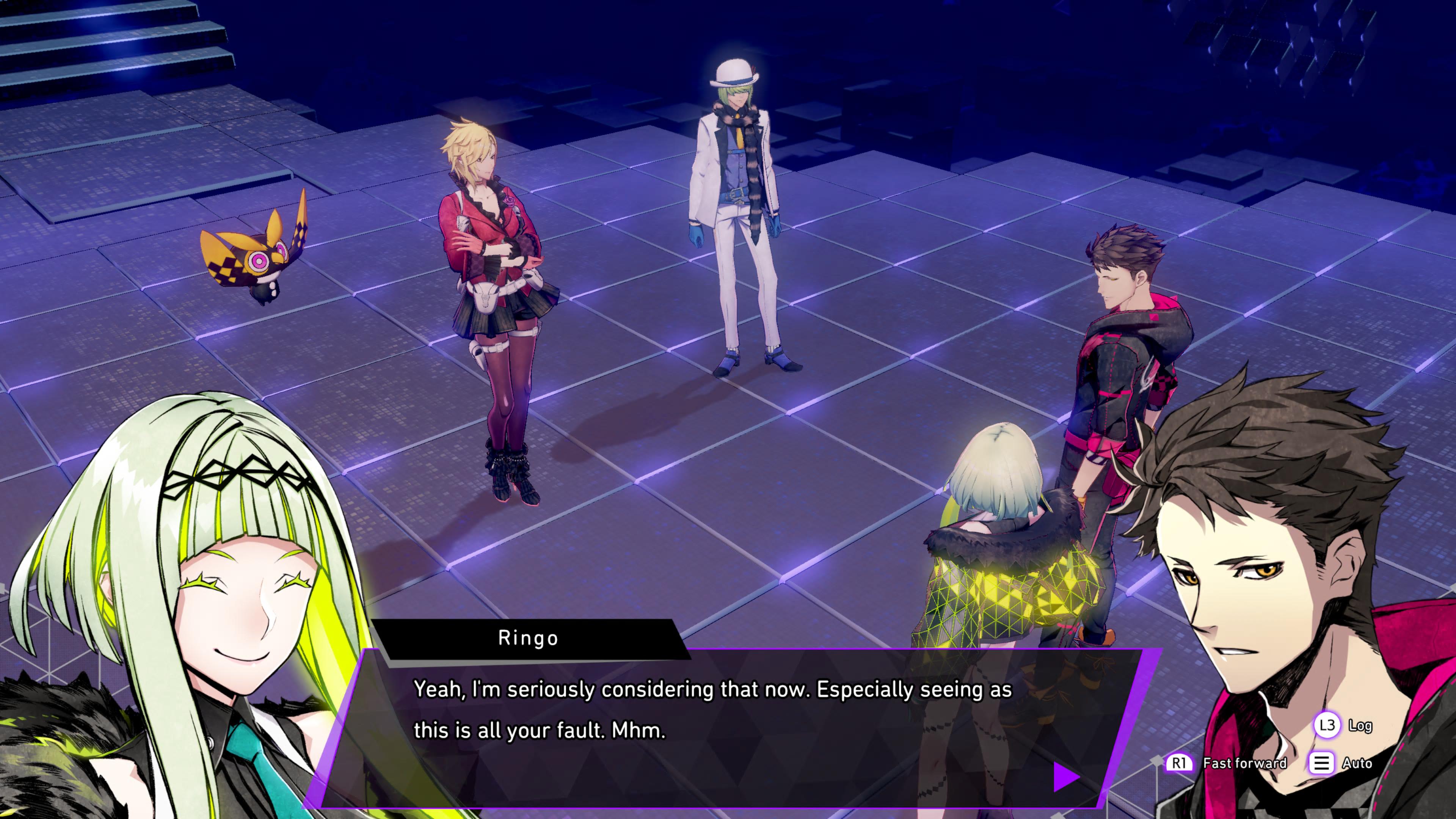
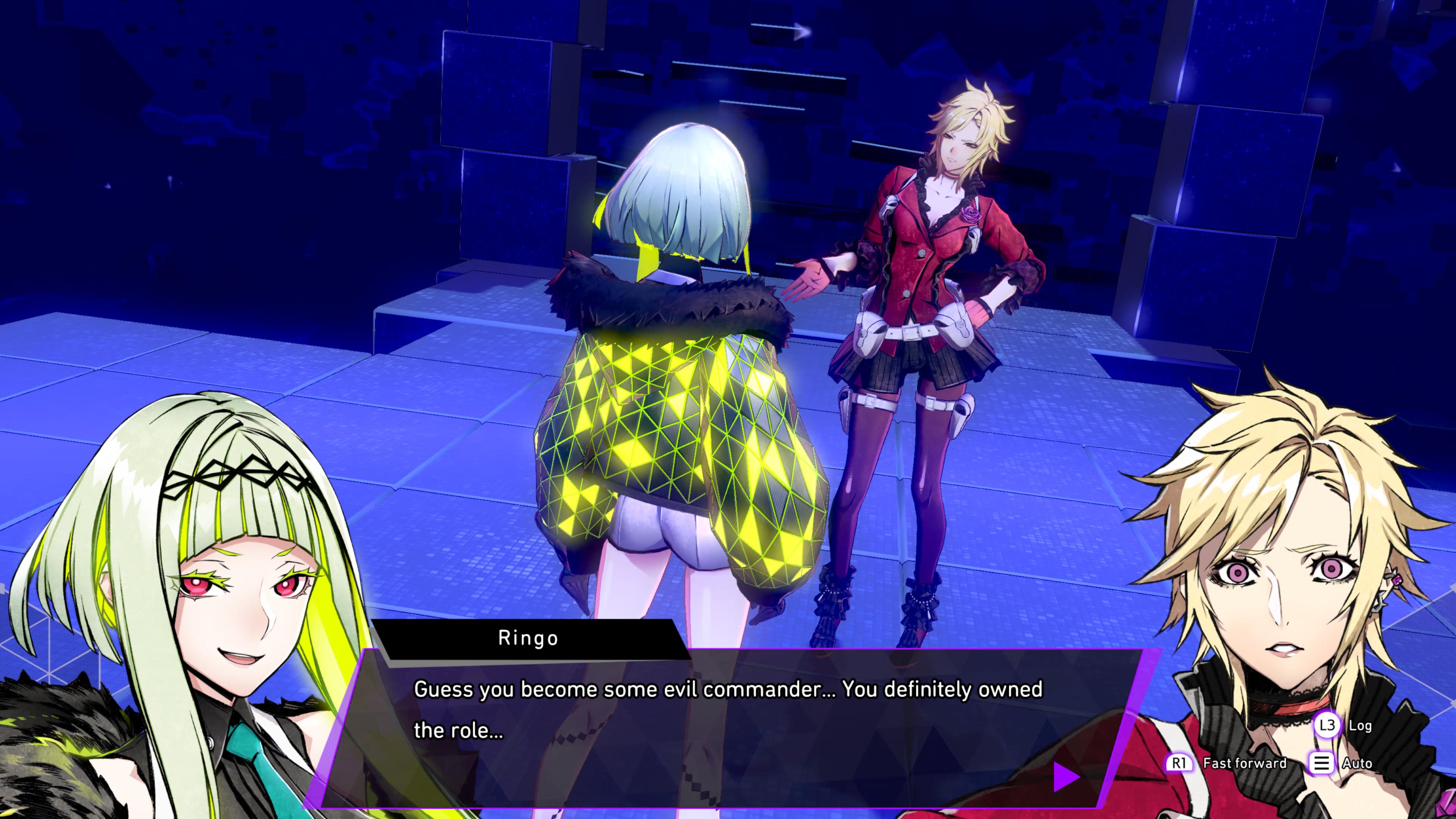
But the biggest offender of them all has to be the Soul Matrix, which is ultimately what the majority of the complaints on this game were about. Where most of the story dungeons were bland, they also happened to be fairly short on average and pockmarked with plenty of events & dialogue to at least shake things up a little bit. On the other hand, the 4 floors of the Matrix are gradually unlocked throughout the story, there are actually 3 dungeons - one for each other member of your squad. These give some more context to each character's personality and history to close some gaps left open by the story events. The idea is cool, I guess... but not so much when these are the longest dungeons in the game, AND they have even less visual style. You're basically walking on Tetris/Lumines "cyber" cubes, which do not change per-floor OR per-character. Cap this off with the most uninspired set of "Aion Directives" for each floor that are basically a Killtenrats quest, a collection quest, and (thankfully) a combat challenge. I slogged through 12 floors of these throughout the game, and it probably makes up for over half my playtime - not an exaggeration. I think the Matrix will probably determine any player's overall opinion of the game - if you're OK with relatively monotonous exploration (ie. DRPGs like EO, etc.) you'll probably think it's fine. Otherwise, this would be cause to quit immediately.
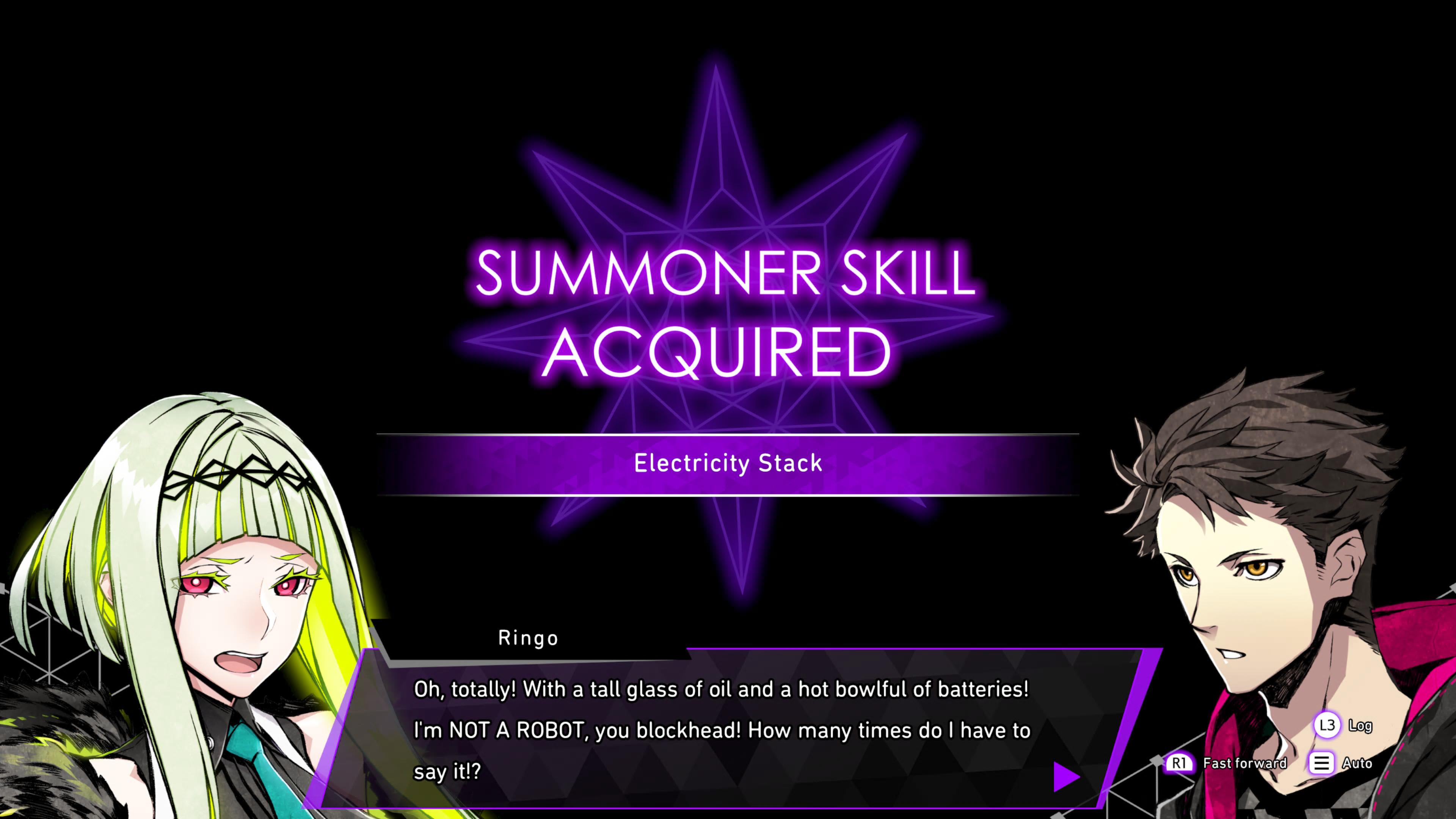
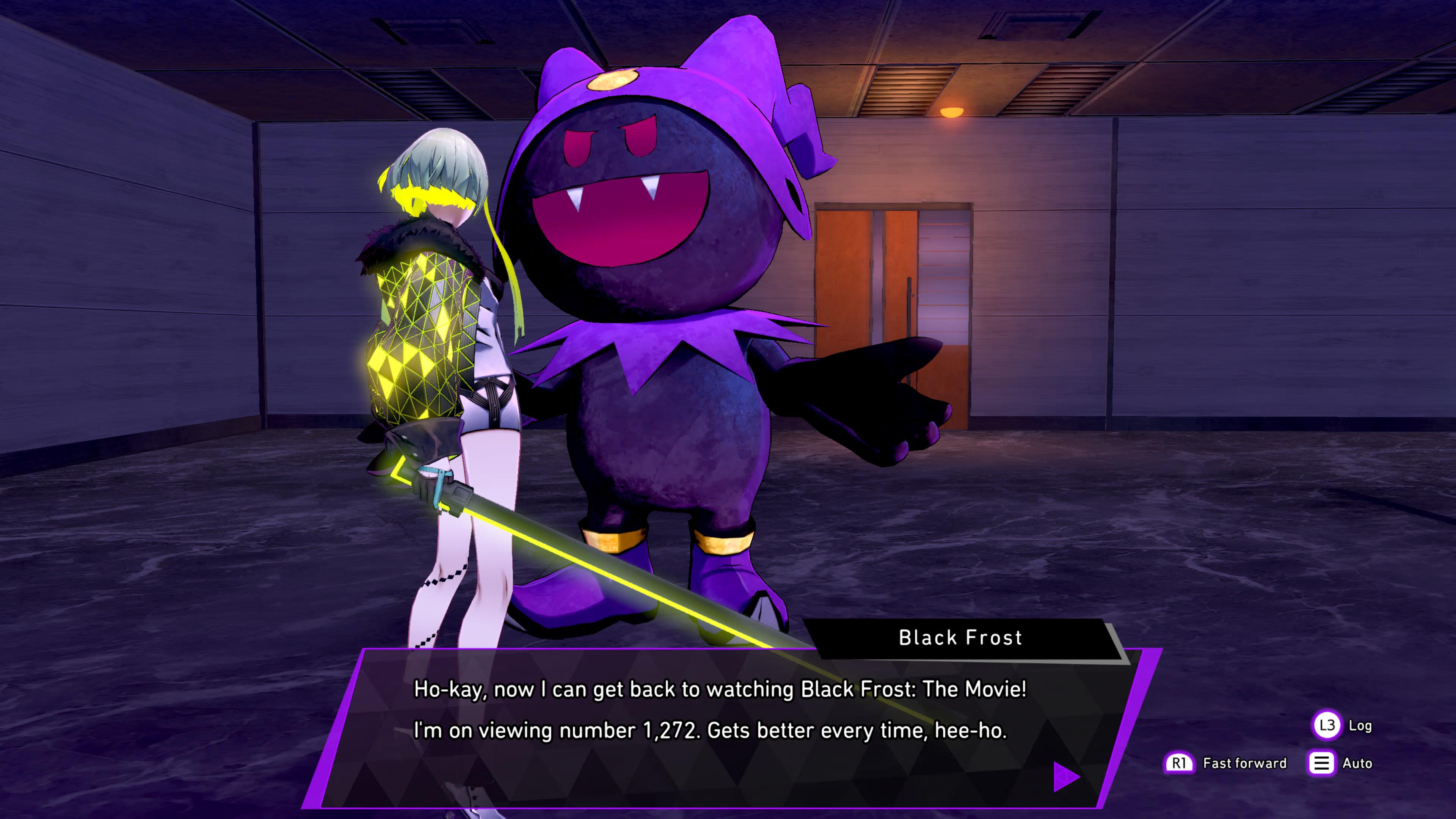
What's kind of a shame is that the combat system is quite fun, and is the main reason why I like the game despite how boring the dungeon crawling is most of the time. This game has an interesting turn-based system fairly reminiscent of Strange Journey; turns switch between Player & Enemy parties (ie. not per individual unit), and striking weaknesses is encouraged via a "Sabbath" that happens at the end of your turn, which deals bonus damage based on the number of "Stacks" you built up. In essence, they're basically SJ's co-op strikes, but taking place once at the end of each turn (and striking all targets). These aren't too potent at first with limited skills, but get better over time with skills offering additional "rules" to add bonus stacks - critical hits, using a particular element, etc. This mechanic is particularly important in a number of challenge fights and gimmick bosses, emphasizing the need to build and use a complete and well thought-out team rather than just ramming your head into a DPS check.
The second major combat element is the inclusion of Commander Skills, which is again reminiscent of the same thing implemented in SJ. These are additional abilities that can be activated on Ringo's turn to apply bonus effects to the party: buffing allies, doubling stack gains, concentrating attacks, etc. However, something that irked me a little bit about this system is that demon swapping was gated behind it, which prevents you from activating any other command skill concurrently with it. Worse, you can only swap 1 demon per turn, until you get a second skill that lets you swap everyone's demons once every ~4 turns. That's really not good enough for a game like this IMO. At the end of the day, I ended up almost never using commander skills other than the demon Conversion ones, and I felt like they were a bit of a missed opportunity overall despite occasionally being really cool and useful.
Demons and general equipment dynamics in this game are handled with a strange and almost contradictory philosophy. Individual element affinities and mystiques kind of imply an expectation that you'll try to keep each character locked to a particular set of "roles" or elements. Ringo is Elec/Almighty, Arrow is Ice/Healing, Milady is Fire/Ruin, Saizo is Wind/Support. In practice, the way demon fusion works will rarely let such simple and clear-cut dynamics play out across dungeons or major encounters. Weaknesses and immunities tend to be rather lopsided insteaqd of being spread out, encouraging the use of frequent switching in combat to proactively strike weaknesses instead of having a character on standby doing nothing or using the default Attack command. But this feels unnecessarily gated by the restrictions around the Conversion command, which stunts the gameplay a little bit. Moreover, rare items and new mystiques are only gained by leveling each demon in your party until they learn all their skills, which also encourages constant switching. The different systems are fit together in a confusing way; Mystiques are incredibly powerful but are extremely annoying to switch for big encounters (and impossible to switch for random encounters), while an ability as central as demon Conversion prevents you from using the rest of your commander skills, stunting your overall pool of options.
Despite the more general issues I have with some of the decisions they made for various combat systems, I really enjoyed the gameplay; bosses generally tend to be fairly well-designed around the system and often consist of multiple adds in addition to the main boss that allow each character to properly contribute. Bosses and their lackeys almost all have open weaknesses as well, so you almost always have the ability to build stacks, thereby interacting with the core mechanic of the game. There are a couple of exceptions later in the game, but this comes after you should have a number of other stack-building abilities available, or once you have a strong enough buff/debuff combo to just nuke everything you see. Even all the climactic fights against Zenon, Iron Mask, and Aion all offer mechanics to expose clear weaknesses for exploitation. With a couple of exceptions in some challenge fights, I found the game to be well-balanced on Hard.
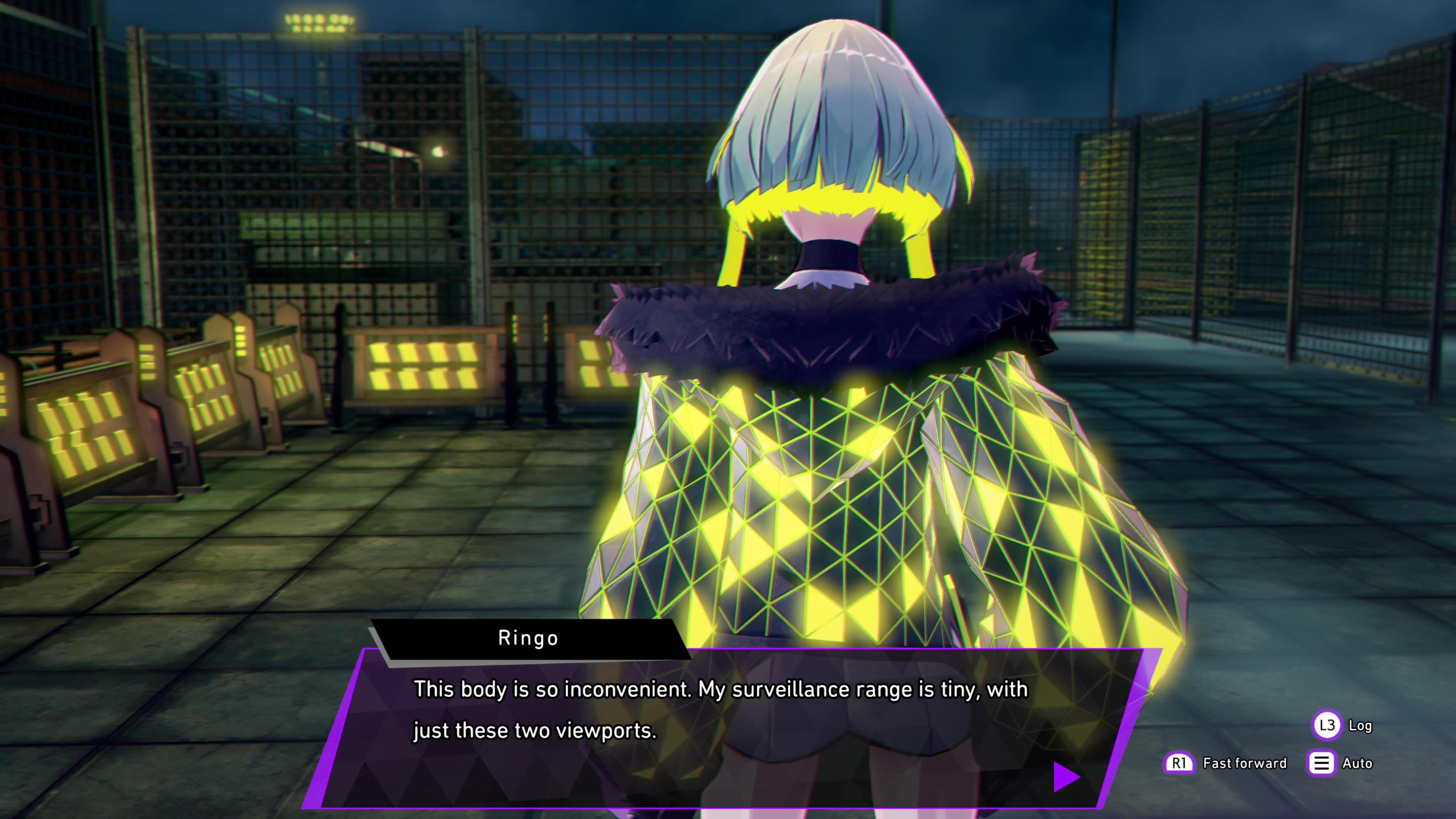
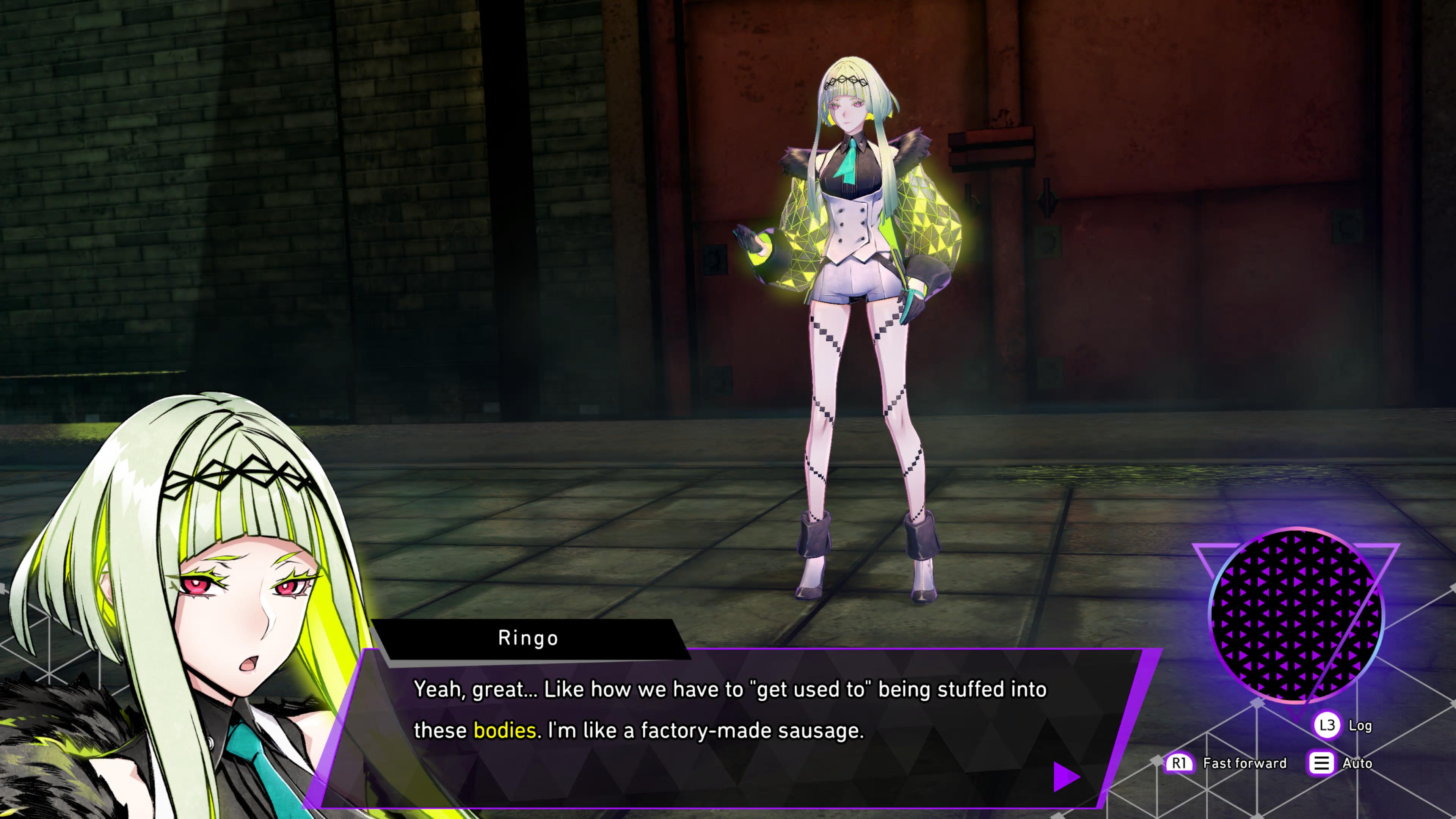
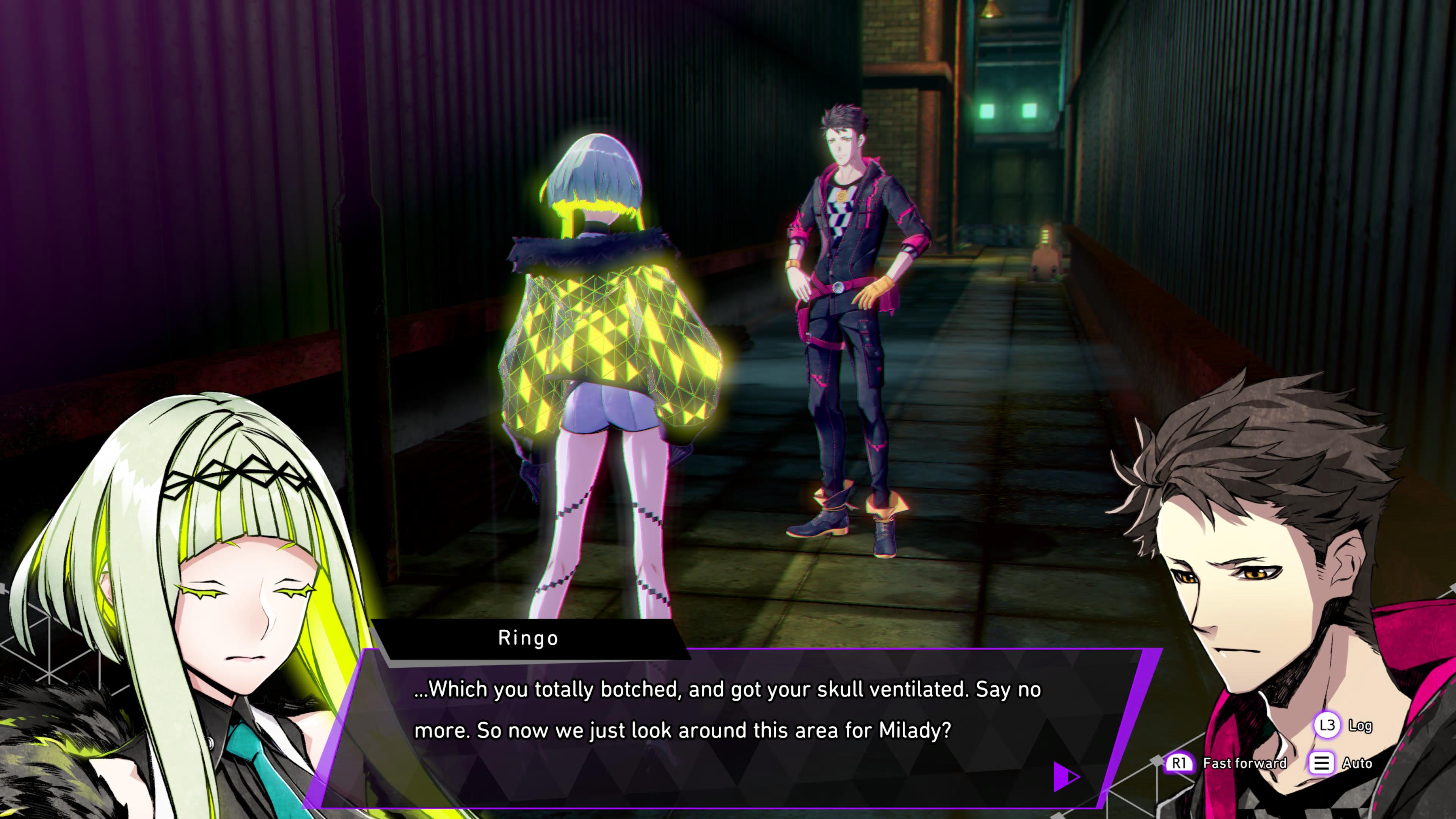
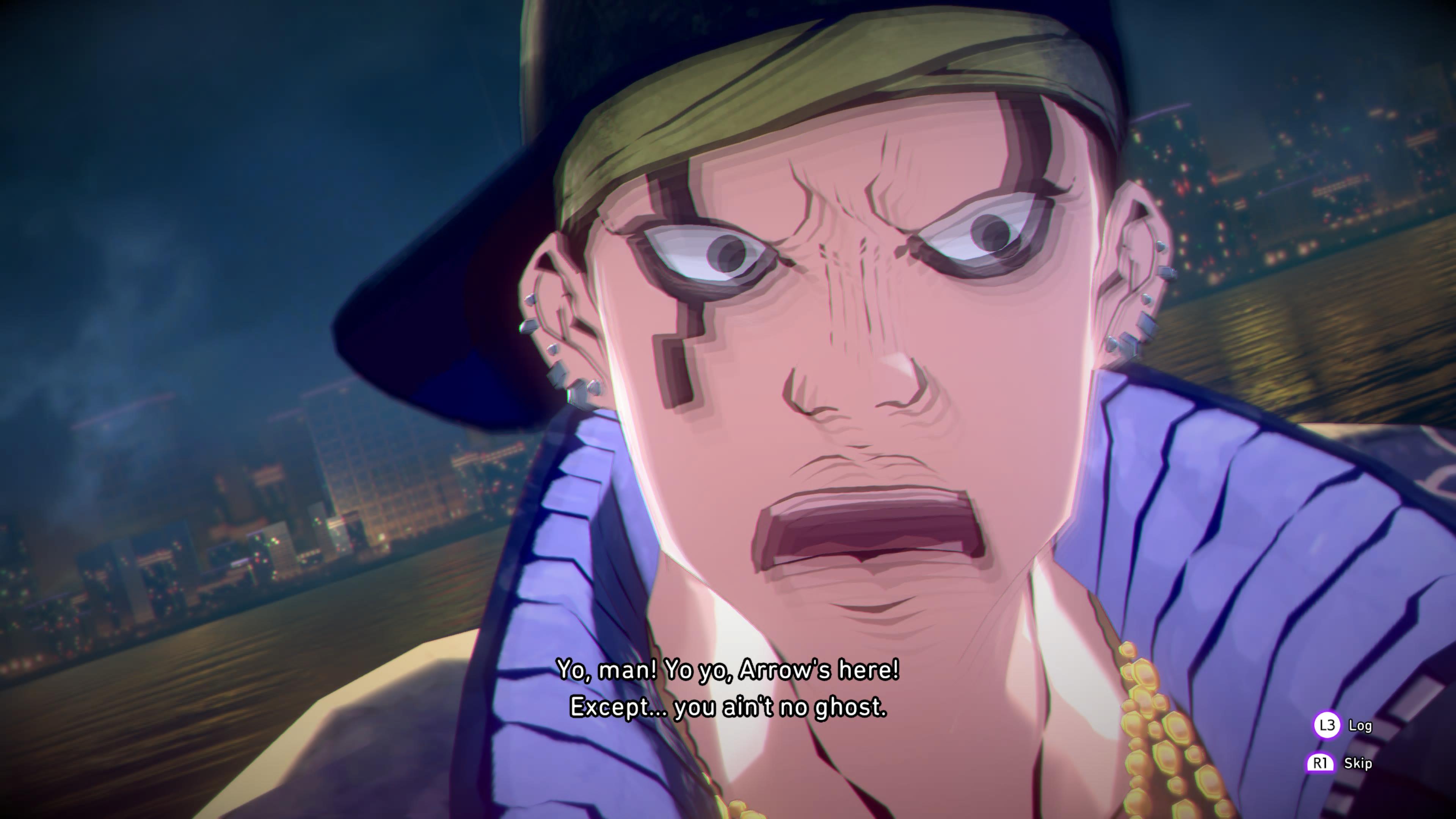
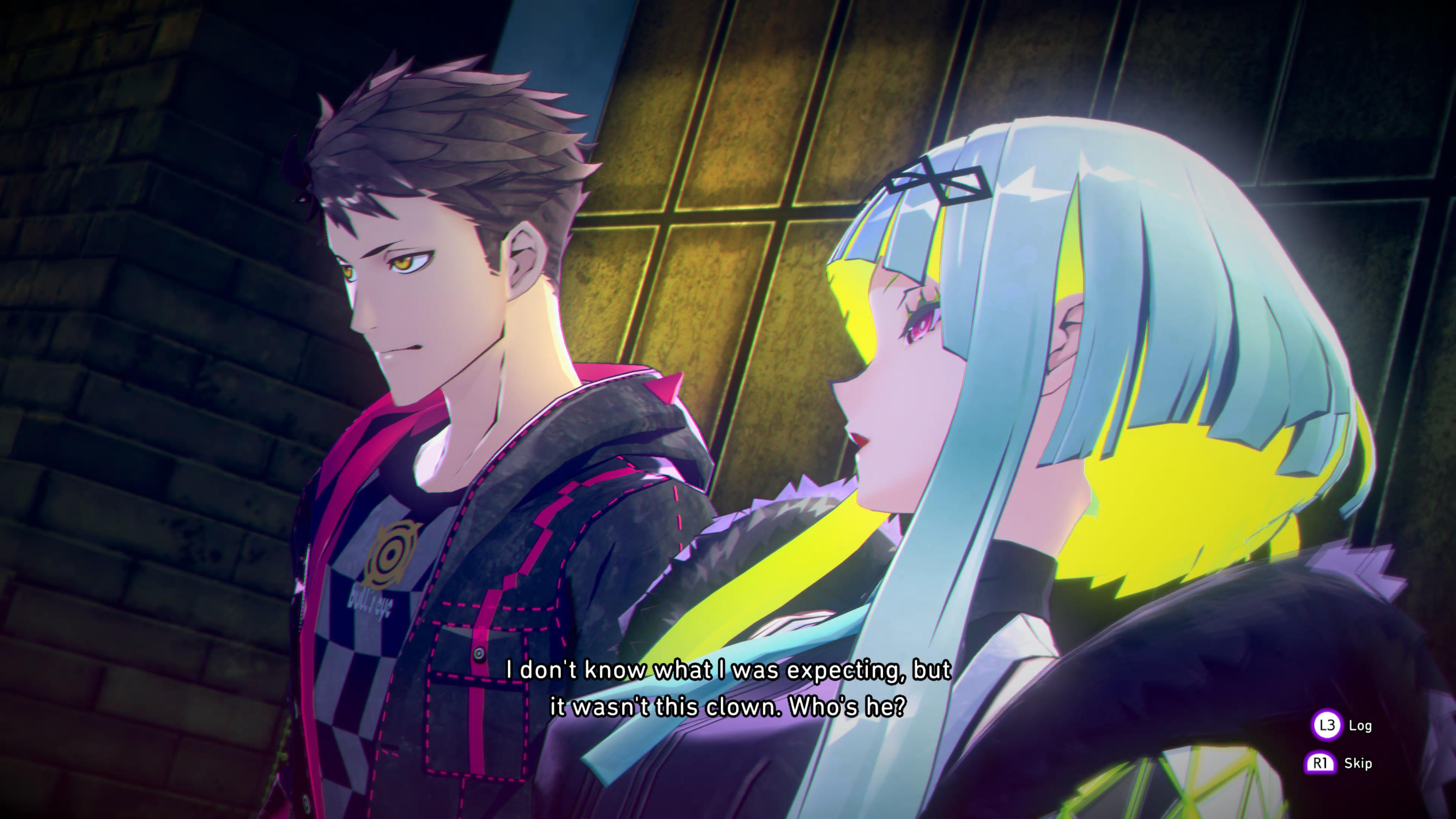
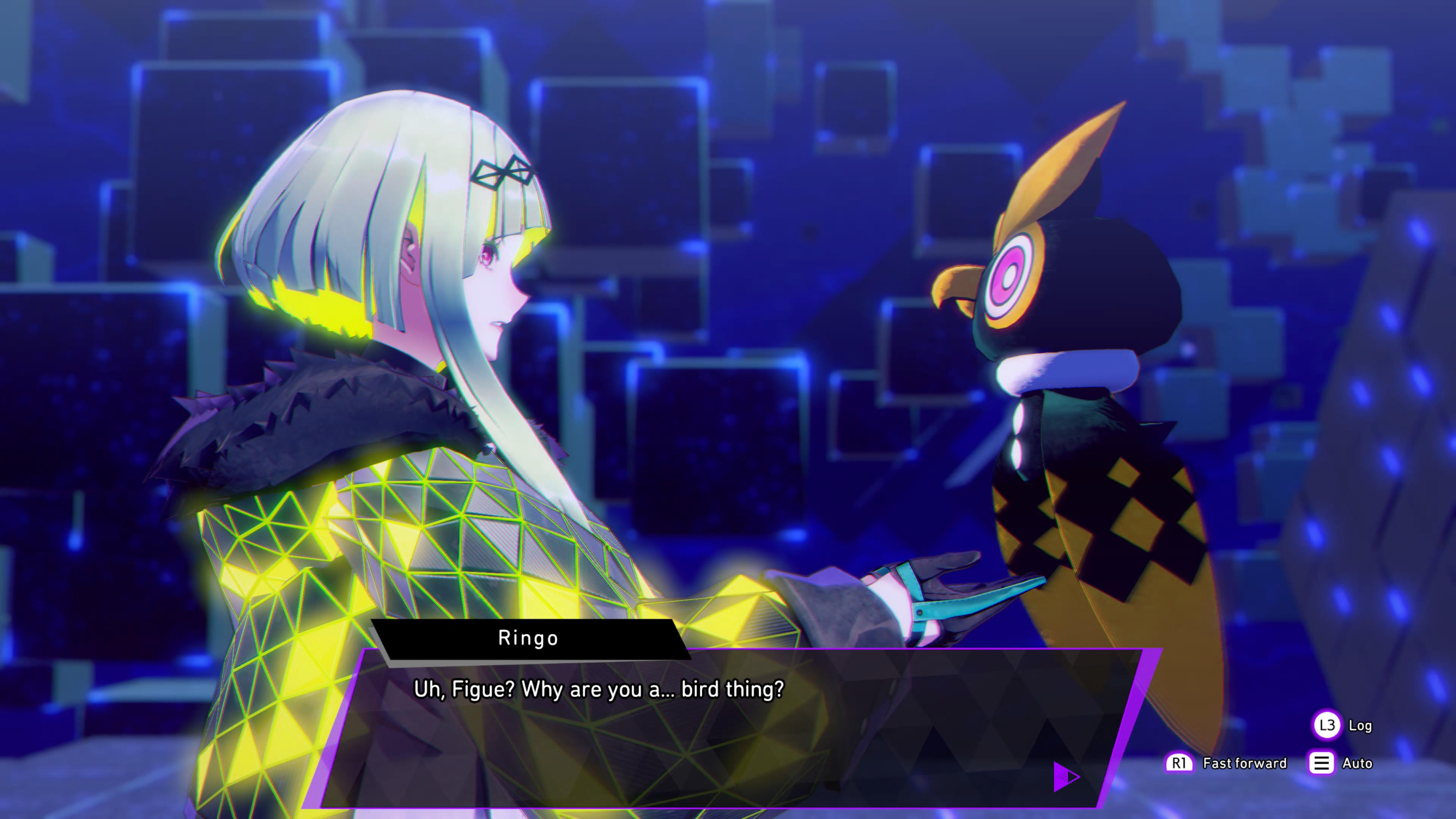
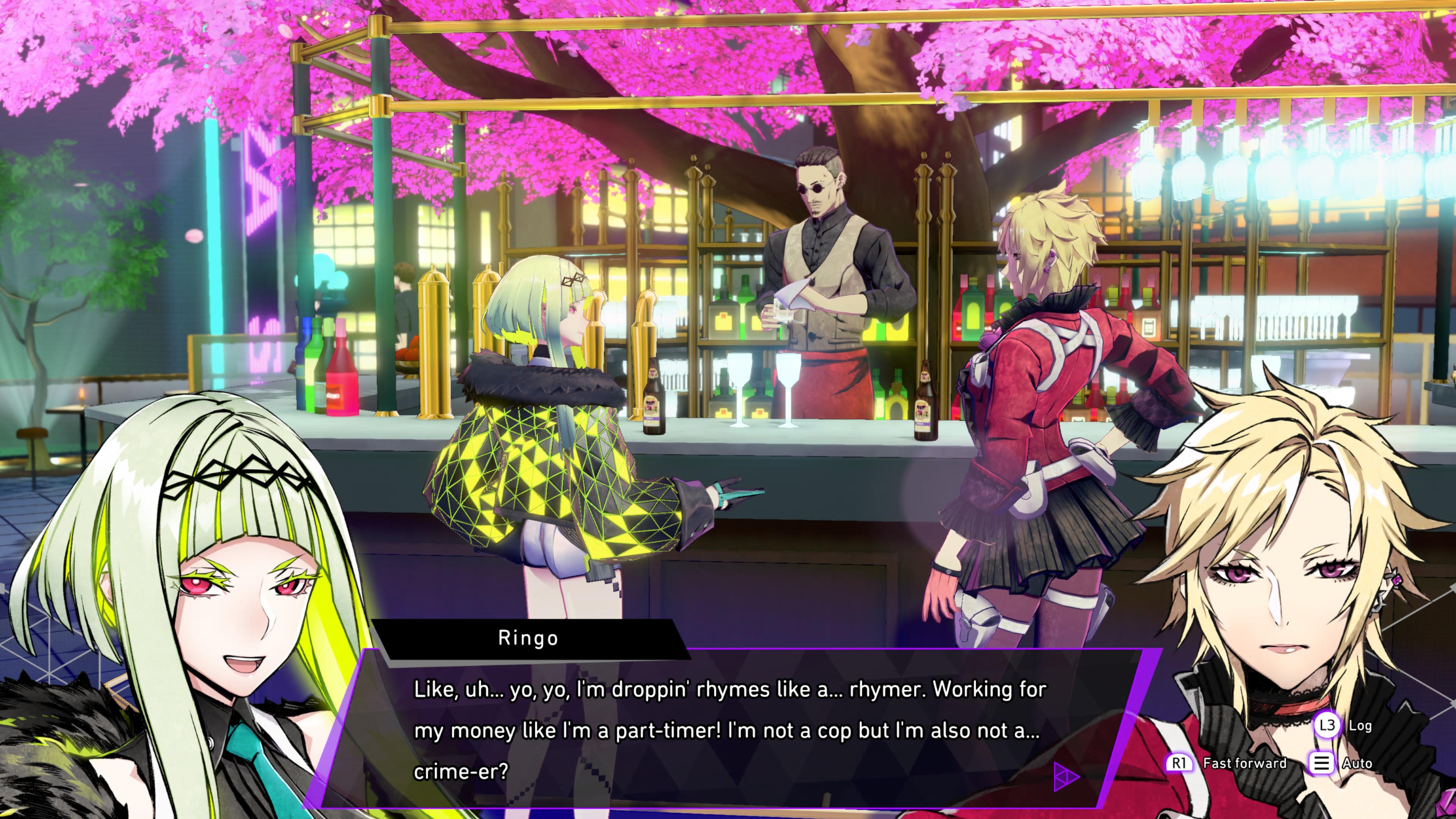
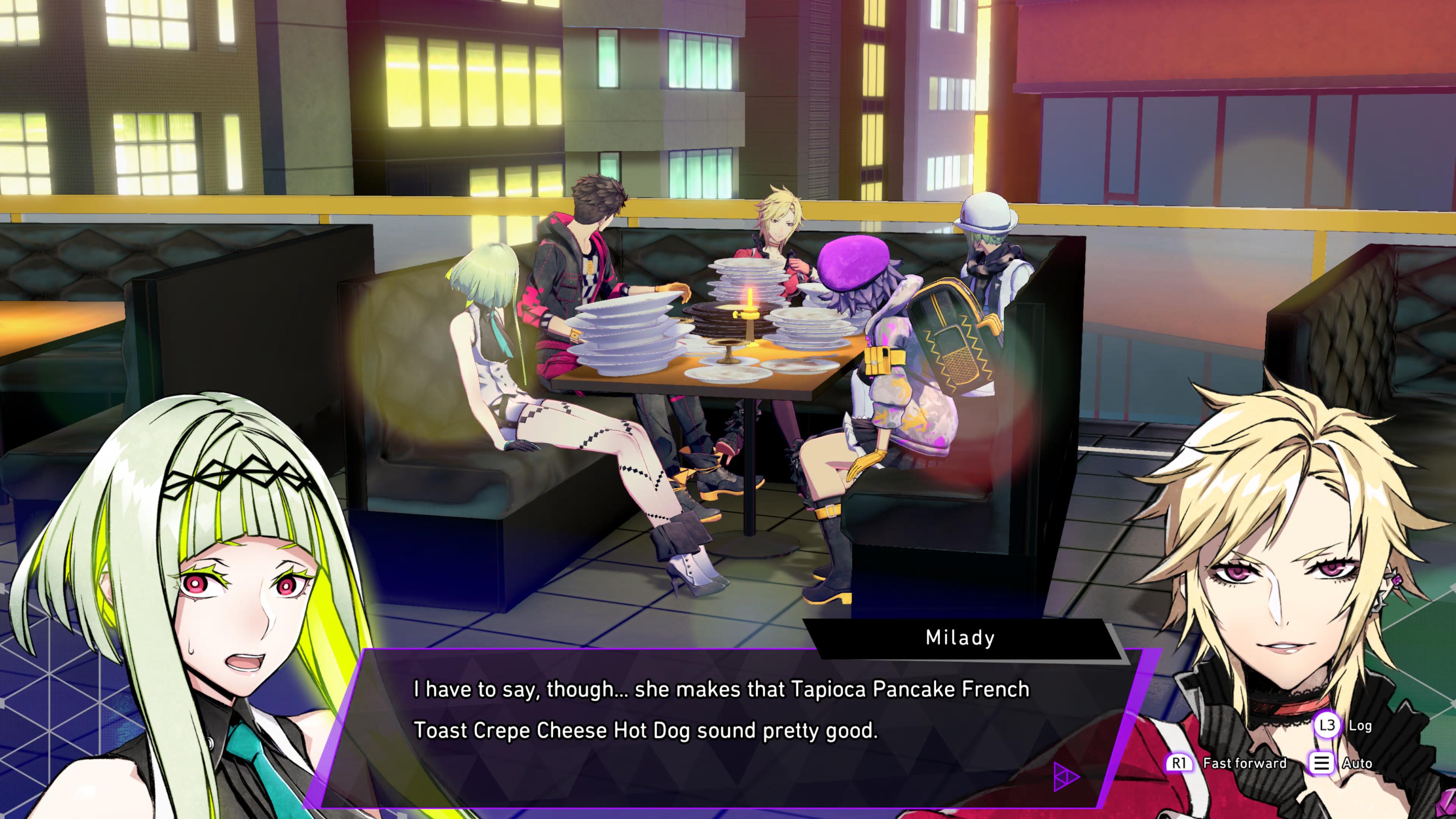
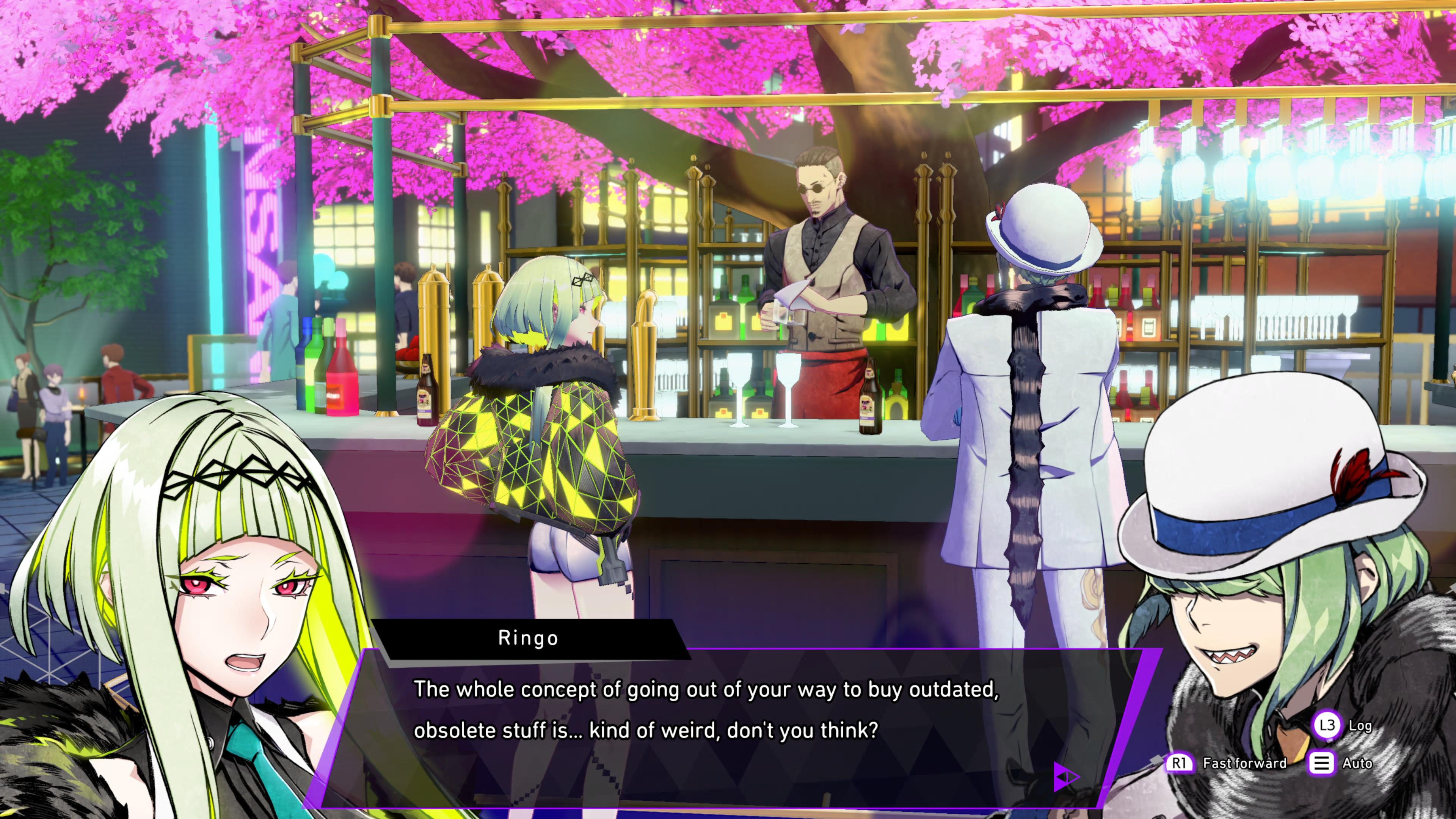
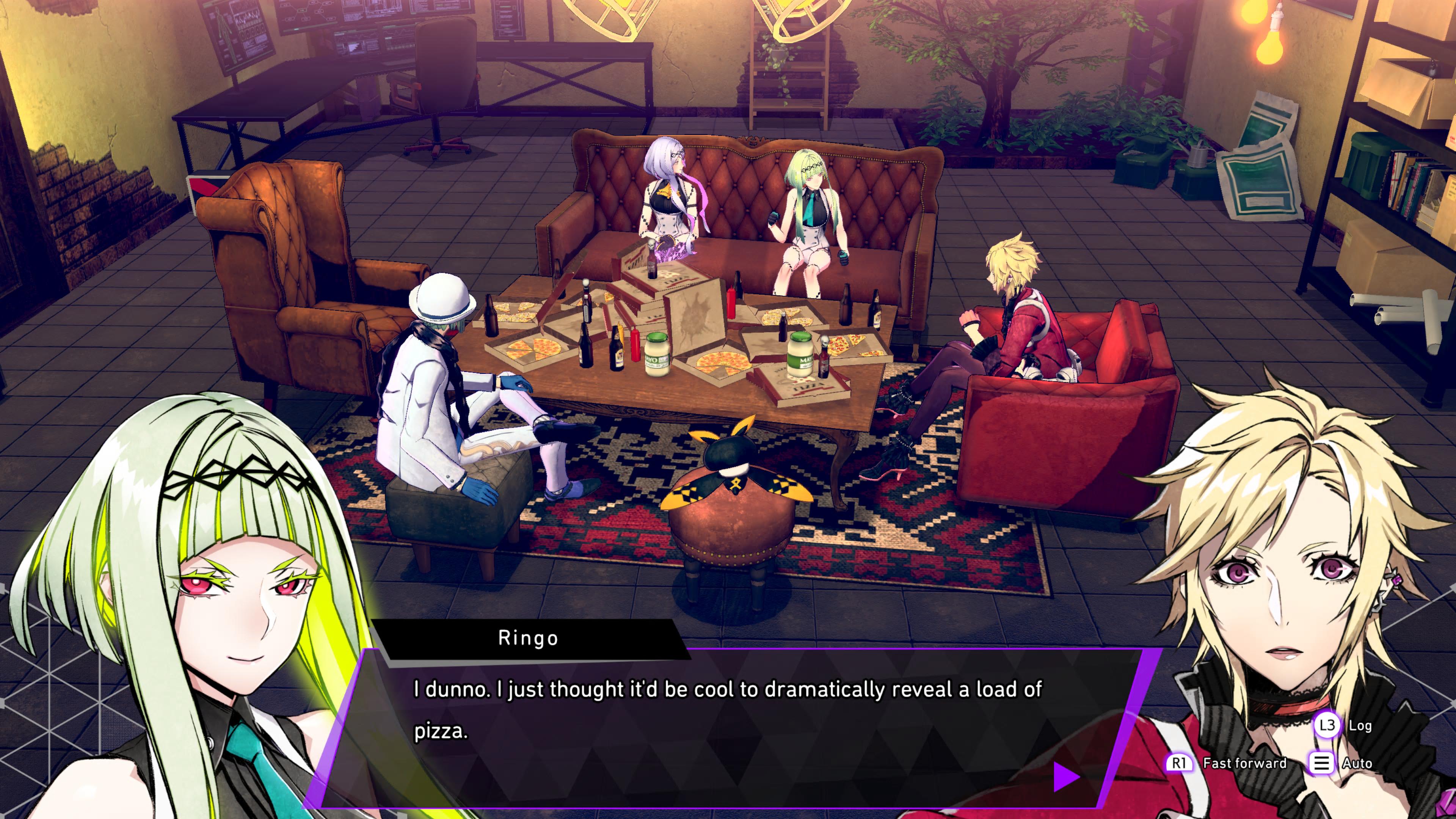
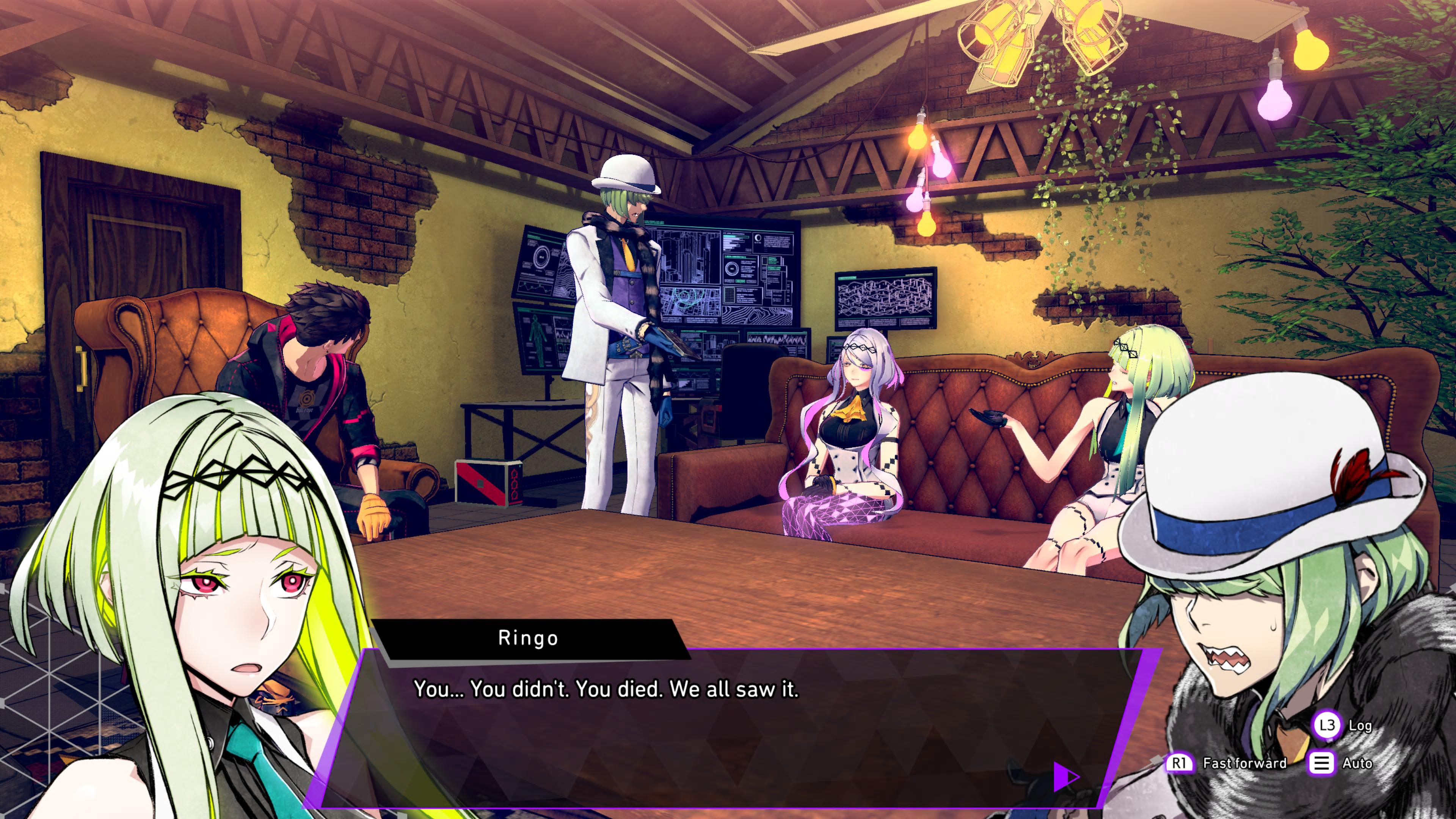
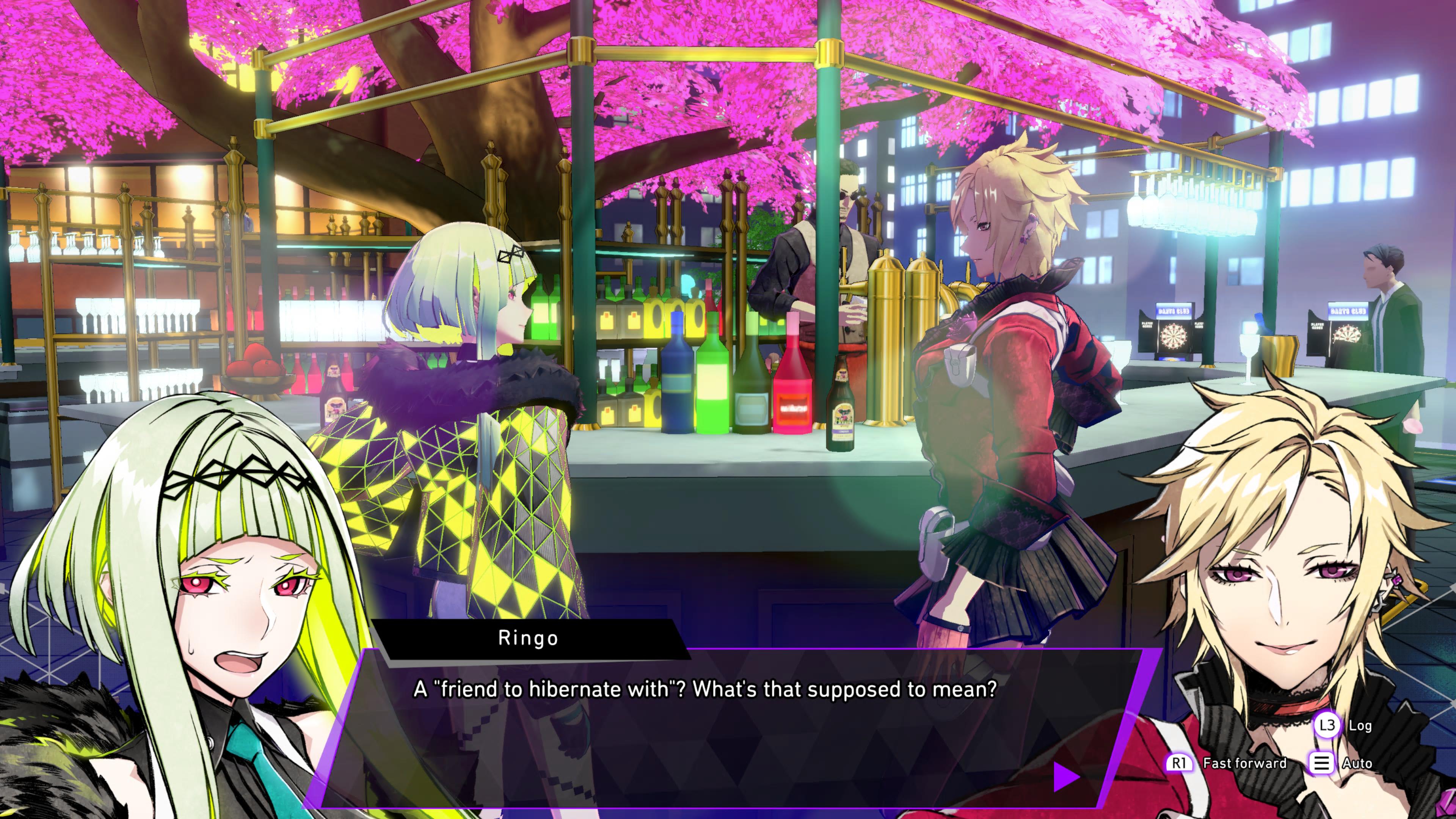
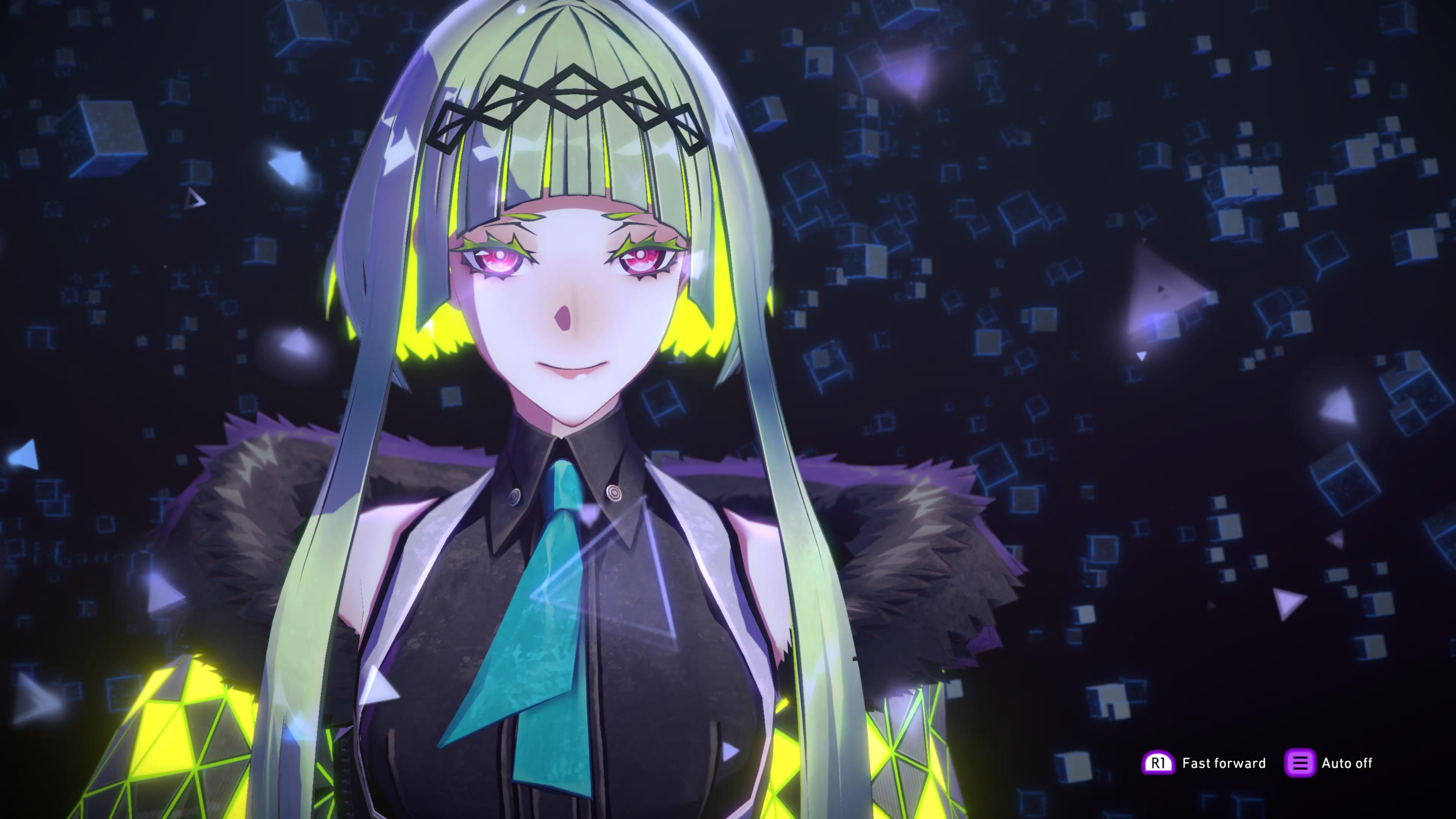
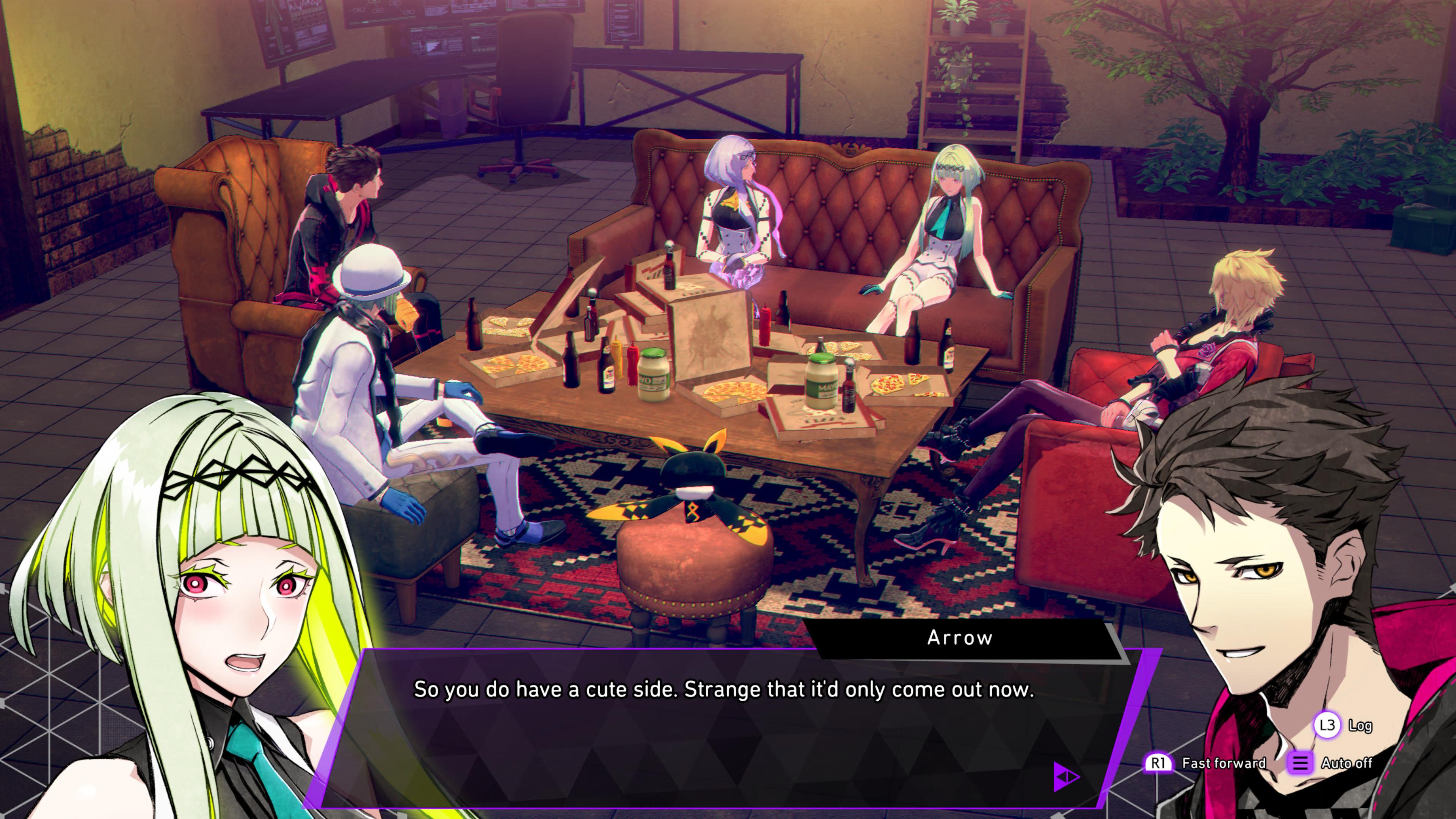
Finally coming around to the setting and story, I like how upfront the writing is about the definition of "Soul Hacking" here; Ringo literally does it 3 times for the rest of your party members in the first few hours of the game. (As an aside, I also like that you get your full party almost immediately; I was worried we might have to do a dungeon or two for that, given what we've seen in Persona.) Unfortunately, you don't really see it much in the rest of the story - the excuse is that Ringo gets "headaches", leading to the creation of the Soul Matrices to weed out the glitches and aberrations that were causing them. Speaking of Ringo, she's awesome and hard carries the rest of the cast on her back - she has a good argument for being one of the best main characters from any Atlus game. The writing (or translation?) has managed to hit the absolute perfect balance of sassy, goofy, and sincere that connects with just about everybody; it seems exceptionally rare for anyone to outright dislike her. The other characters are also not offensively bad; Arrow is a bit of a boring blockhead, Milady is an edgelord, and Saizo has a bit of a "suave-in-his-own-head" personality going on, and they play off each other nicely! Given that the three are all from very different, even opposing backgrounds, it's nice to see how they grow together over the course of the story. Also, Figue exists - she's the twin "sister" of Ringo and is more of a typical introvert character, but also feels a bit boring, kind of like Arrow.
Not much to say about the story, actually. The covenants being these weird worm things makes no real sense to me, and it's never explained or even truly implied what they actually do. You don't realize any benefits from them from a gameplay standpoint, and their usage in-universe is vague other than the fact that they can apparently be combined to cause some kind of doomsday event; for whatever it's worth, this doesn't happen as the ultimate crisis at the end of the game is caused by another machine/system, NOT the covenants. I suppose the meta-commentary here is that the war was all fought over nothing? Even the writing is confused, given that the game keeps making up stuff that you can do with these Covenants throughout the game. First they're transferred only on death, then you can fake your death, and you can create a fake covenant, then Mangetsu somehow transfers a real one into his arm and cuts it off to free it, etc. It just doesn't feel believable, even within the context of the world. My attempt to sum it up after playing the game is: you and your party go on a wild goose chase to grab all these covenants, then eventually have to deal with a threat caused by Aion and not by these covenants. I still can't make any sense of it to be honest.
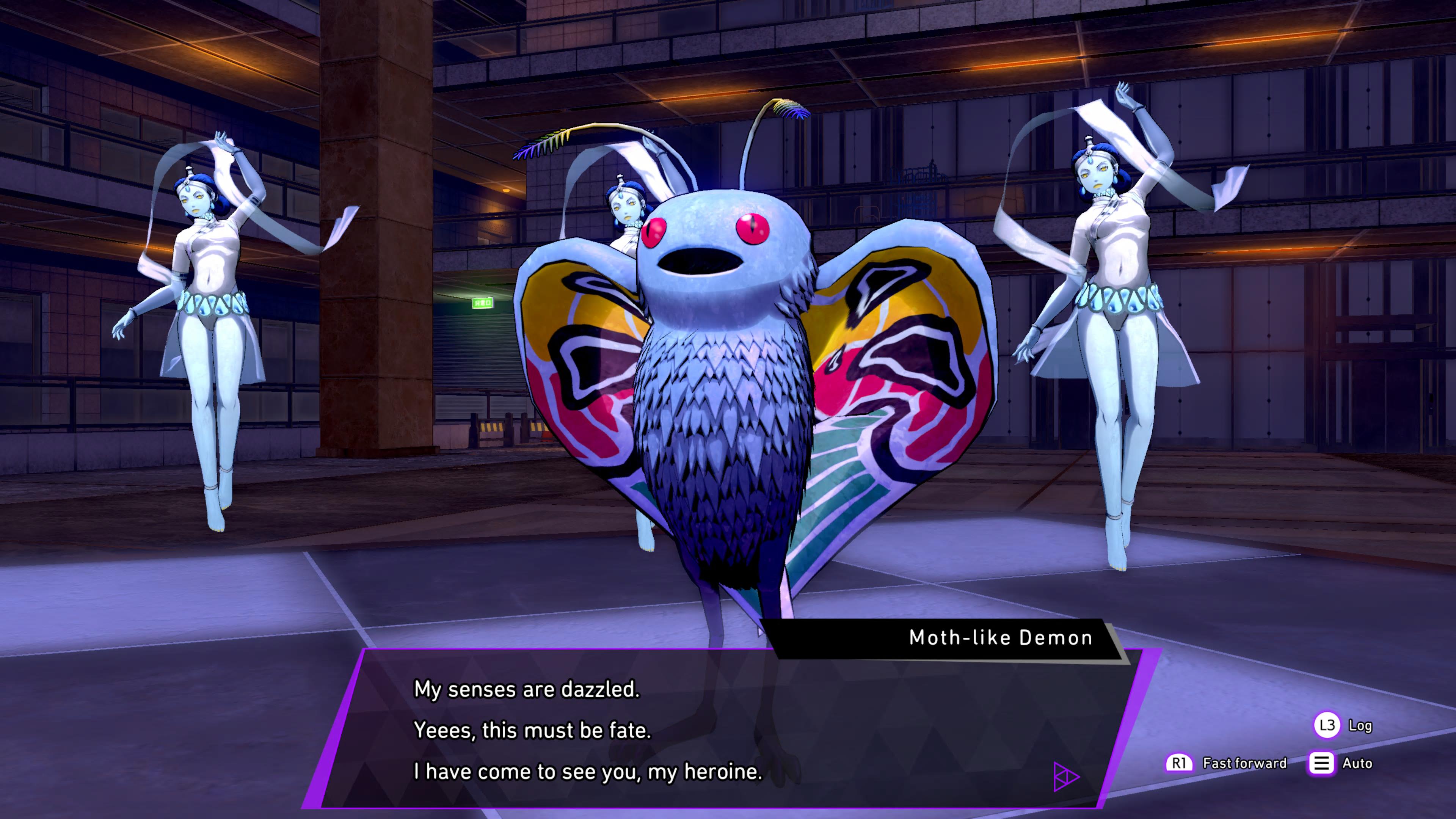
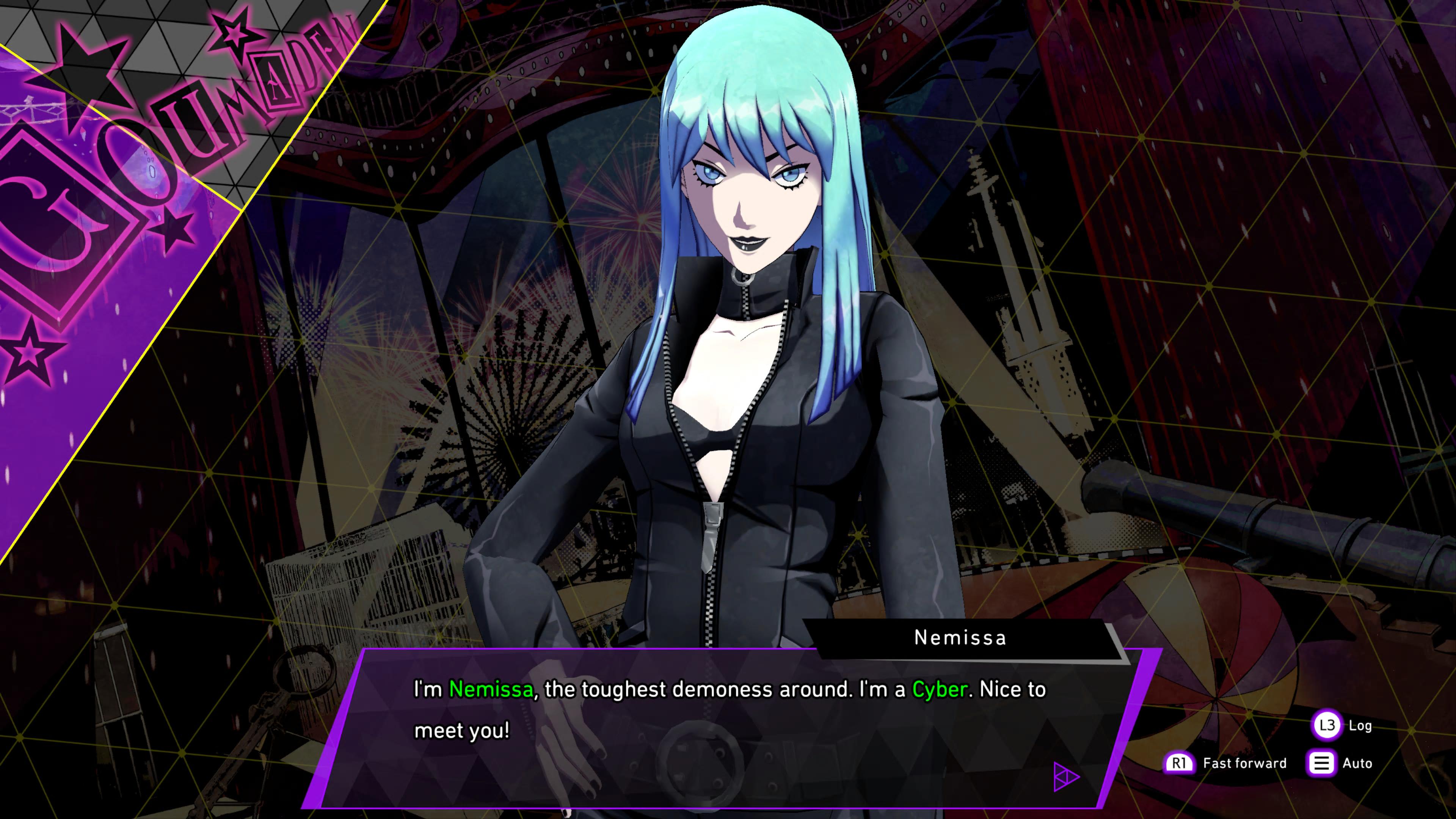
The DLC is fun, but most of it should have been included. The storyline with Nana is whatever, and the character herself is kind of annoying. The challenge bosses that you get to fight throughout the game are pretty neat though, and come with added conditions that really make you think about what you're doing. The last part of the DLC gives you access to another giant endgame dungeon, which basically consists of a single floorplan repeated around ~18 times with slight variations. It's not actually as bad as it sounds, but the couple hours I spent there did get pretty monotonous fast. With regards to the other DLCs, the demons are super useful though they never should have been paid to begin with; it's just typical Atlus scumminess, but it was dirt cheap and included Nemissa - practically the poster girl for SH1. She's actually super overpowered too, with the strongest all-target Electric move AND the strongest random-target Physical move, plus easy access to Megidolaon and Eternal Prayer. Masakado and Mara were also great for tearing up targets with absurd Physical & Gun-type capabilities. Finally, a shoutout to some of the costumes - Ringo looks good in anything but was great in the Raidou & SMT4 outfits, and Milady as Reiho & Arrow as the SH1 protag go hard. I wouldn't have bought the DLC by itself, but everything came together with the Lost Numbers DLC so I figured I might as well use it. I wish the skins would apply outside of combat though, even if only in dungeons.
Overall, I clearly enjoyed the game enough to dump over 50 hours into it, which makes it one of the longest games I played this year. It's very deeply flawed all the way down to its core, and I wouldn't fault anyone for not liking the game, but I think it still shows a lot of promise in consideration of what it does well. Combat is fun, and characters are solid, especially Ringo. It's a shame that there isn't much of a chance we'll see further developments along this series given how badly this flopped, since it could have matured into a very solid formula offering a third option between mainline SMT (Press Turn combat, darker tones) and Persona (VN/RPG hybrid, One-More combat, more "juvenile" tone). That said, this game itself doesn't really leave me wanting any more after my playthrough, and I especially don't want to deal with the boring dungeons a second time around, so I think this game is one-and-done for me. I'm not even sure why the end of the 5th floor is locked behind a 2nd playthrough.