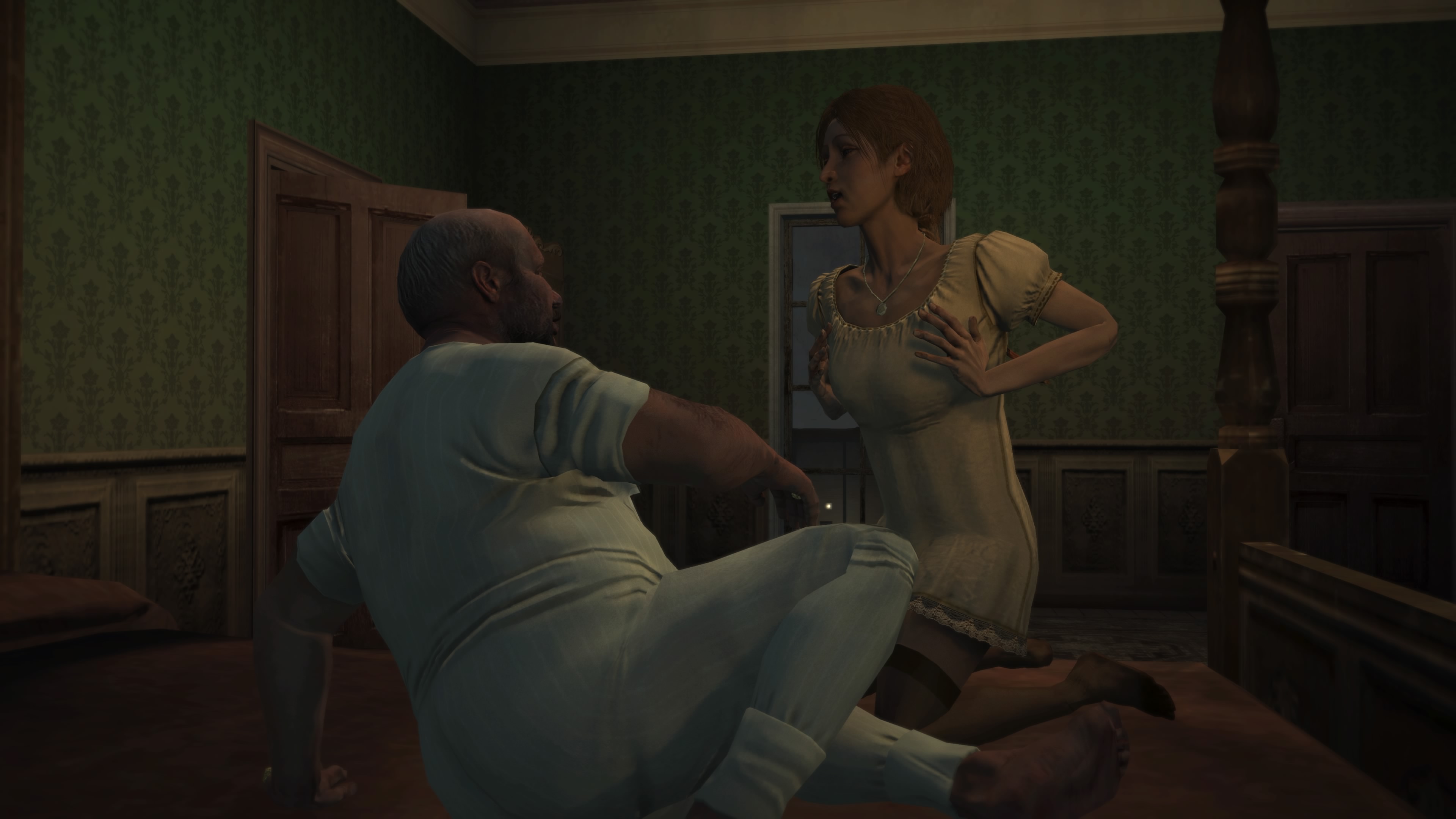
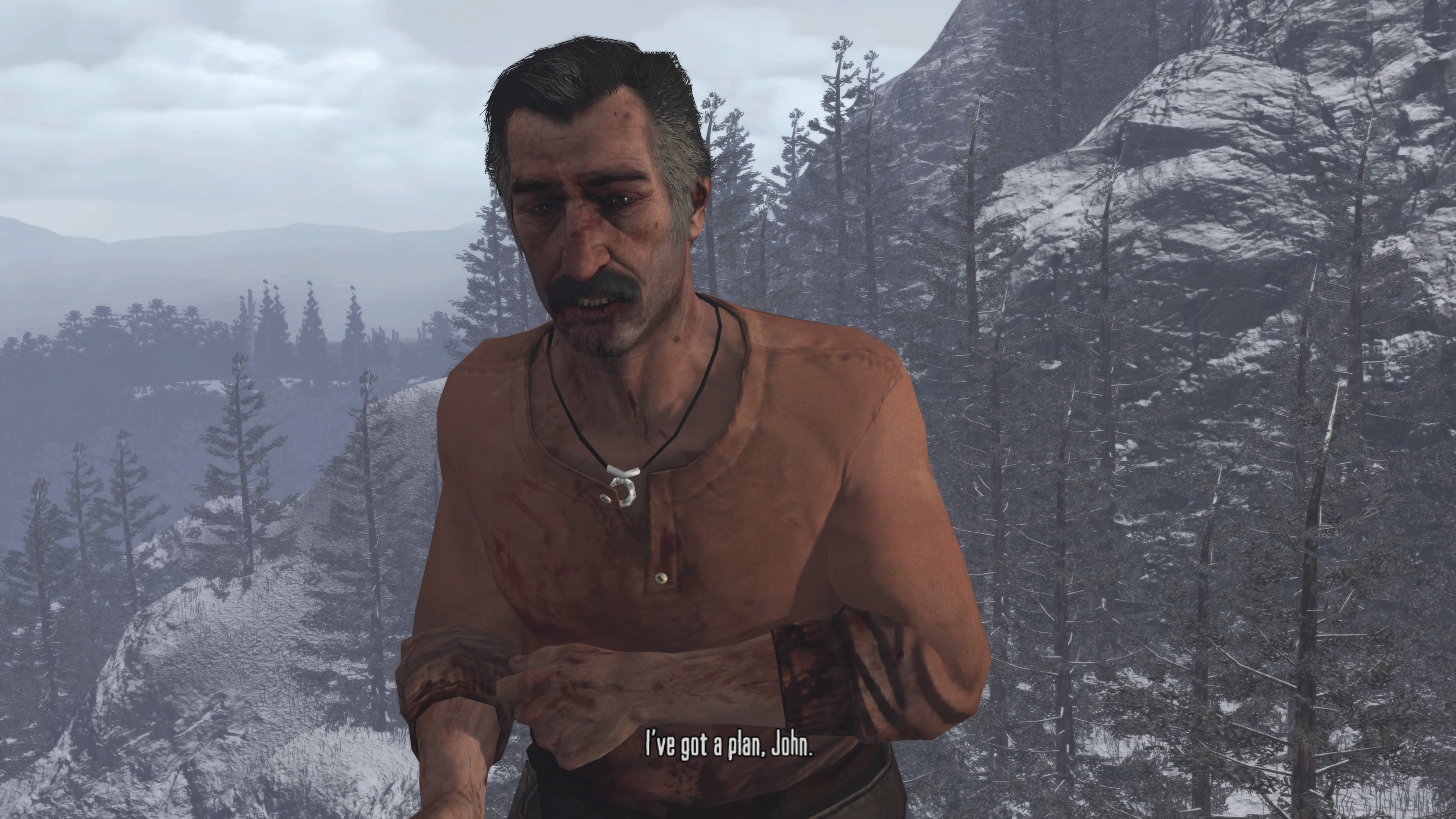
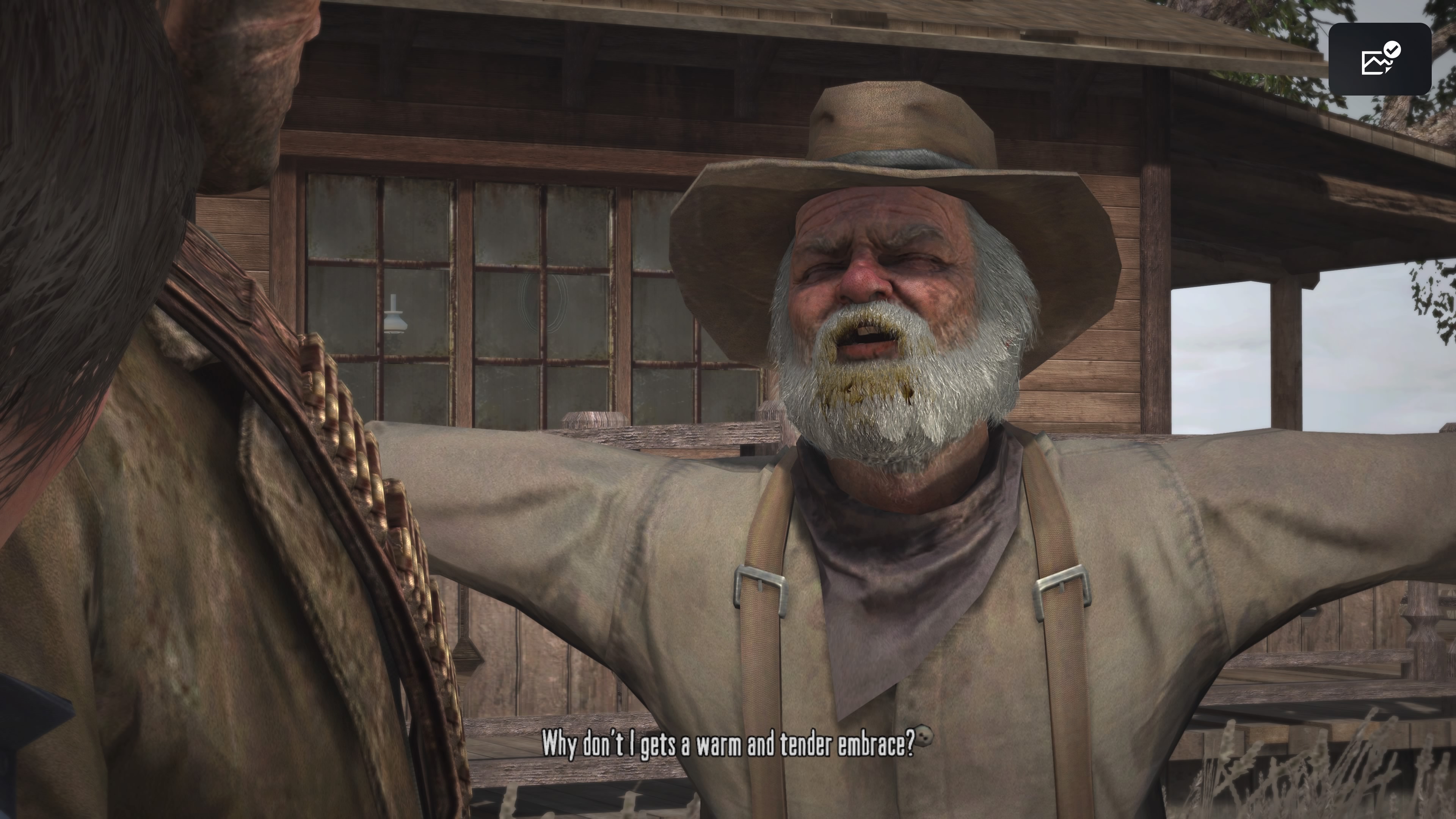
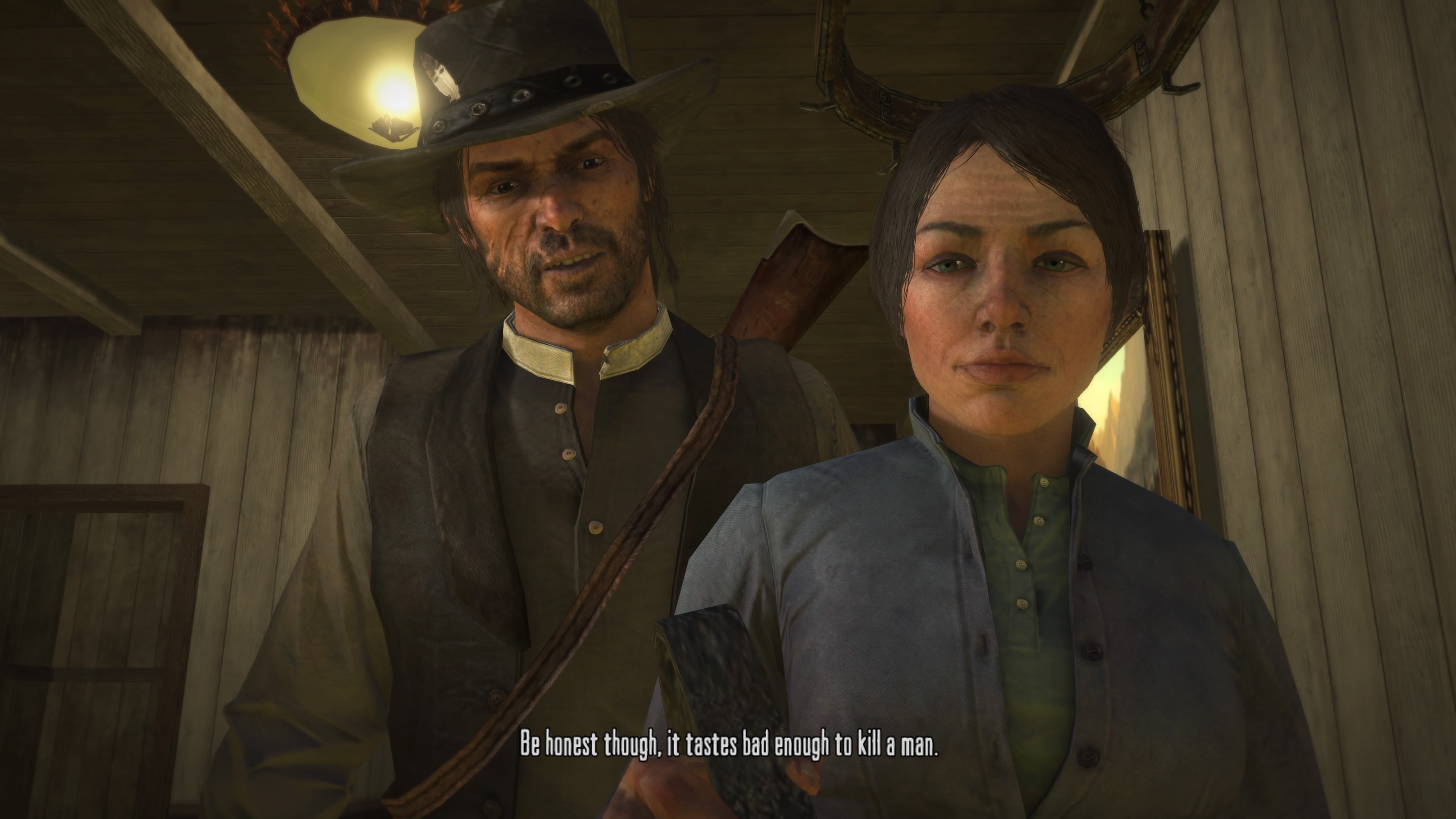
Red Dead Redemption
Main Game Playtime: 19.5 Hours
Finished 15 February 2024.Undead Nightmare Playtime: 6.0 Hours
Finished 23 December 2025.Played the remastered version that's available on PS4, playthrough done on Normal difficulty. I did all of the main story missions and all 19 of the Stranger side missions and not much else; I did a couple of gang hideouts and some other miscellaneous activities but mostly because they were convenient to do. Ended up with maximum honor and high fame; no idea how those impact the story of the game (maybe John's epitaph?) but I didn't feel like those were particularly important.
Didn't want to play Undead Nightmare immediately following the base game since I was a little tired of it, and ended up going back to it about 2 years later. It just so happens that Rockstar released a PS5 update for RDR just a few weeks earlier (in early Dec 2025) so it seemed like a good time to go back and finish this up. For this playthrough, I again focused mostly on the main story & side missions, and additionally rescued all of the different towns in the game. There's a lot of repeatable rescue missions (15 iterations), challenges, and horses that you can tame, but I didn't really care enough for any of that; I ended the DLC with 65.0% completion.
Main Game
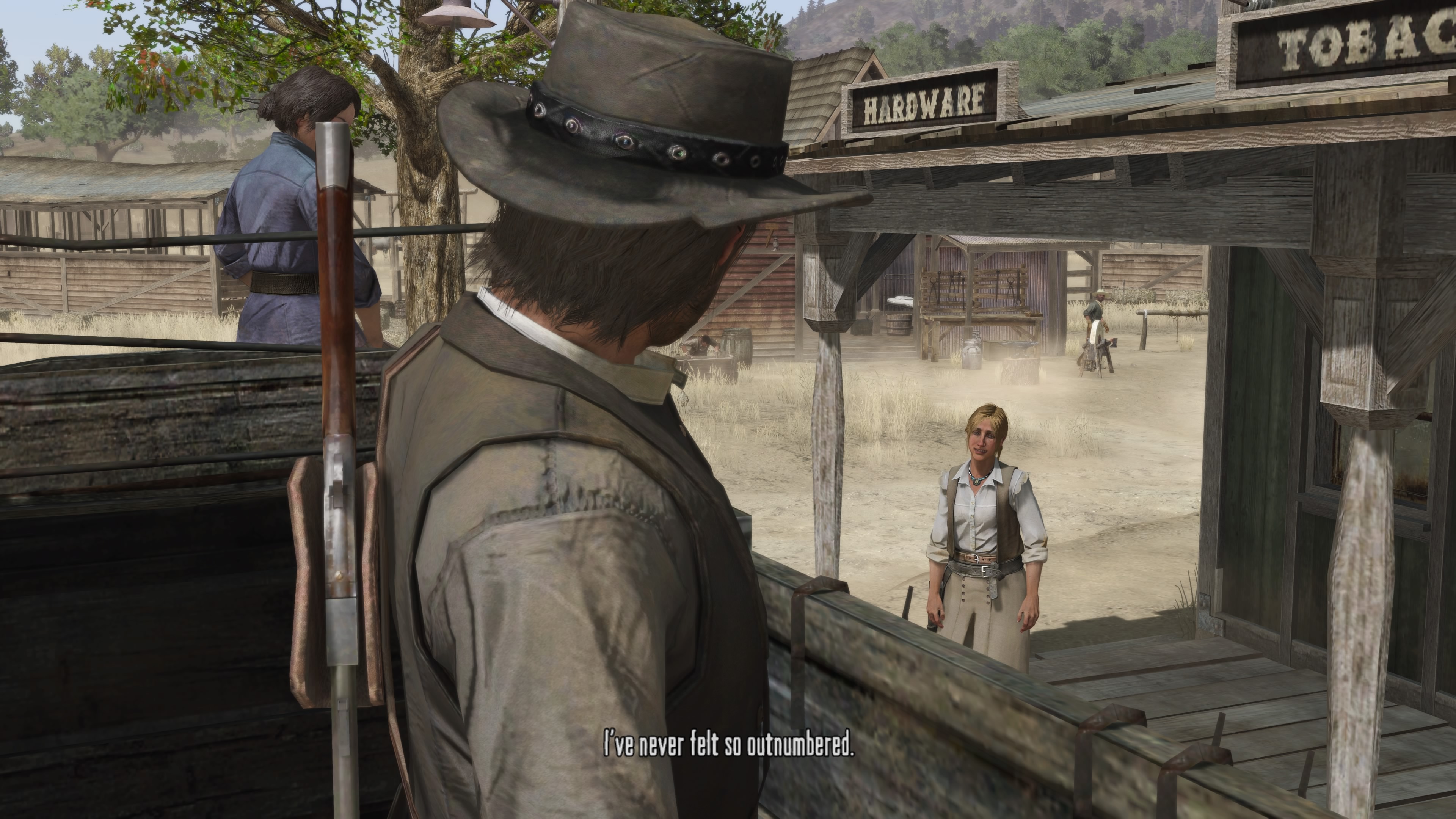
In the same way that Ubisoft's major releases all follow a very defined formula, RDR's gameplay flow is almost entirely defined by the typical Rockstar open-world formula, with the only real difference from GTA being that it takes place in the Wild West rather than some random city. Most of the missions involve running to a location to start, only to be told to immediately ride somewhere else where the actual action takes place while John talks to the mission giver as they trade insults with one another. I feel like this game in particular also has you riding shotgun in wagons very frequently as you slowly trudge across half of the map, so not only are you not really doing anything, but you can't even control the pace of travel either - and you are discouraged to skip to the destination by the conversation. I also find it a bit irritating how the game likes to abandon you in the middle of nowhere once missions are over, forcing you to go all the way back across the map again for the next one. Do these guys just teleport back home after the job's done? It feels like such a hamfisted way of forcing you to take the in-game transportation options, and just breaks up the pacing of the game which nukes any sense of urgency you might feel. That's not a problem though, since pretty much all of the missions in this game feel like short, disconnected skits; outside of the minor plot thread regarding Bill & Javier spanning the first 2/3 of the game, the missions rarely felt like they were building up to anything, which is especially true of the Mexico chapter. The New Austin missions did build towards getting John a gatling gun in an armored cart into Fort Mercer, but that was done through missions that each felt completely unrelated to that actual task. As a result, my overall impression of this game is more of a guided tour across a set number of landmarks than an actual adventure.
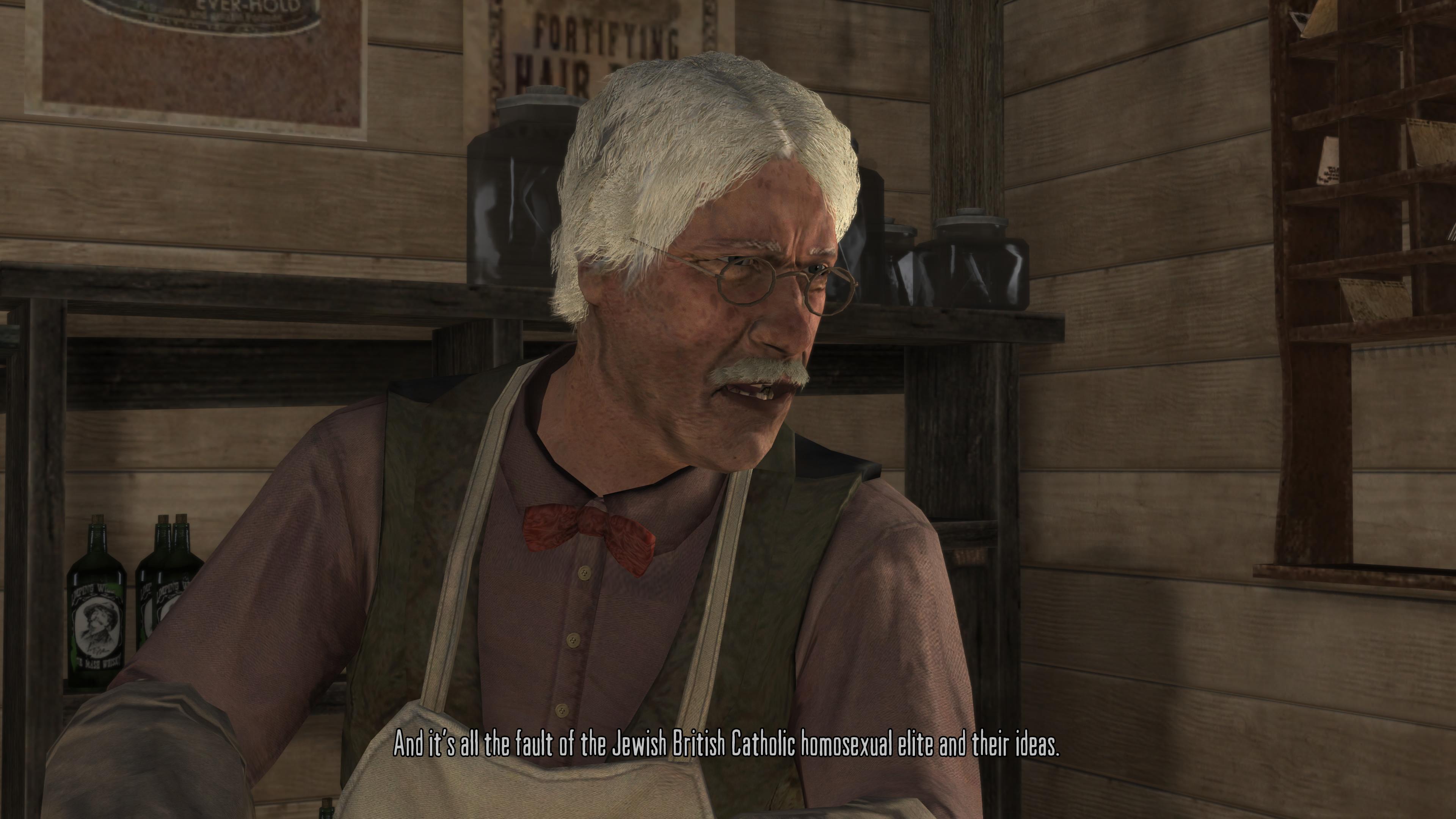
Outside of the main storyline, the only other content with real meat to it are the "Strangers" side missions involving unimportant side characters. For the most part, even these interactions tend to be brief cutscenes or conversations and varying forms of fetch quests, but what really irked me in this game is how formulaic they all felt. With the sole exception of "Remember my Family", which is actually the epilogue and not a real side mission, every single one of the Strangers missions was written as a generic interaction with people who are clearly a bit loony or malicious. Alternately, they seem normal, just with some strange requests - but as you help them out there's a sudden twist that reveals how fucked up they are! Once you see the pattern after the first couple of these, the other 16 of them are boring before you even begin. It feels like such a charmless and detached portion of the game, undermining what could have been an interesting atmosphere with content better reserved for a "Wild Wasteland" mode. Either way, outside of the stranger missions there are other activities and minigames (like gambling, hunting, gang hideouts, etc.) but as usual for Rockstar games these all feel undercooked and pointless; there is no incentive (via reward) to do them, nor are they fun enough to attempt on their own so they're basically dead content. How Rockstar manages to not have anything substantial or interesting to do in their games outside of the linear main missions is incredibly sad.
I feel like there's a serious issue regarding the tone of the writing in this game which kind of ruins my opinion of it, in that it's too heavily reliant on wacky or shifty characters to grab your attention and ends up being a one-trick pony. In the first chapter, Nigel, Seth, and Irish were all goofy characters that had no business being as much of a spotlight as they were. In the second; De Santa (and whatever the Colonel's name was) and Abraham were also a bit slow in the head. In the third, Edgar was written as a moustache-twirling curmudgeonly villain and Harold's personality needs no further explanation. Despite some better characters like Bonnie, Leigh Johnson, and Landon Ricketts, it's really only in the final chapter that the tone of the game actually settles into a good spot, and even that only lasts for about an hour or two all told. The consistency of this outlandish tone might not be wholly unreasonable, but I don't find it interesting nor funny, rather formulaic and a bit soulless. I feel like I'm playing GTA in the wild west, full of immature characters in an immature story for people in their early teens. It feels like the writing is afraid of being too heartfelt or serious and stepped it down to a level of corniness that would give them an excuse of being a "satire", playing into the corniness - but this only happens when the writing isn't competent or confident enough in the story to present it without an unnecessary smirk. It's amateurish, in my opinion, and should have been left in GTA. Thankfully, they learned that lesson for RDR2 which does not suffer from these same problems at all - but rather balances a great story with very dramatic moments against some really funny missions and scenes.
It's not at all a surprise since this is a console game, but the mechanics of RDR are dogshit. Auto-aim is overtuned to the point where the game will snap your aim and track your targets for you, which I suppose is necessary on console but completely dumbs the experience of shooting down to spamming L2 and R2 instead of actually taking the time to line up good shots. I've noticed that I can usually also track people through foliage, hilly terrain, and sometimes even walls; the game's combat practically plays itself as long as you can manage to keep your enemies anywhere on screen. Meanwhile, lots of object hitboxes in the world feel a size or two too large, which is a common grievance in combat where I line up a good angle, then realize my shots are being blocked by the air right in front of me because of an inconvenient box in the same ZIP code. Other times the guns will just feel inaccurate as heck in a number of other ways. There's also a really strange and kind of nonsensical set of controls for sprinting and horseback riding where you have to spam the X button the entire time to keep your character moving, which was unfortunately replicated for RDR2. Your character movement is pretty fucked as well, controlling like the classic lead block on a ski so common in third-person games. I never really got to the point where this game felt comfortable to play; it's stuck in this limbo where I'm struggling with the unnecessary complexity of actions, while simultaneously being bored out of my mind by the combat. The lasso controls felt impossible to me as an example; John just can't consistently lasso a horse and keep it that way, no matter what I do he'll just randomly let go and let the horse (or dude, for hogtying) get away scot free. The missions requiring the use of that piece of crap were almost unplayable because of how poorly the mechanic was actually implemented into a control flow. I really wish time was spent tightening the core controls instead of implementing all this other crap, because this game certainly needs it.
I definitely had fun with my time in this game and I don't regret playing it, if only to see the conclusion of the storyline that began in RDR2 (the prequel). It's nice to see some of the same areas, and there's definitely an attachment I had to the characters in the last chapter after having seeing all their struggles and their short-lived success throughout RDR2 and its epilogue. Beyond that, however, I really can't consider this to be a particularly good game - this to me was like any other trashy Ubisoft or Call of Duty game, fun to play one on occasion but not really memorable in the long term.
Undead Nightmare
I finally decided to come back to the world of Red Dead and finish what I started almost 2 years ago; I burned out a bit towards the end of the base game and really couldn't stand the idea of playing the expansion. I think it worked out for the best; Rockstar just recently came out with a performance and graphical upgrade across all platforms. To be honest, it doesn't seem to have much of an effect when playing on the PS5; the original PS4 version already looked pretty good, so some minor shading and lighting improvements aren't really noticeable in my case. Performance was also great on the PS4, and I saw no difference with the new PS5 version. The other platforms saw much more significant improvements though, which is really nice to keep in mind.
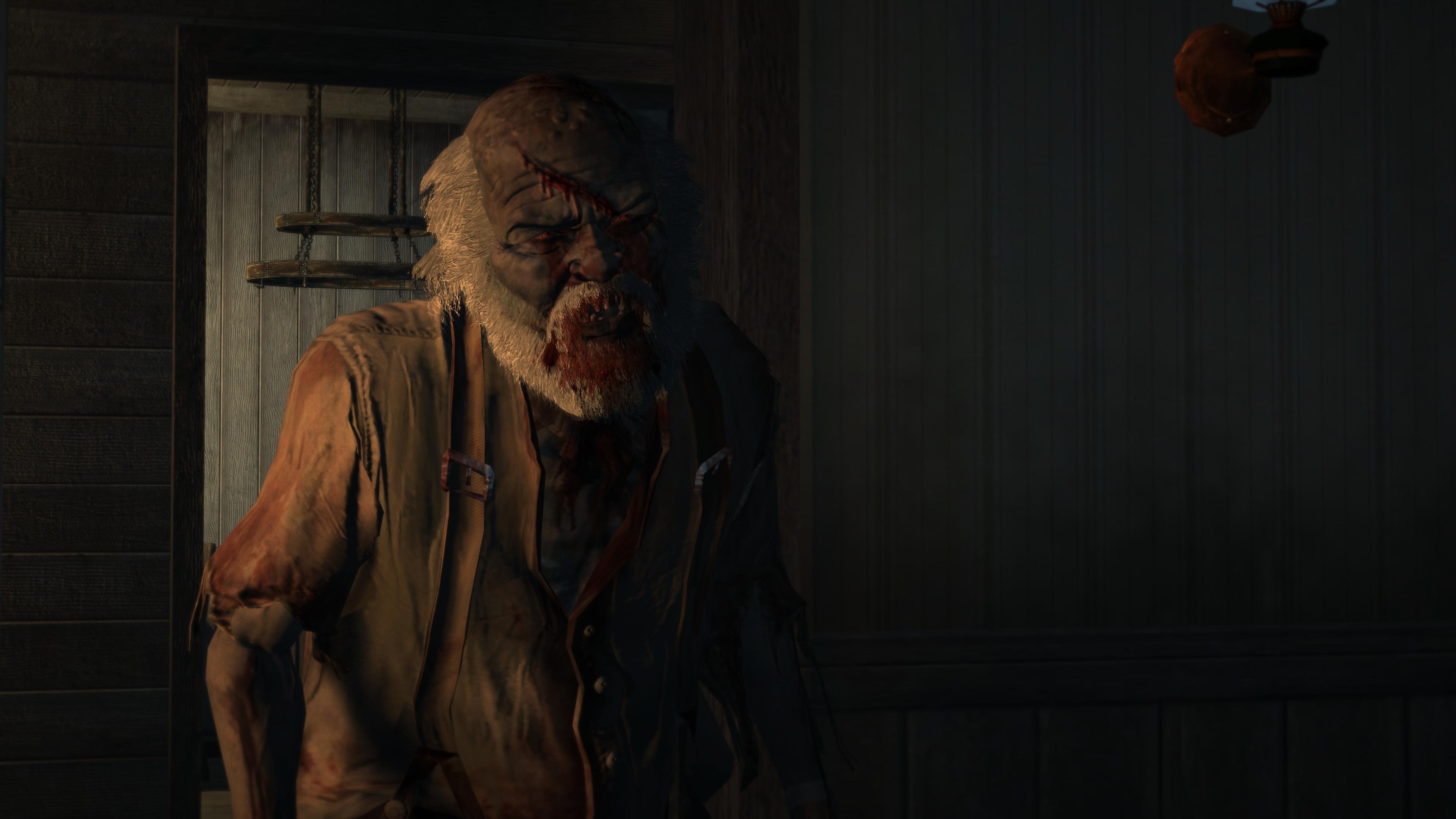
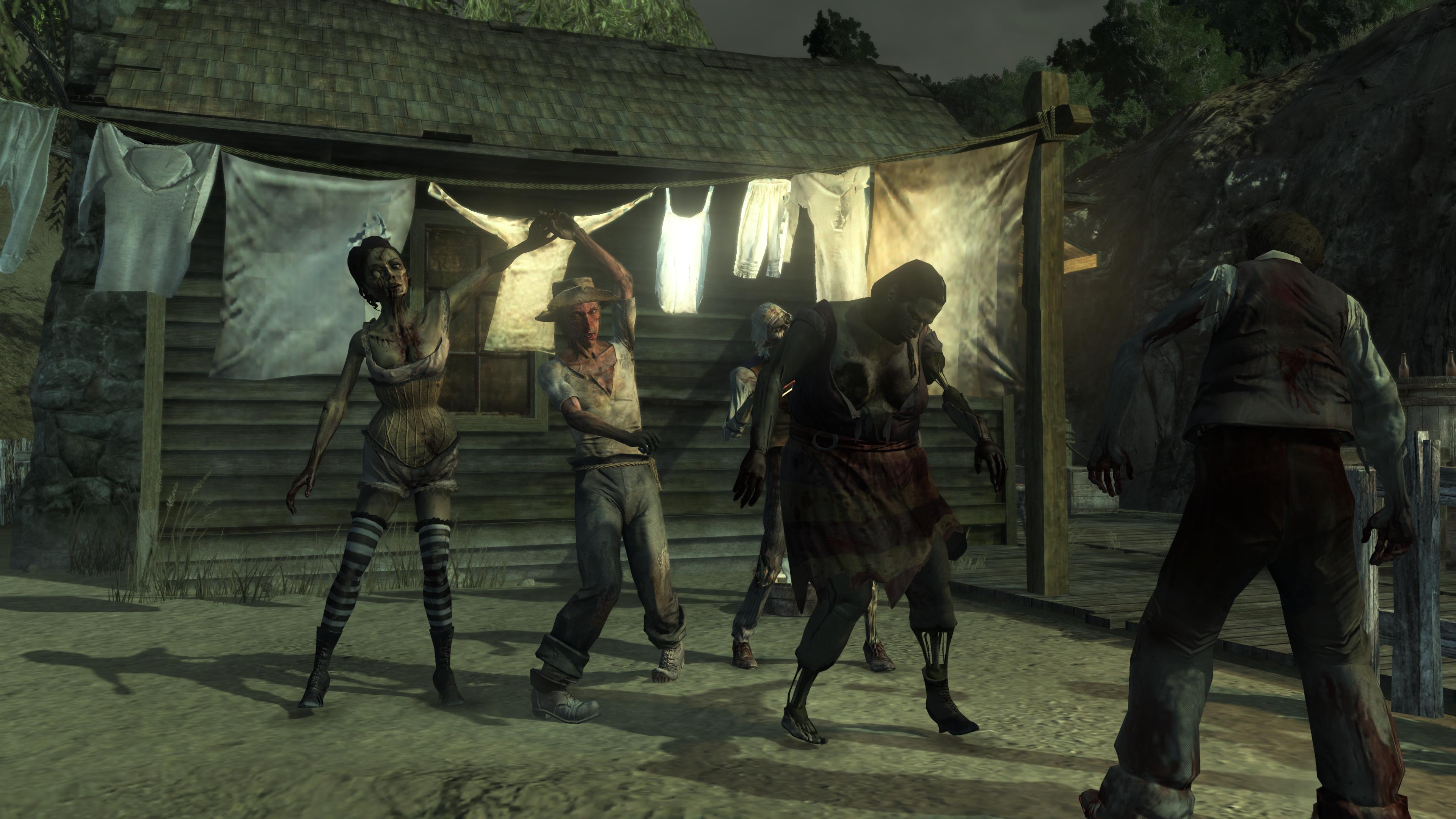
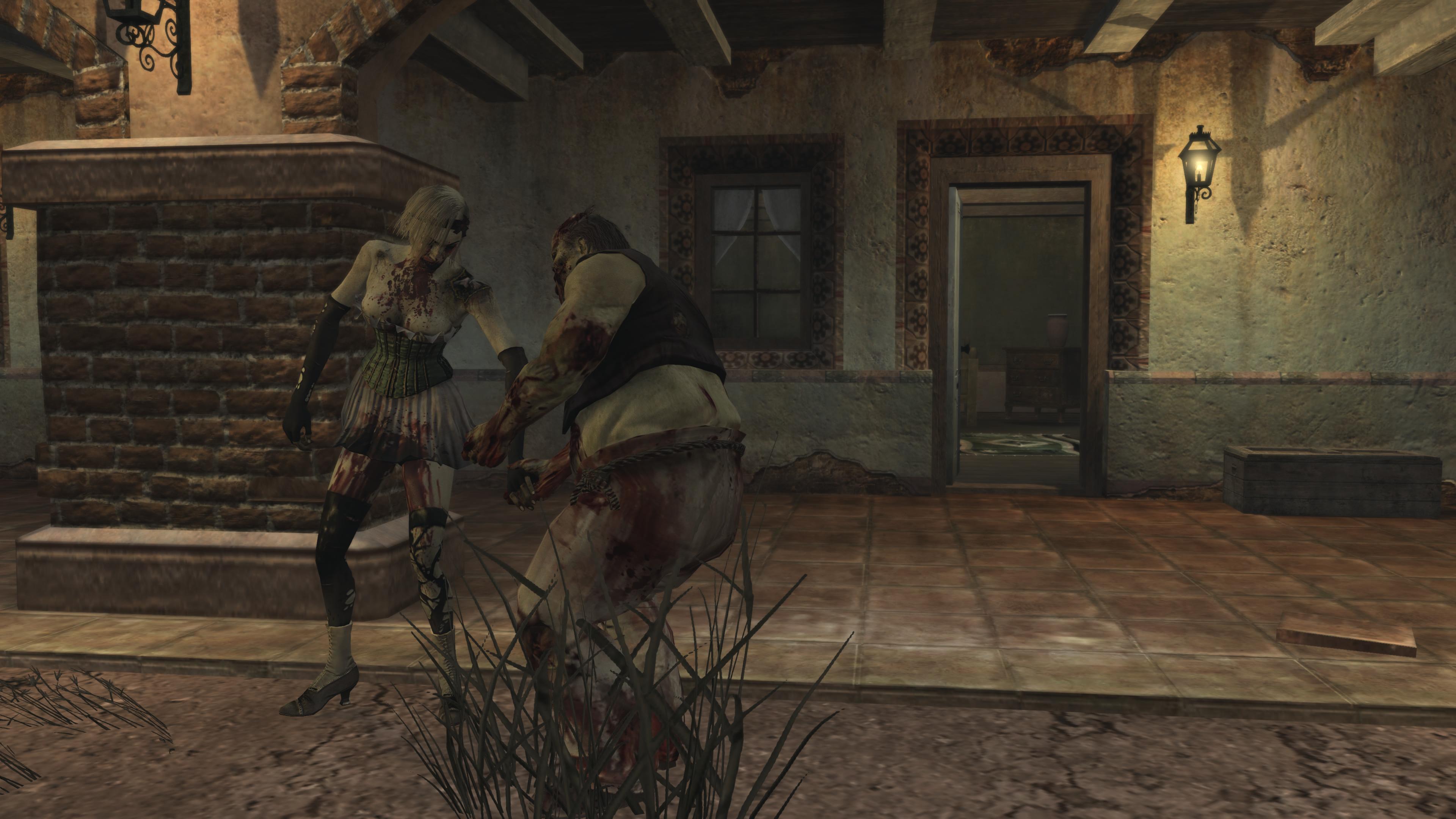
After coming back to the game with a fresher perspective, I feel like a lot of the comments I made above were probably a little bit harsher than what I'd say now, although I still can't completely disagree with the fundamental point's I've made. Undead Nightmare doesn't really deviate from the formula too much; you're in the same world and one of the most common tasks you're bound to do across the DLC map is to clear out towns and settlements of zombies, making them "Safe" areas to temporarily unlock save points and fast travel locations. Naturally, the smaller scale of the story means that most of the world feels a bit sparse, with the small but lively population in the base game reduced to a mere handful of survivors, few of which have any characterization. Outside of mission cutscenes and a few overworld encounters, the survivors in the towns just request ammo during a zombie siege and thank you once you mop up the undead. A bit ironically, the survivors almost feel more dead than the undead you're supposed to be killing; I barely noticed their presence the entire time I was playing. Some of this comes down to the gameplay design of these survivor camps; it's usually more of a hassle to get to the survivors than it is to simply help clear out the zombies, so I noticed I wasn't even doing the objectives to assist them directly (mostly by giving ammo), instead finding places to post up and blast zombies like fish in a barrel. Outside of the towns, there are also around 5 or 6 graveyards in the game that you need to cleanse by burning coffins on the grounds; these are basically a wave assault/survival challenge, and were good fun though a bit short and sparse in the story. I should note that towns can come back under siege infinitely, but this happens very infrequently and didn't bother me when playing.
This is probably a good avenue to talk about the rest of the gameplay changes. Most of the game is mechanically similar or identical to the base game; knowing what to expect, I didn't really have any issues with it. Weapons are earned from clearing out and saving the different camps, which I thought was a good idea and made the progression seem much more natural, starting with a small selection of mediocre weapons and leading to some extremely powerful ones by the endgame in Mexico. The Deadeye meter is massively buffed in Undead Nightmare, which was a necessity given the massive number of zombies you fight in comparison to the smaller number of more dangerous enemy gunmen in the base game. To more heavily encourage extensive use of it, it's nearly required for you to use headshots to kill things, since zombies have absurd body HP (to be fair, they are undead) - several shotgun blasts to the gut aren't enough to dispatch even the lowliest of regular zombies, but pretty much everything will die to a headshot from any of your peashooters. When I checked at one point late in the game, I realized over 95% of my kills were via headshot, with the remaining 5% mostly consisting of fire & explosive kills. Overall, most of the gameplay feels the same; not the happiest about the forced auto-aim, but it works much better here for agile zombies than it did for other dudes who mostly sat in cover with easy headshot angles. I did kind of like how UN had no concept of money or currency, though; all your ammo needs to be scavenged from bodies or chests found in each area. The way it's balanced ensures you'll have a rotating surplus of ammo across your weapon types, and the result for me was that I was constantly switching between almost everything; revolvers/pistols, shotguns, repeaters/rifles, and snipers. Multiples of the same weapon type felt a bit meaningless since I couldn't notice much of a difference in stats, but the different weapon categories were all useful throughout.
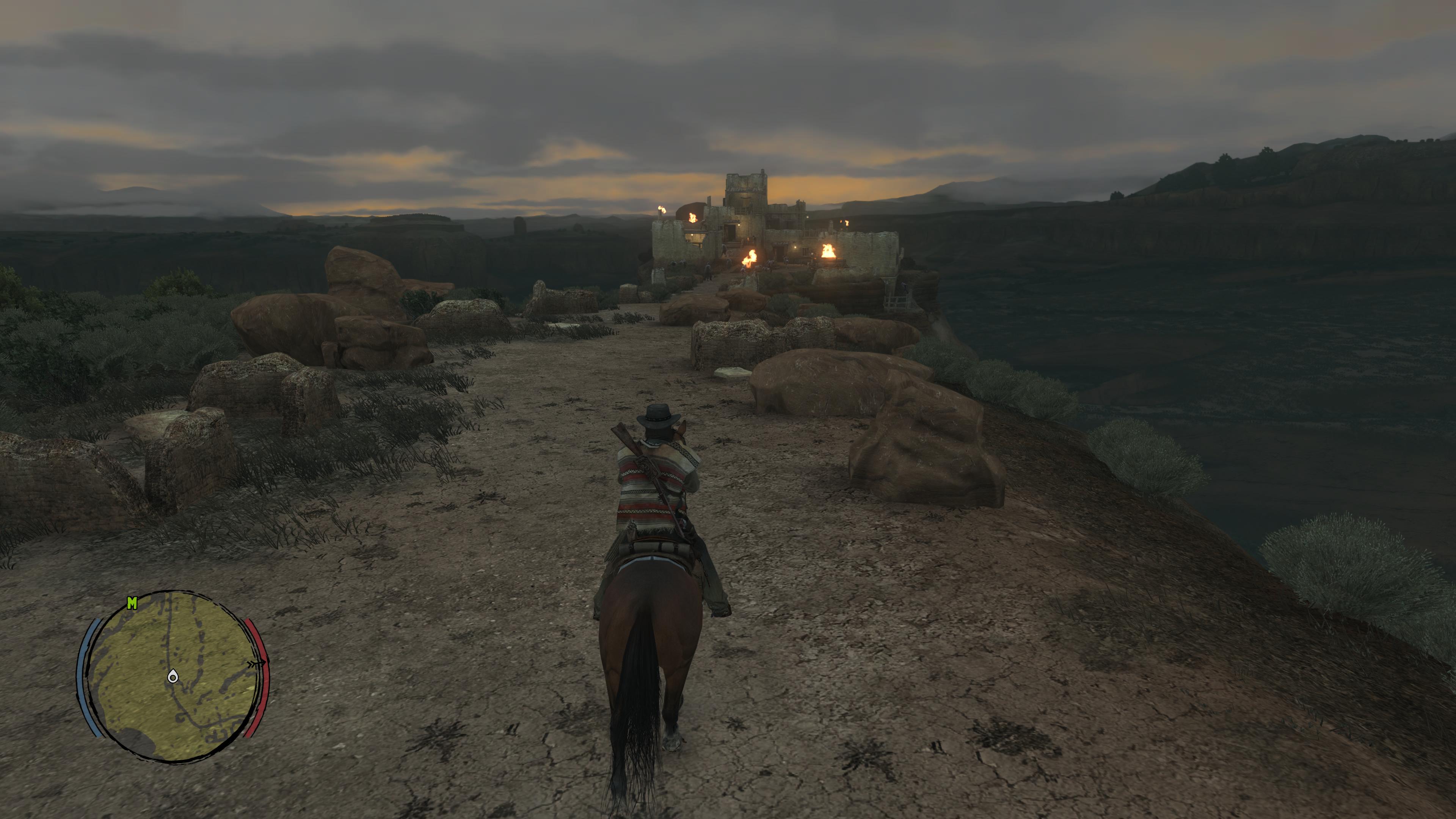
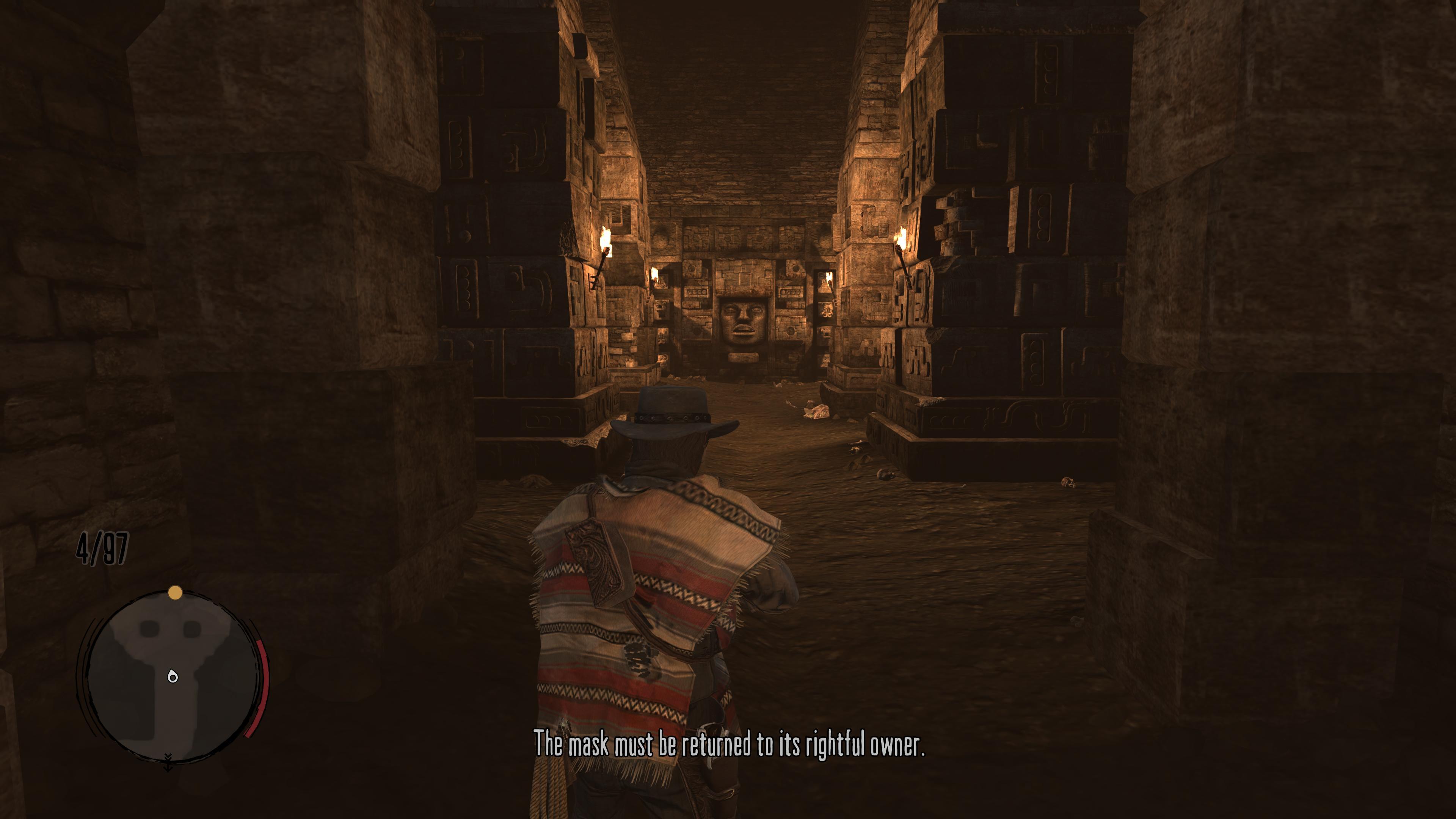
The story is similarly very simple as well; the dead across the land are suddenly afflicted with a sickness that reanimates them and makes them hunger for flesh. That's about all you really know until the last few missions, where you learn that Abraham Reyes kicked this off by stealing an ancient Aztec mask of some kind, cursing the people of both Mexico and America (unknown how far it spreads beyond the borders of the game's world). In any case, the tone of the DLC makes no attempts to adhere to any kind of sincerity, with lots of goofy and outlandish characters and situations, particularly with characters dying in really dumb ways to the undead. While this kind of hurts the main story's impact, it's hard to keep the writing for a zombie outbreak DLC straight-laced and serious, given that the concept is goofy in of itself. I also feel my opinion of RDR1 over time has shifted slowly to be a lot more forgiving of its tone, and that carries over into the way this game was handled. All the GTA games and RDR2 have similar quirks in juxtaposing ridiculous characters and situations to lampoon writing and character tropes; I think they're handled far more masterfully in RDR2, but I can appreciate what they're trying to do.
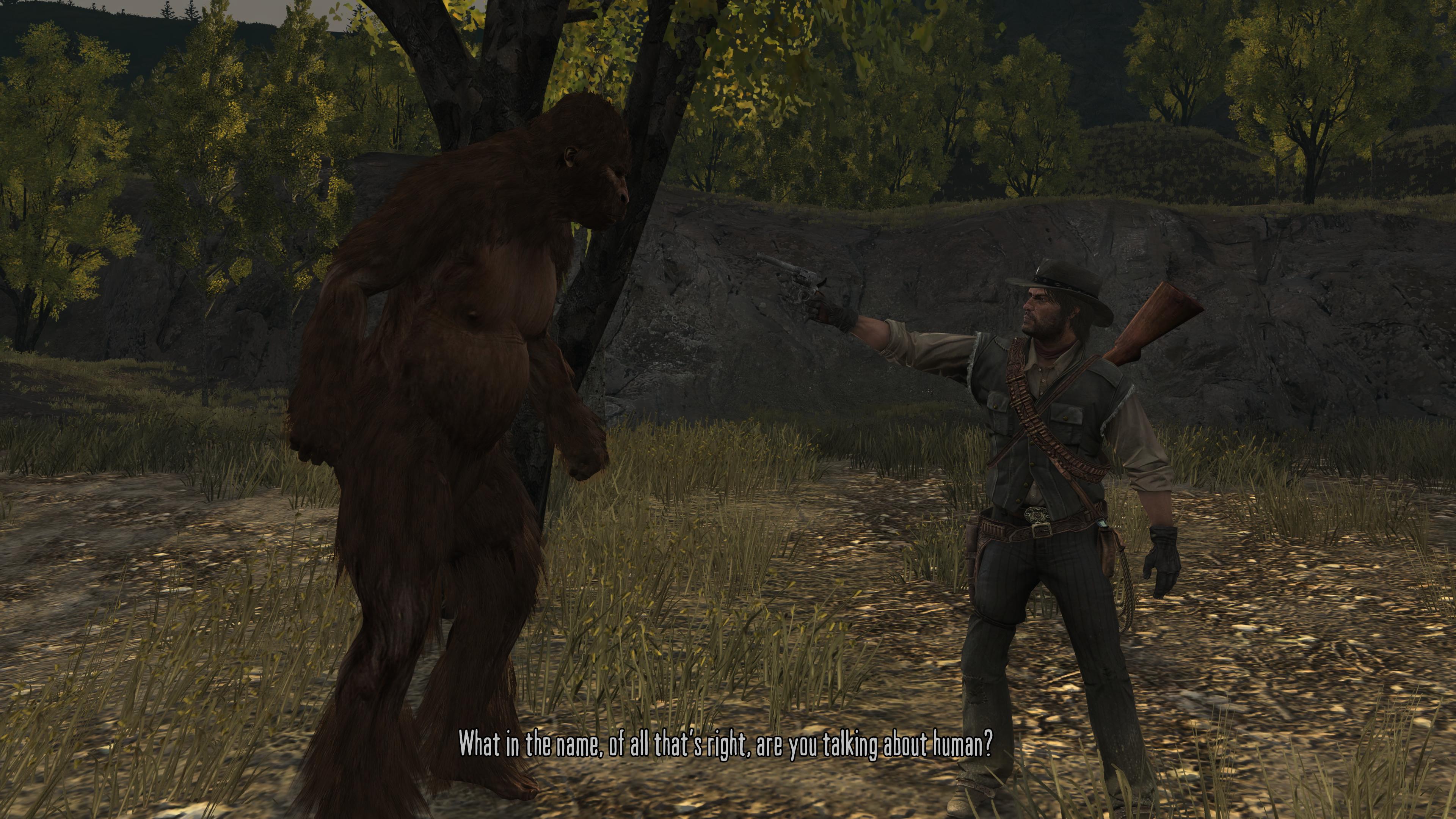
Not too much else to say; it's just more RDR. It's a very worthy add-on, especially since it's free with pretty much any modern version of the game, but I still think it's a bit exhausting to have to re-explore the entire map from nothing again for this DLC. It's inevitable that the world feels a little bit emptier, especially since most of the people in it have been zombified but it's a well done & complete experience. BTW I feel really bad for the Sasquatches :(