Okami
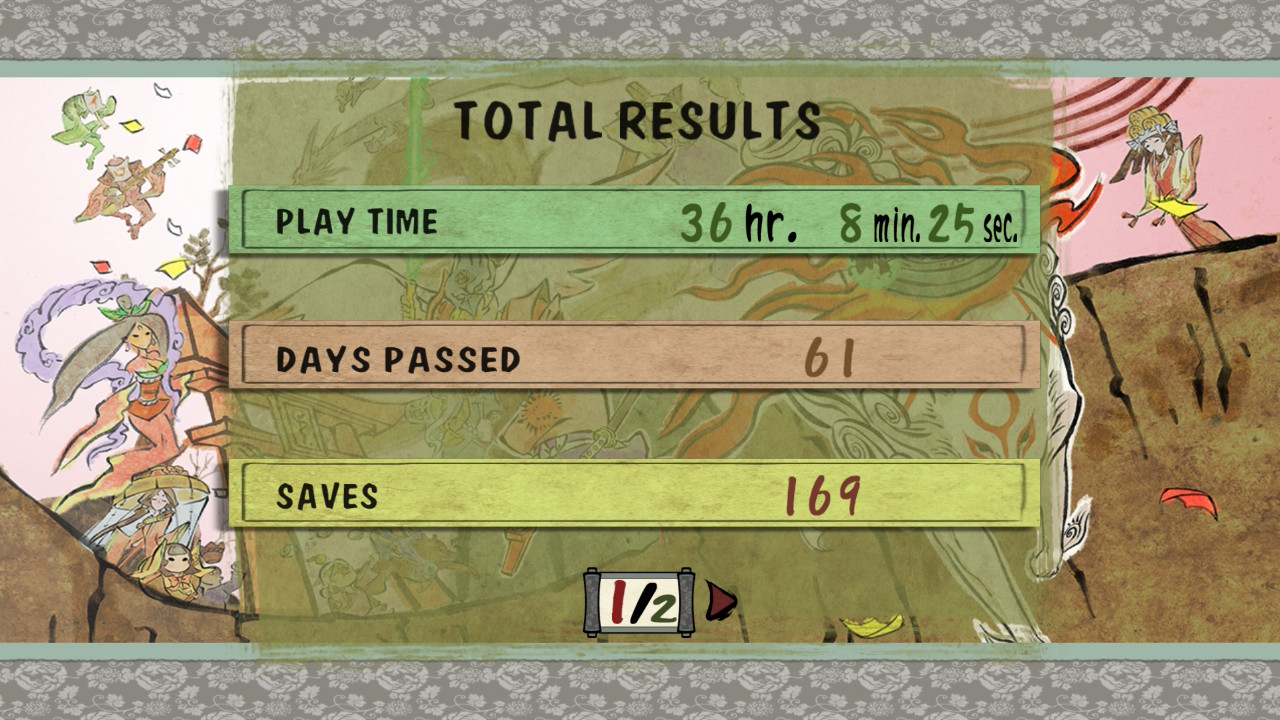
Playtime: 36.1 Hours
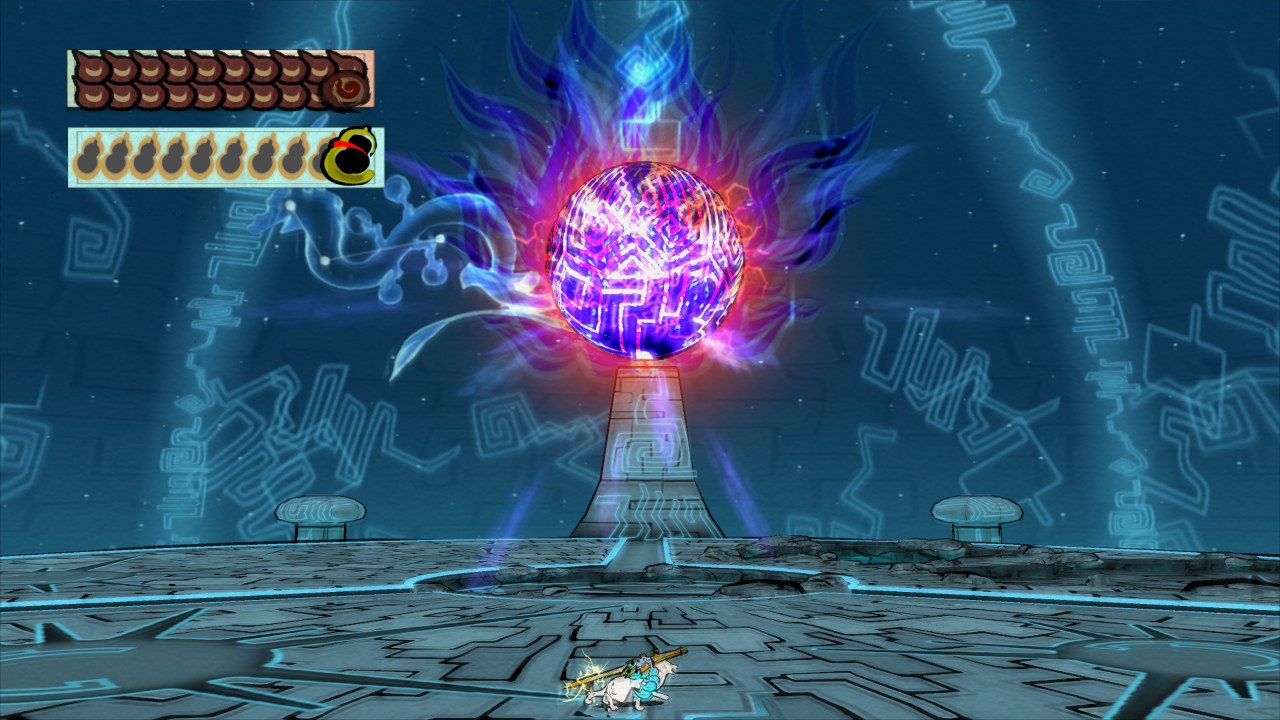
Finished 19 March 2026.Played the Switch HD re-release, but on the Switch 2. Most of it was handheld in 720p, but near the very end of the game the Switch 2 got an update adding a "Boost Mode" that allowed me to play the final sections in Kamui at 1080p handheld. The game looked and played great either way but the improvements were still appreciated. The final sequence aboard the Ark of Yamato was played docked, because I felt it had to be.
This game has a ton of collectibles and other things to accomplish; not overwhelmingly so, but still enough to make me uninterested in going for 100%. I did still try to get a number of things completed to a pretty satisfactory degree though:
- Unlocked all Praise upgrades (15 HP, 10 ink pots, 4 astral pouches, 7-digit wallet)
- Found all Sun Fragments, bringing total HP up to 20
- Obtained all Divine Instruments, and upgraded all 15 of them with Gold Dust
- Obtained all Holy Relics except the String of Beads which is only obtainable in NG+
- Unlocked all Dojo upgrades except Brown Rage (which is worthless after getting all needed Demon Fangs)
- Recovered all Secret Brush Techniques, and upgraded Power Slash & Cherry Bomb to Lv3
- Finished most of the "side quests" or activities in the game
There technically are a few things left to do if I really want to fully 100% the game. It'll require starting in NG+, which was already enforced for the last Holy Relic - but that saves a ton of my equipment & stats that will make things far easier the second time around. There's a couple of activities which I couldn't be bothered to fully complete (rolling the beehive to Sleepy, race w/Kai, etc.). Fully completing the Animal Tome, Fishing Journal, getting all sources of Praise and obtaining all the Stray Beads (currently only around 50%) could take up a good chunk of time in a more completionist playthrough. I'll leave that to later, if ever, though - I'm very satisfied with my experience in this game.
The reputation of this game is very well-deserved. It's more of a cult classic, given that it's never enjoyed the same level of popularity as the Zelda games, but having actually played the game, I don't think it's anything short of a masterpiece. Even beyond the immaculate visual theming of the game, the episodic plot never really got old for me and the central brush mechanic was utilized amazingly well, making the system completely unique to the game (or series, including Okamiden) while not feeling like a janky gimmick in the slightest. There are few enough games that have this level of quality for any individual component, be it the writing or gameplay, yet the fact that almost all of it came together perfectly for this game makes it truly special.
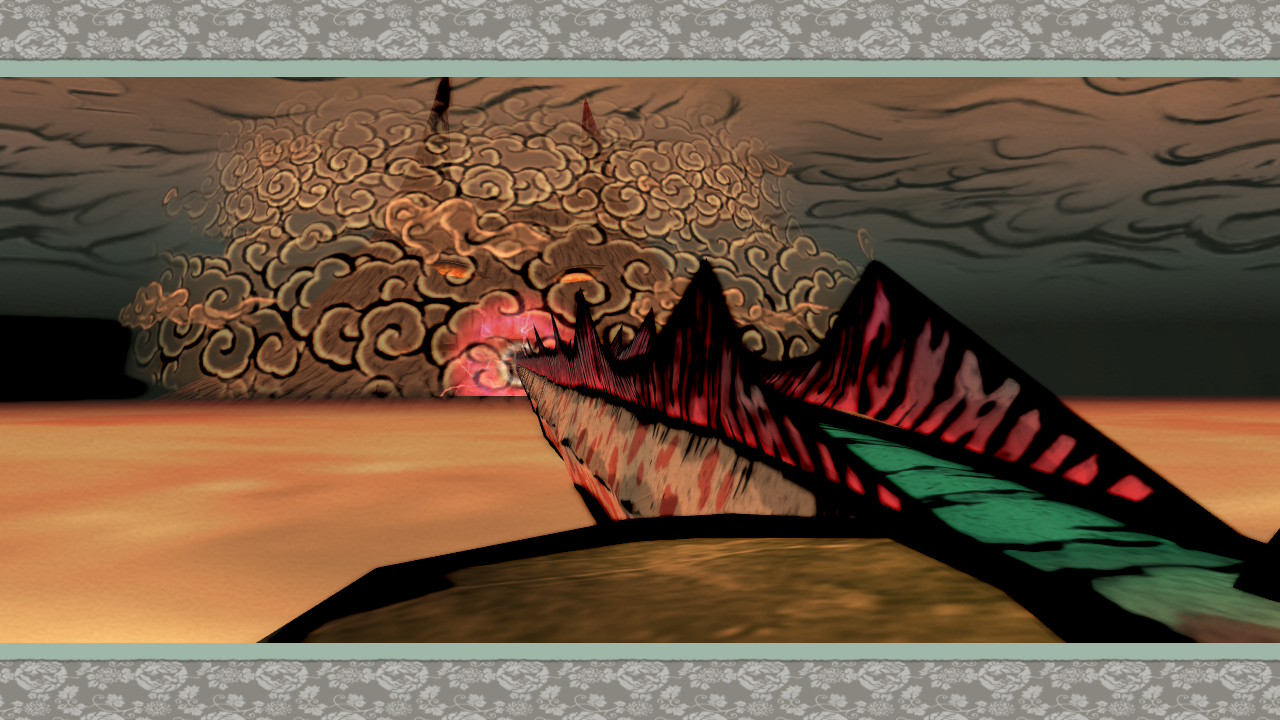
I knew the game was on the longer side going in, but I honestly didn't expect where the length came from; I kind of figured from the way Orochi was portrayed in the beginning of the game that it would be the central villain, kind of like how the Zelda series basically just tells you Ganon is the big bad right off the bat. Instead, I was very pleasantly surprised to see the end of Orochi only about ~13 hours into my playthrough, and with it an end to just the first part of a greater epic that the writers of Okami wished to tell. With this happening a second time with Ninetails' attack on Sei'An City, and arguably even a third with Lechku & Nechku threatening Kamui before the true ending aboard the Ark of Yamato, the story of the game strikes a pretty good balance overall in my opinion. You always feel like you're making meaningful progress towards eradicating the current evil spirit or demon, without constant repetitive sequences where villains get away again and again, yet there's always something new to catch your attention as well. Note that there are some repeats, especially having to fight Orochi 3 times (current-day, 100 years ago, and aboard the Ark) but it doesn't really feel like the game is spinning its wheels, even in those situations.
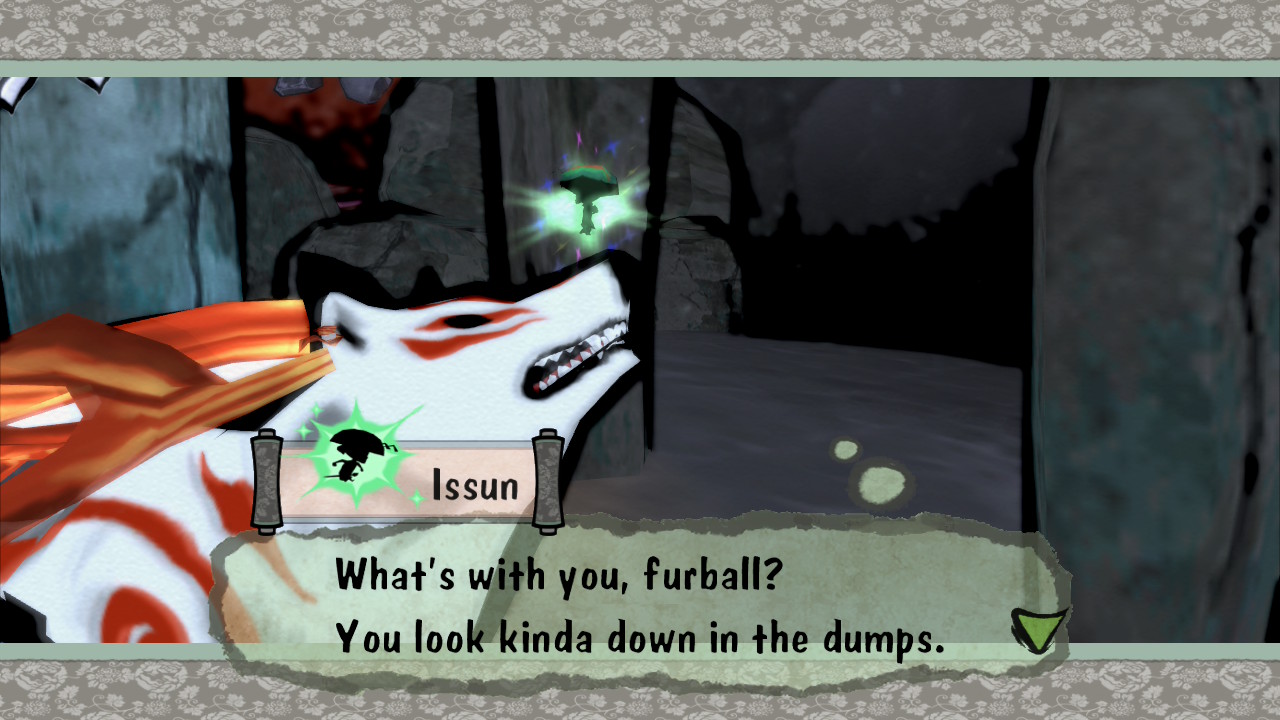
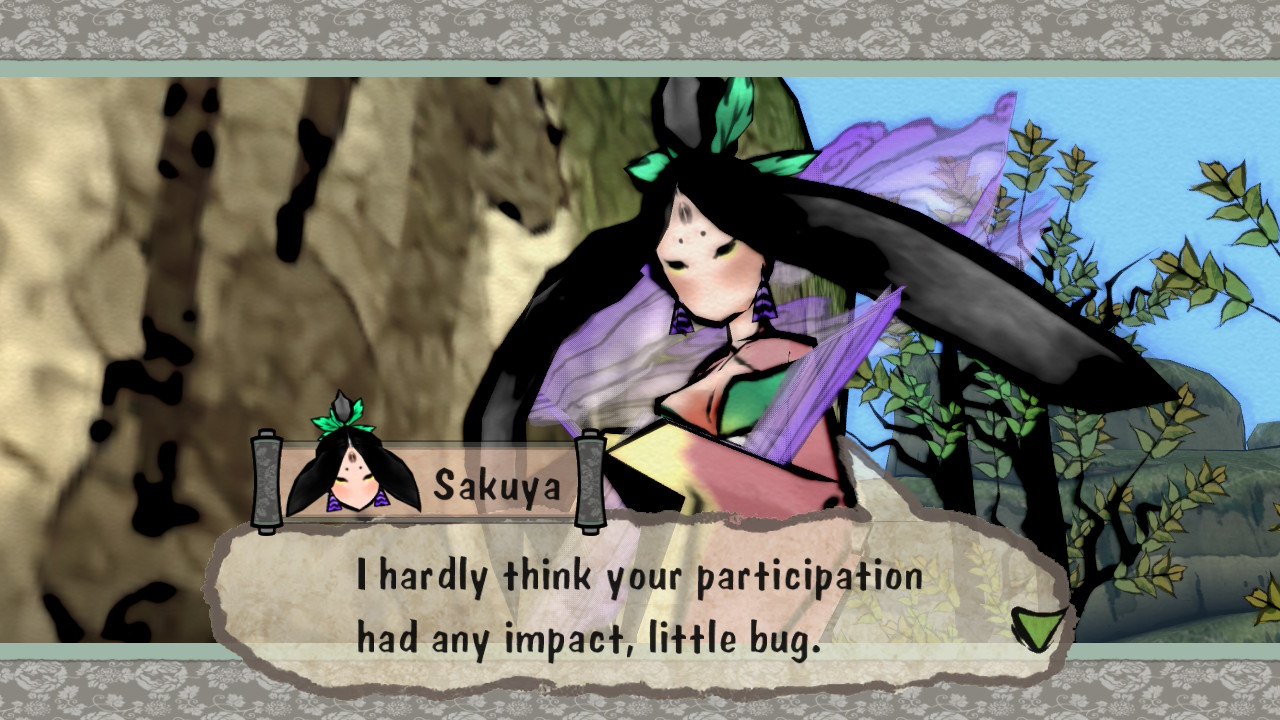
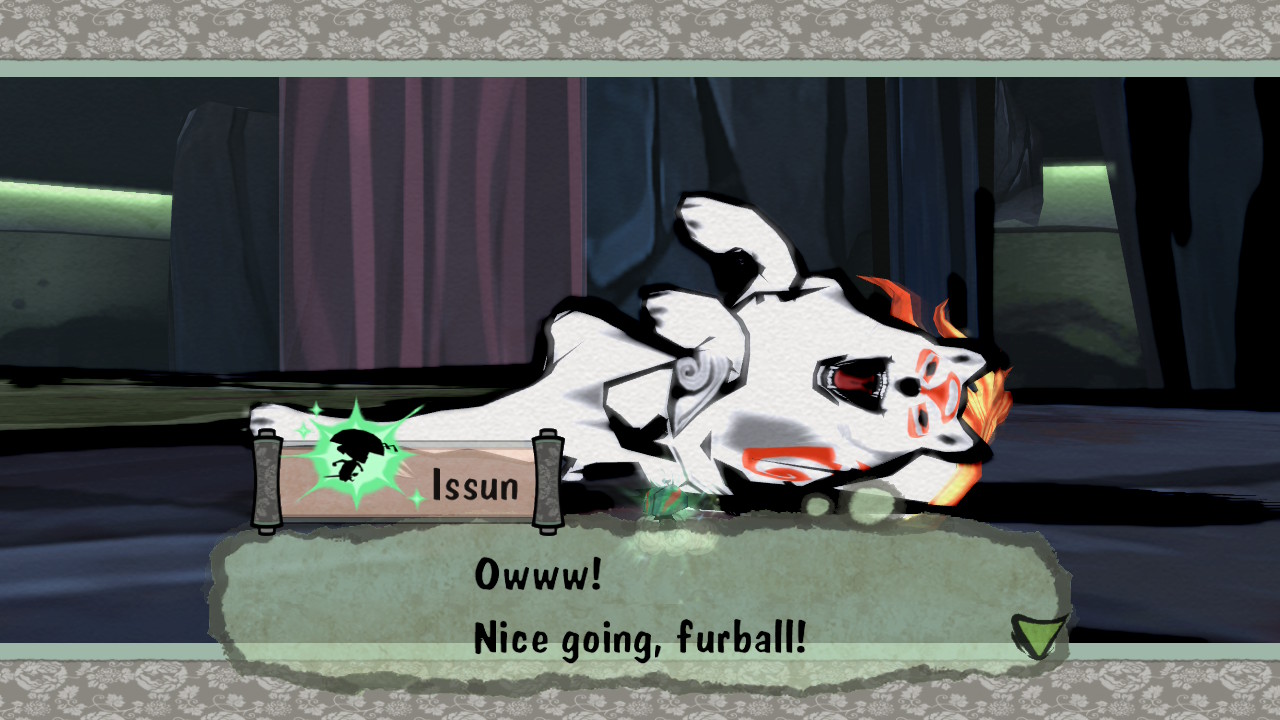
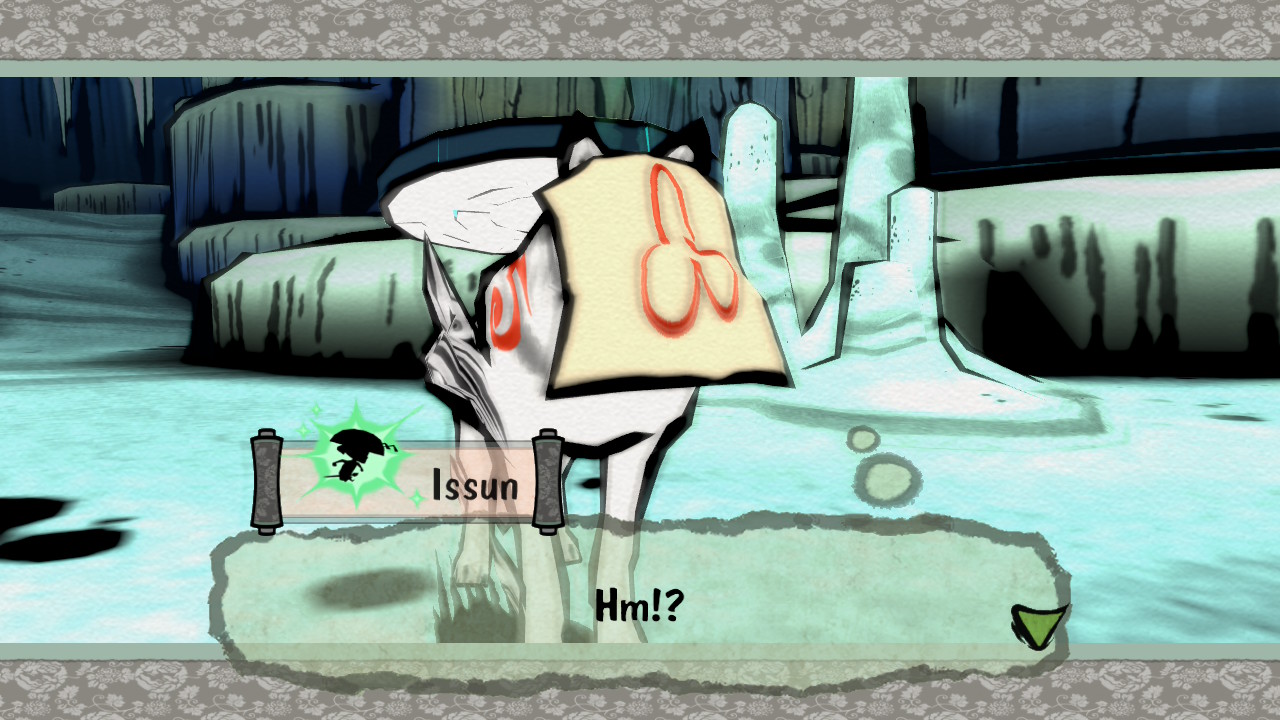
A really big achievement of this game in my opinion is how well the writing is balanced between a whimsical, comedic tone that never feels smarmy or forced, yet the big moments are allowed to be as serious as the situation demands to hammer in the gravitas of the threat and the heroism of Amaterasu's actions. This feeling of earnestness permeates the entire game, making it really feel like a story the writers wanted to tell, in the same way that the rest of the game feels like a game that the developers really wanted to make. It's probably worth saying that some people find a number of the characters to be a bit insufferable though, especially Issun for his somewhat immature and perverted behavior. It didn't really bother me personally given that his personality reflect the fact that he's factually in his angsty teenager phase. A number of other characters are also a bit one-note, designed to fit into the story but without a chance to really develop their personalities; that's just the nature of a story of this scale, not spending too much time with most characters.
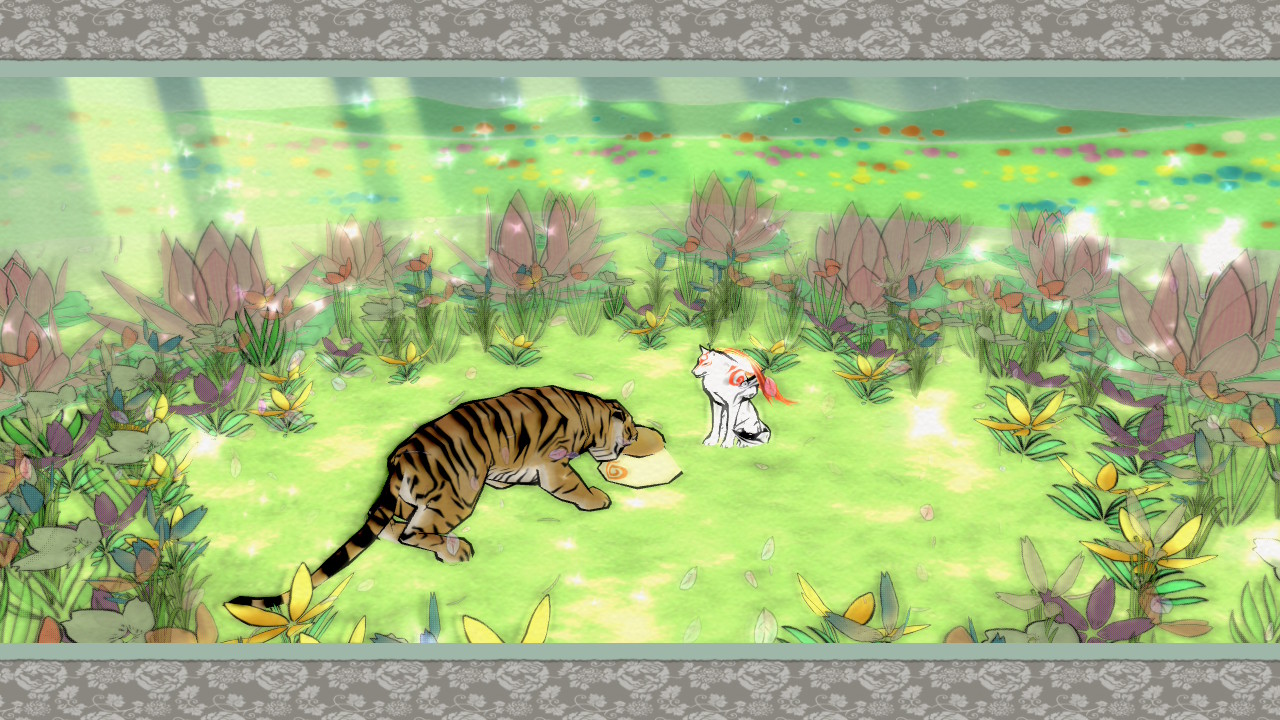
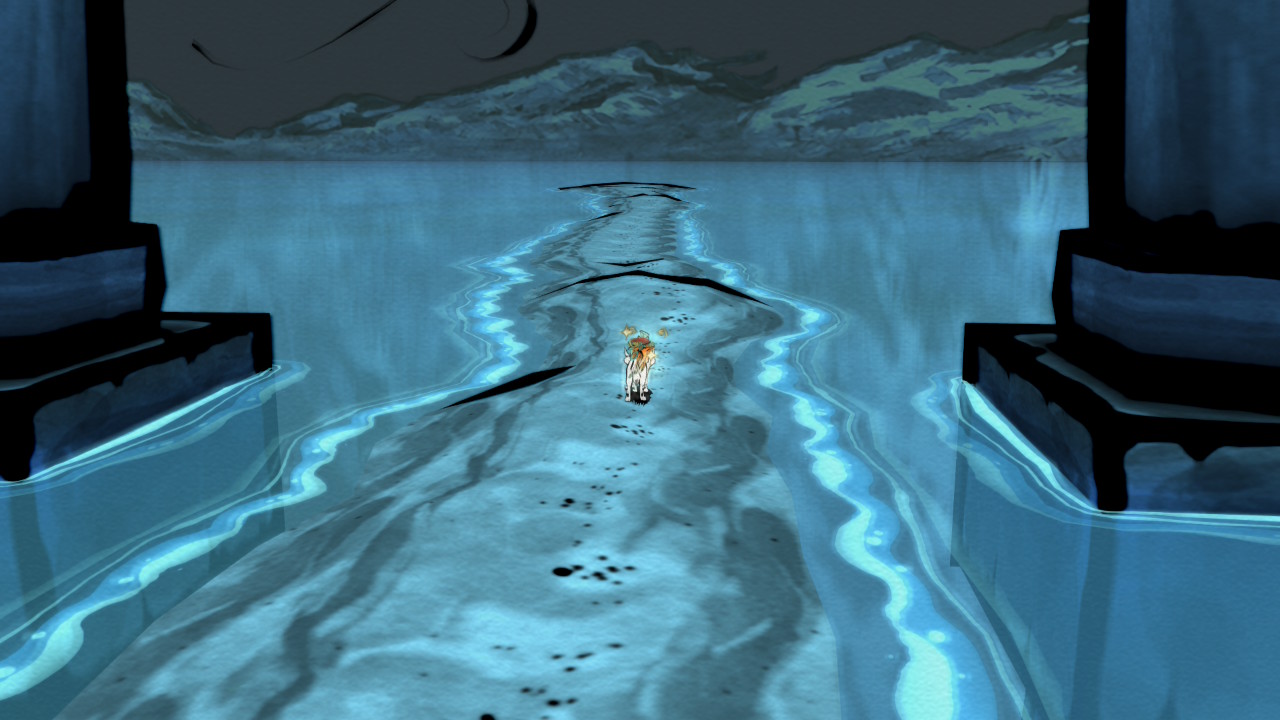
The world map also takes you to plenty of different places during Amaterasu's adventure, though the actual environments you visit are somewhat limited. Lots of fields and coastlines make up the majority of the game set in Nippon, that generally look vaguely similar to one another. What's more is that the biggest chunk of exploration in the entire game happens in the first arc leading up to Orochi's defeat; Ninetails's arc only explores the two halves of Ryoshima Coast in depth, while the final section in Kamui themed very differently to match to colder northern climate yet is fairly small and short in scope. The game makes up for this by having lots of interesting dungeons for the game's greater moments; the Demon Palace, Oni Island, and Wawka Shrine are all expansive dungeons in their own right, among a number of smaller ones between them. Speaking of Kamui, I thought it was really cool how the entire region is a reference to Ainu culture and heritage, instead of sticking entirely to the more generic Japanese aesthetic of the Nippon regions.
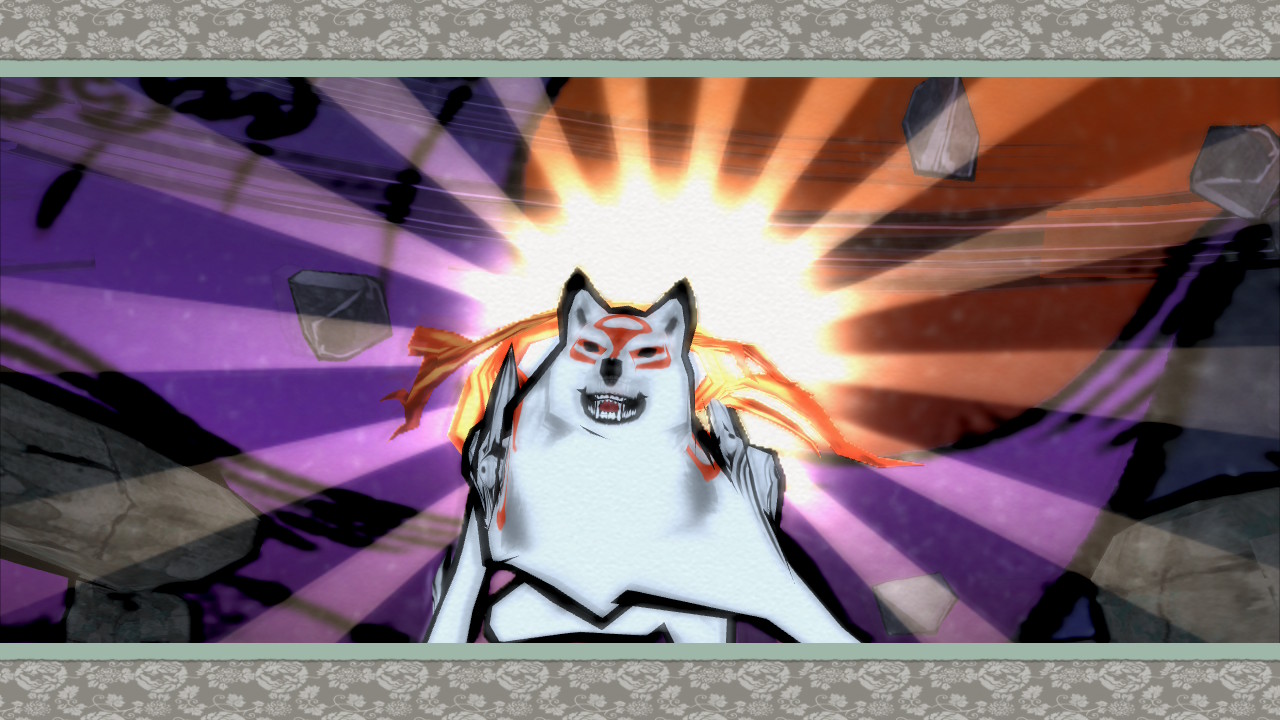
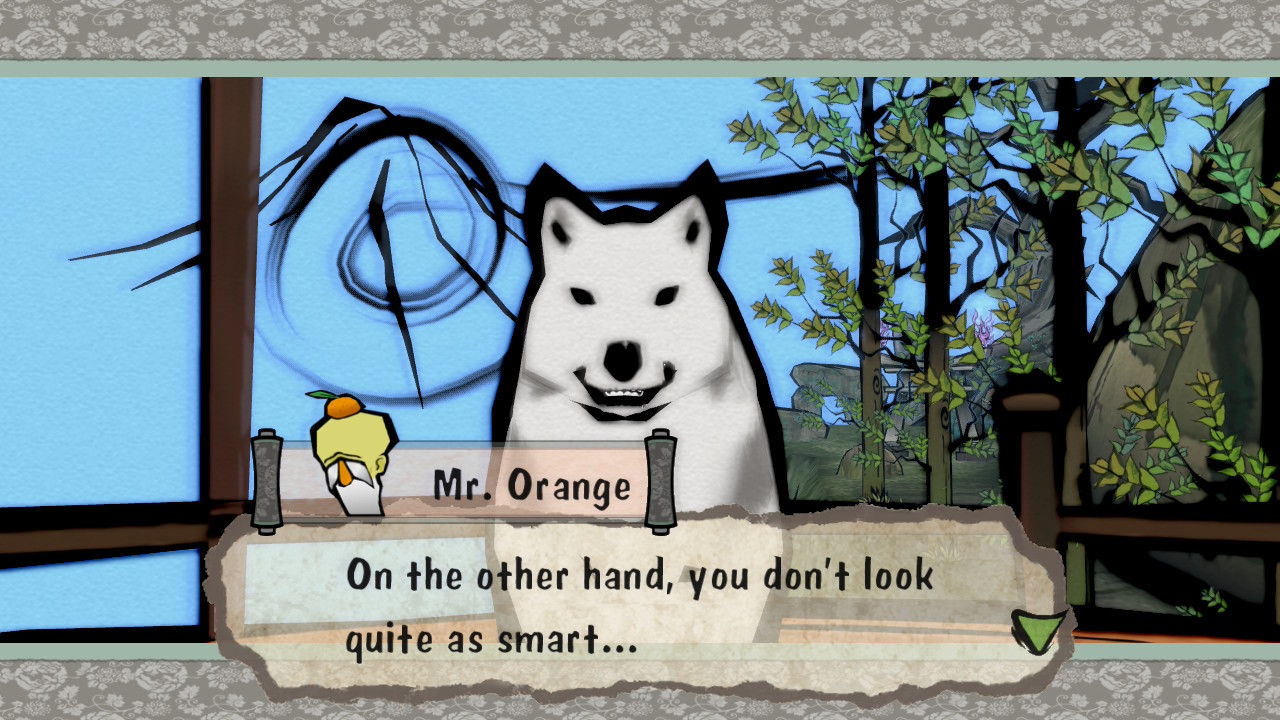
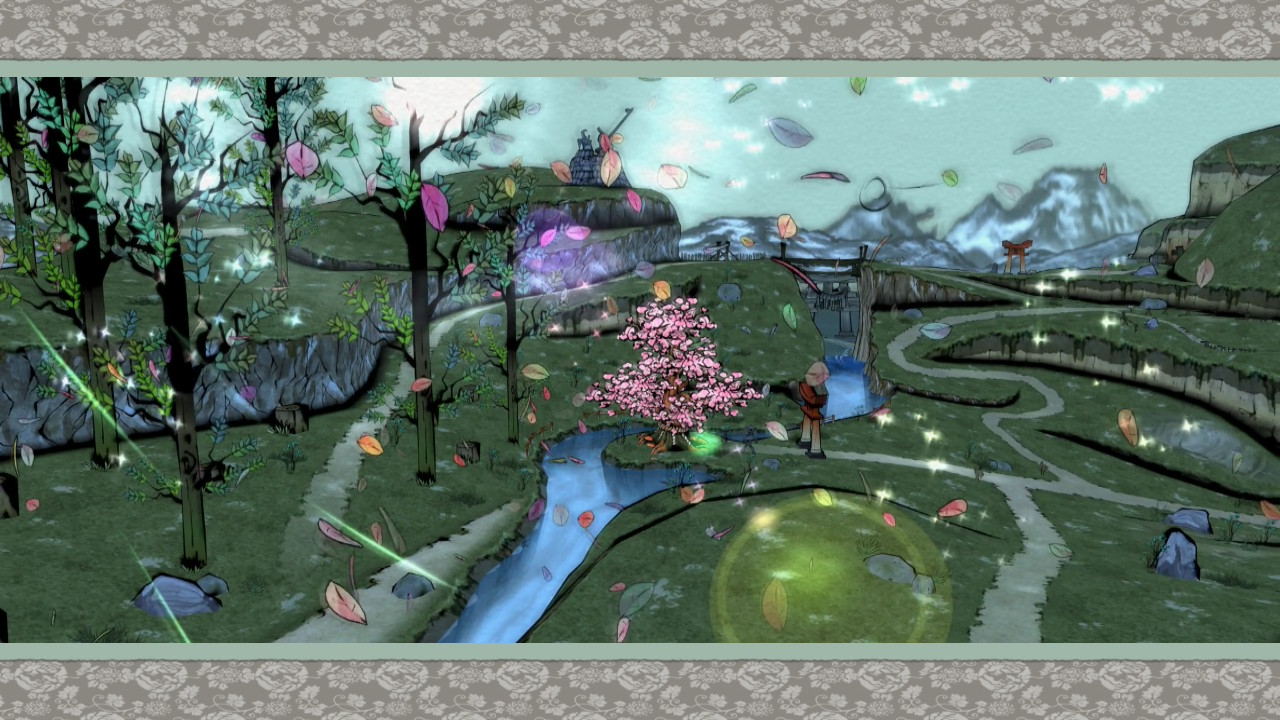
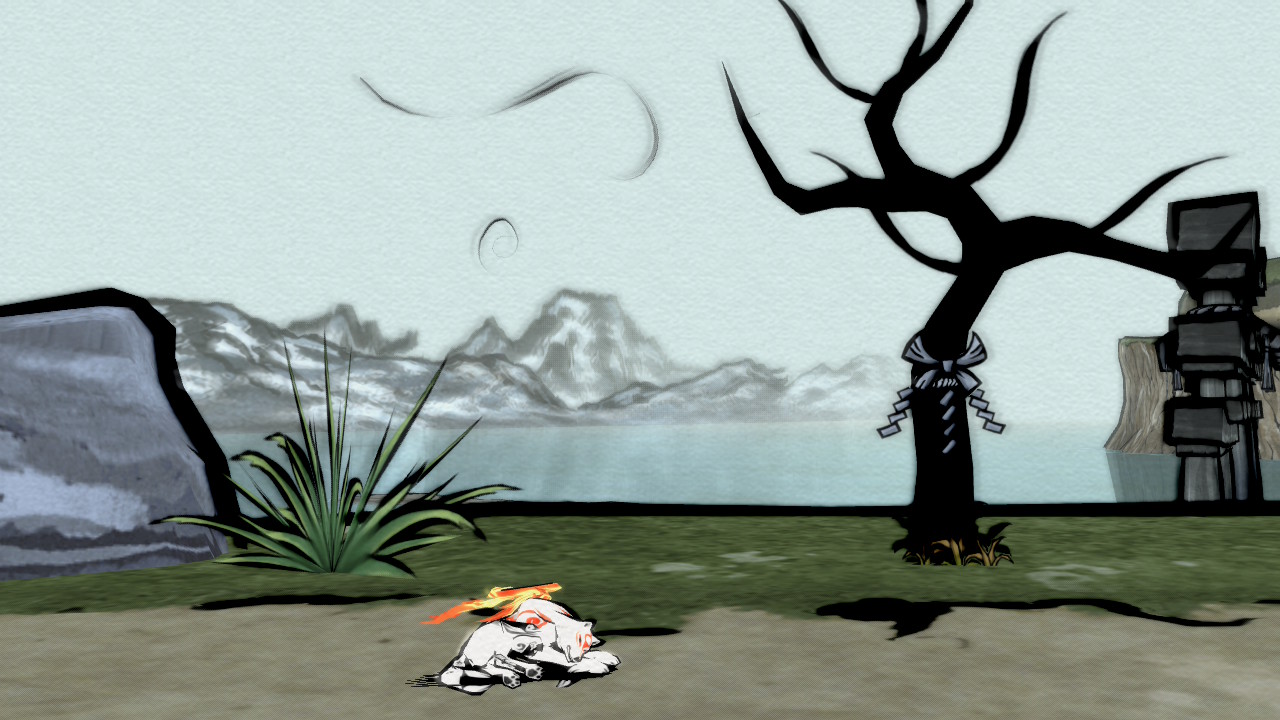
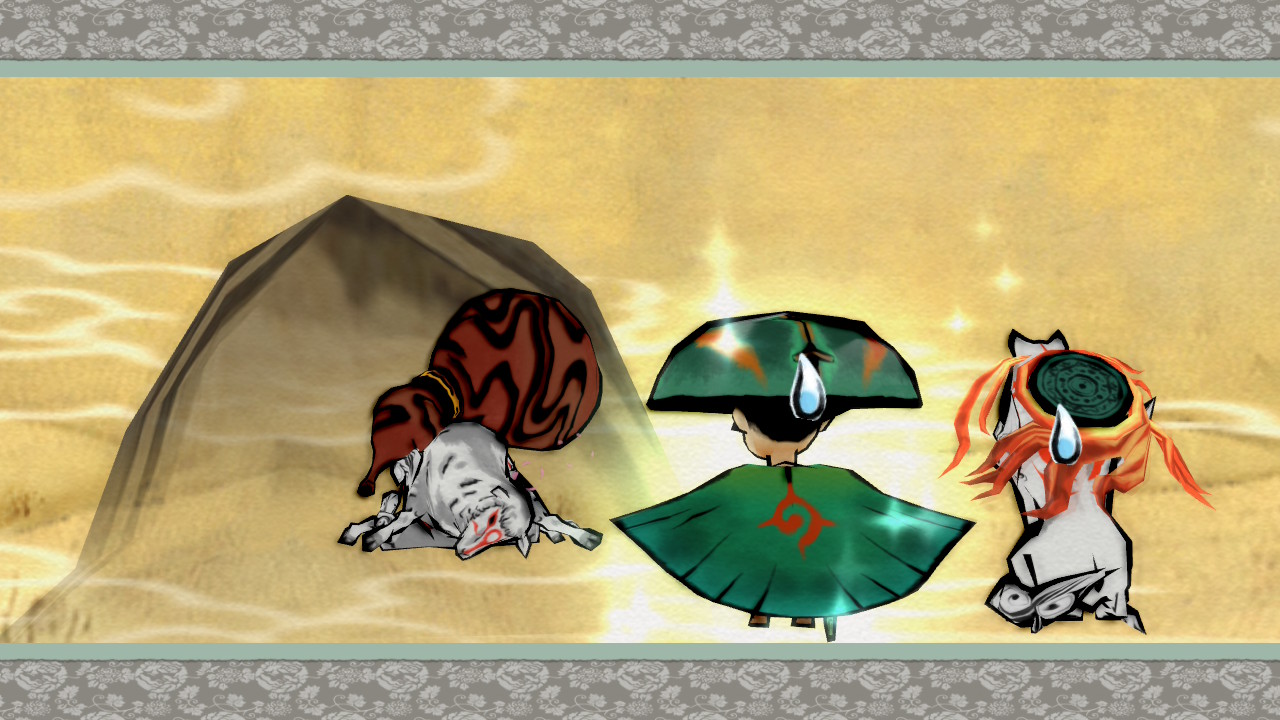
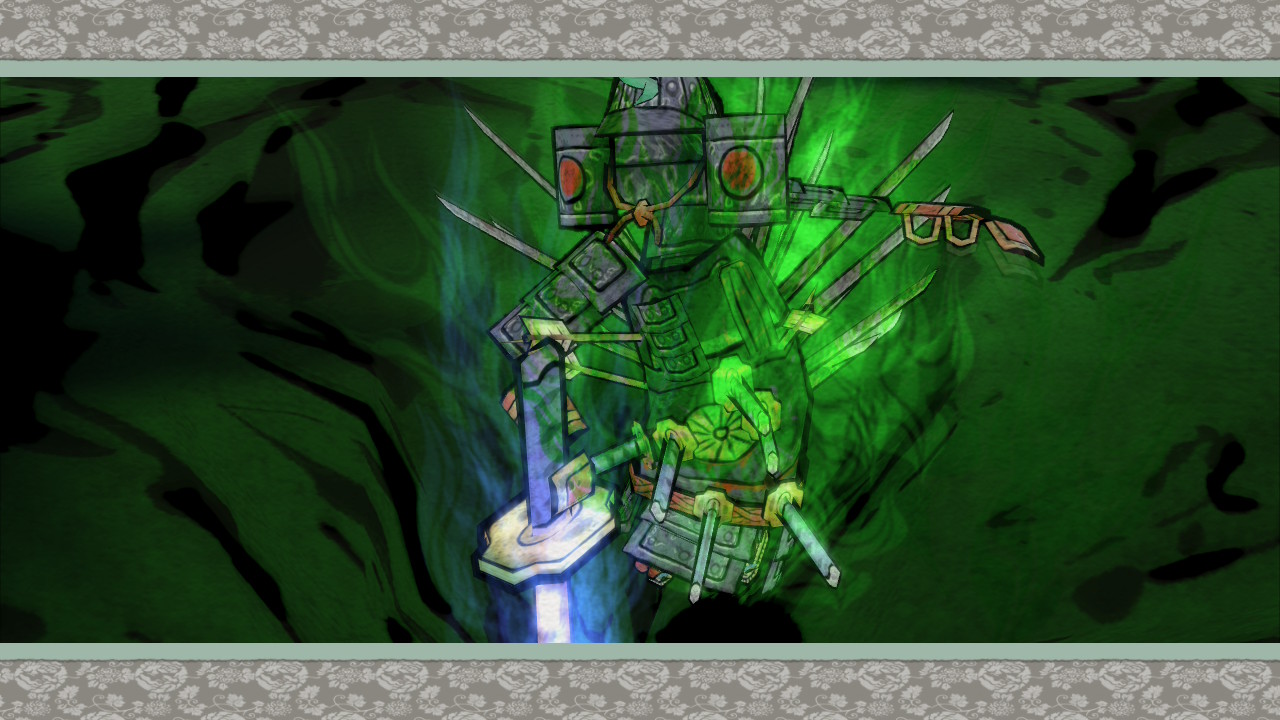
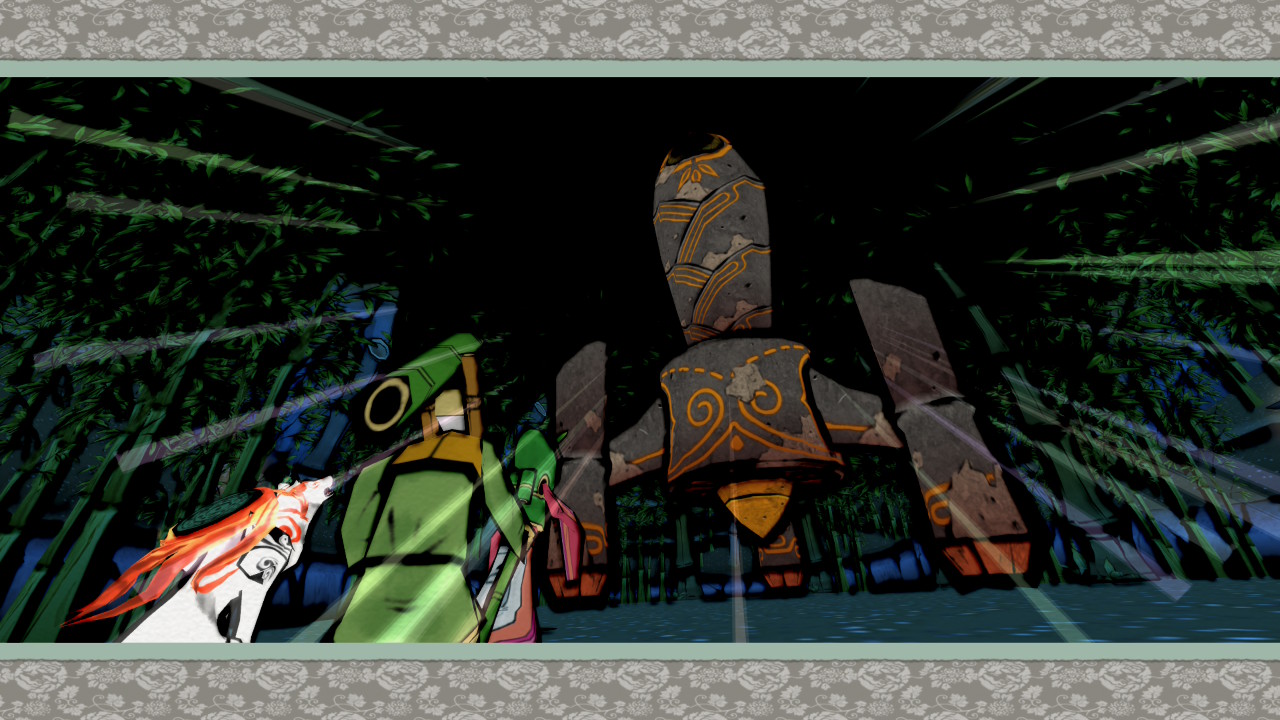
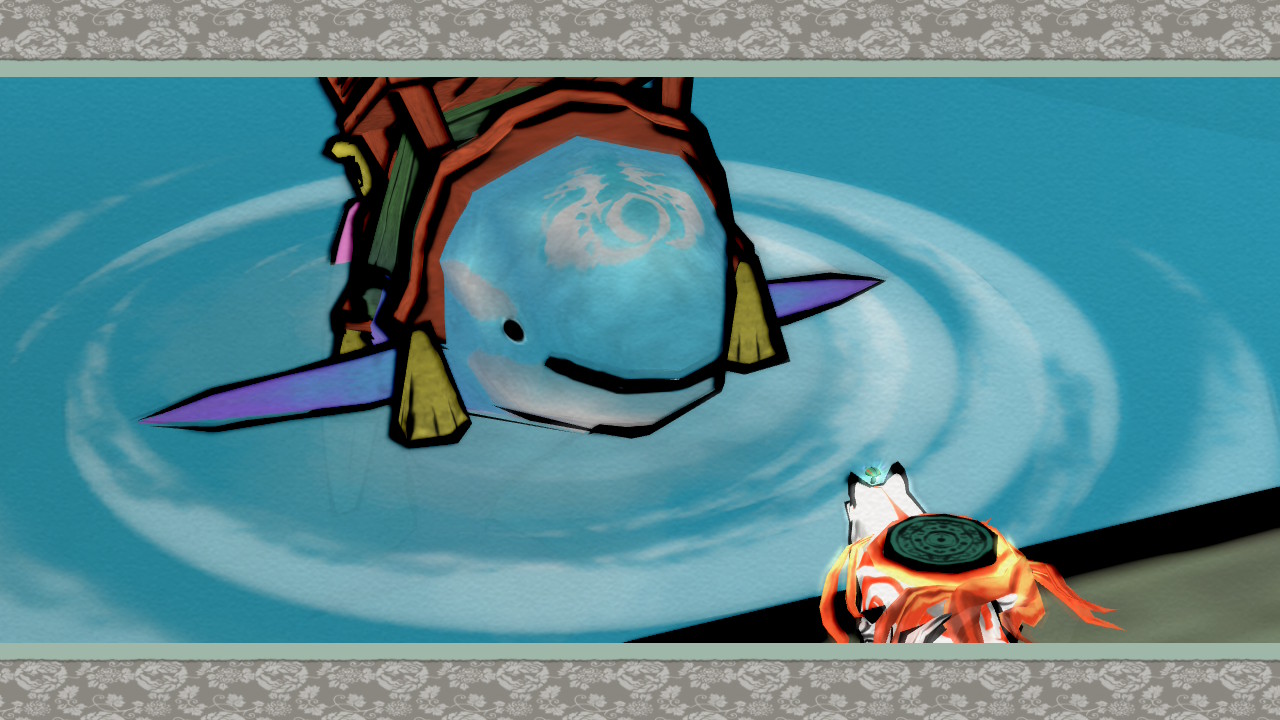
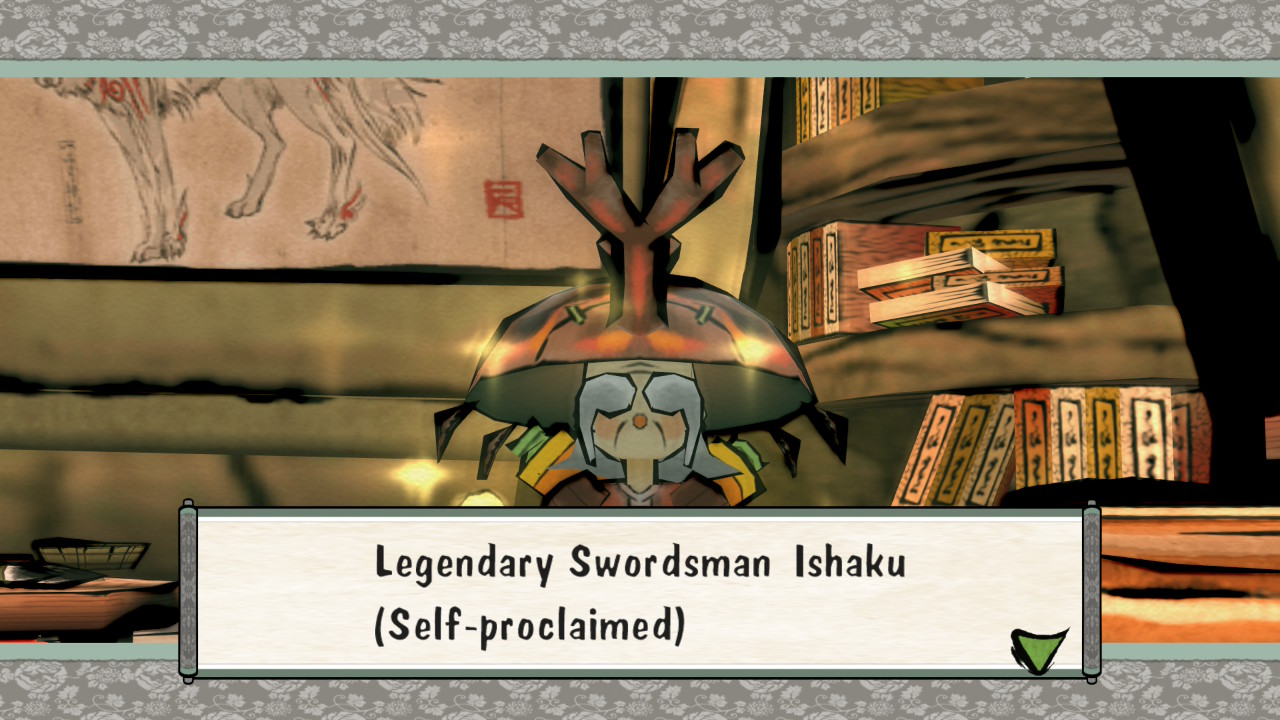
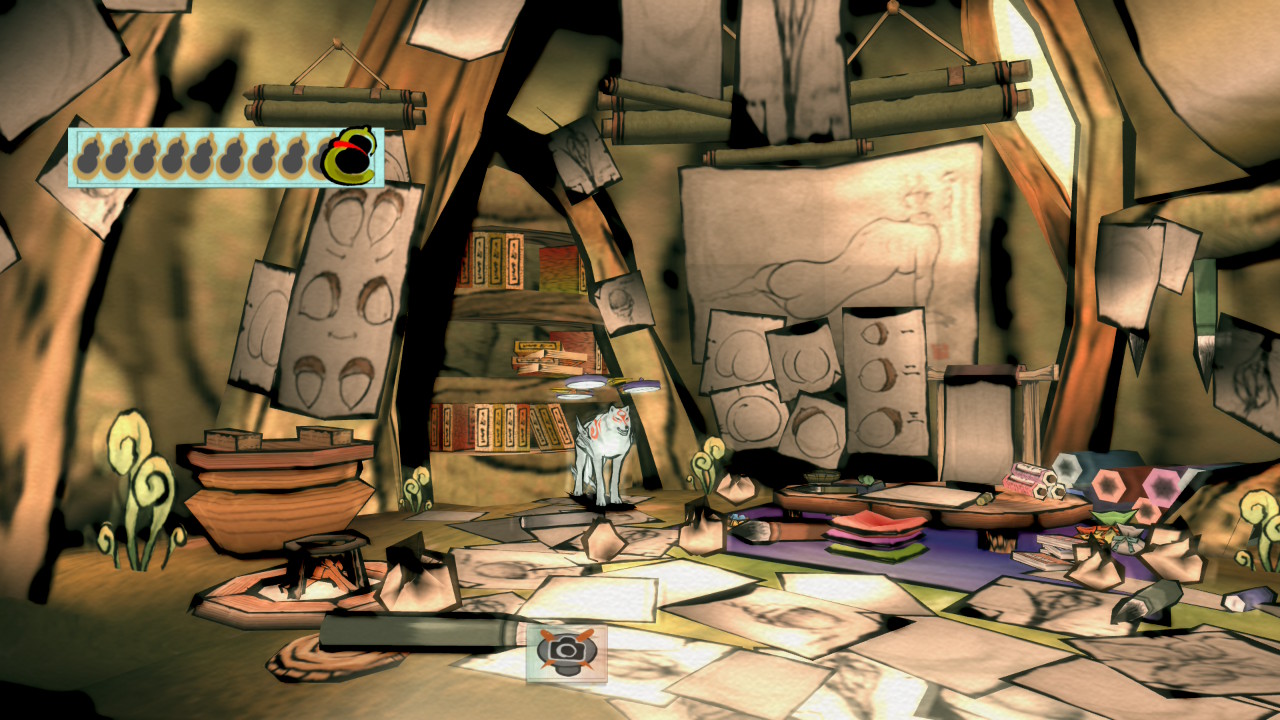
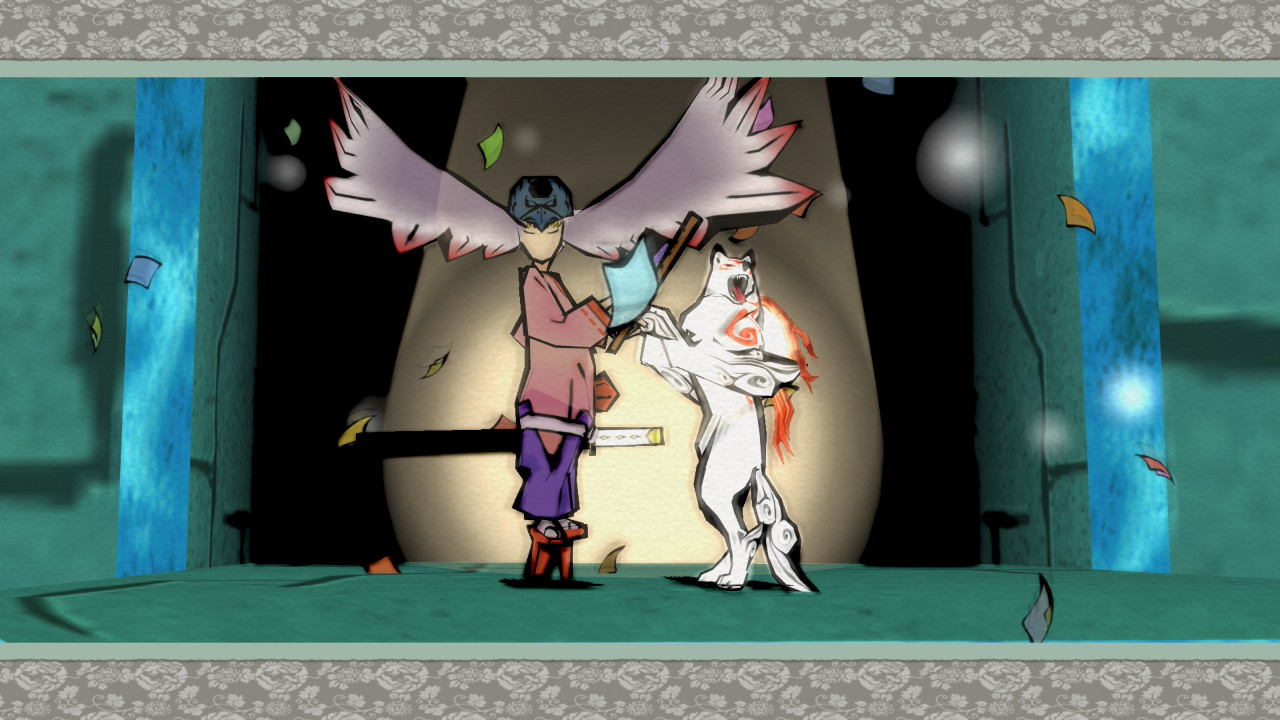
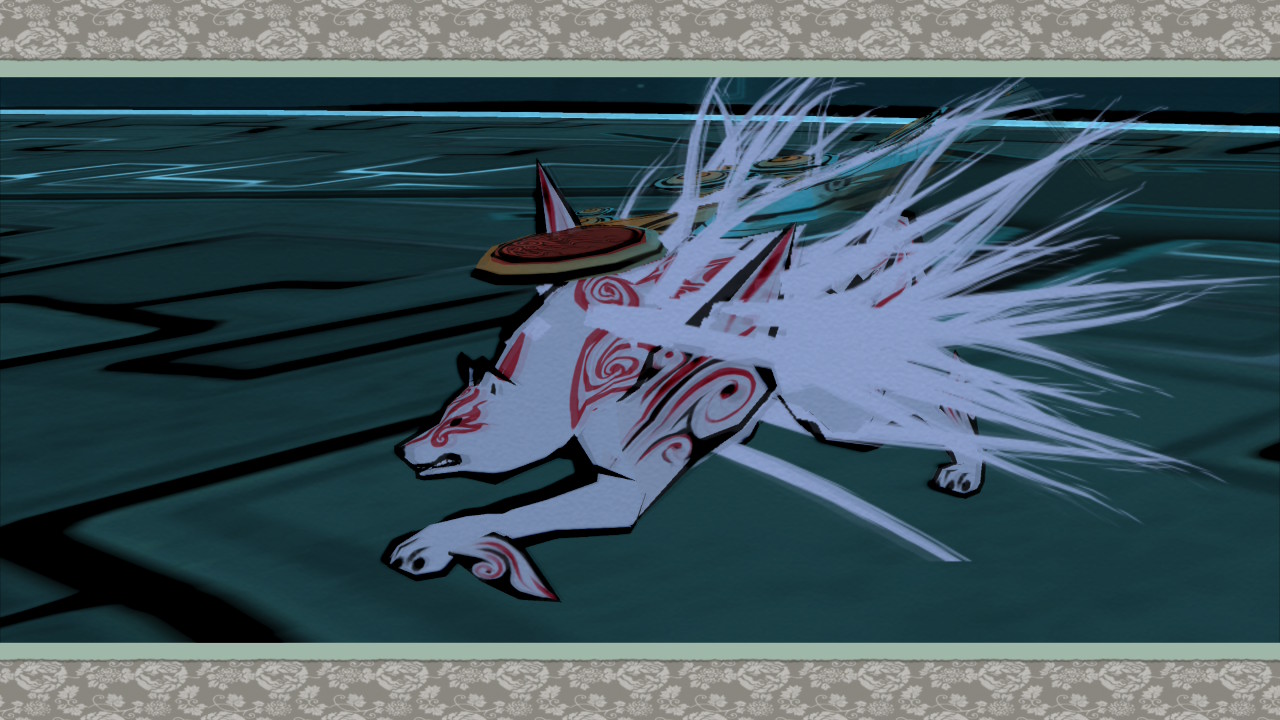
As far as aesthetics and designs go, it goes without saying that the visual design of this game is absolutely top-notch and is a huge factor differentiating the game from any of its contemporaries. The thick borders rendered around characters and objects are meant to make the game look kind of like a watercolor painting or piece of calligraphy, kind of like how Valkyria Chronicles's rendering engine makes the entire game look hand-drawn and shaded. The bonus is that the harsh edges of the relatively lower-polygon models limited by the PS2 actually enhance the look and feel of the aesthetic, rather than detracting from it, to the effect that the game still looks beautiful today as-is, just with the resolution and performance upgrades of the HD edition. There are so many character designs to love in this game, and it's impossible to list them all. One design that really sticks with me (of many examples) is Onigiri-sensei, the owner of the Dojo whose head rotates around to make him look like a harmless elderly gentleman or a mean old codger ready to beat some sense into the next generation or three.
The main gameplay mechanic is the brush. It's the entire reason for the aesthetic of the game, it's responsible for the theming of so many of the characters, and it's naturally the central mechanic that makes this different than just another Zelda clone. It's fascinating to me how well this was implemented in the game, even with all of the complexities of it - what you're targeting, what gesture you're trying to do, etc. are all interpreted correctly almost all the time. There's an enormous variety of powers and an even greater variety of gestures corresponding to the different powers, yet I found almost every one of them to be useful at one point or another, and pretty much every aspect of gameplay, from overworld exploration to combat, makes constant and effective use of them. There's even some fun opportunities that you get to use the brush to draw decorations that you actually see in game - for a mask when infiltrating the Demon Palace, a number of kimono pattern designs in Sei'An, and you can even draw your own symbol to display in the game's credits as Amaterasu's "signature"!
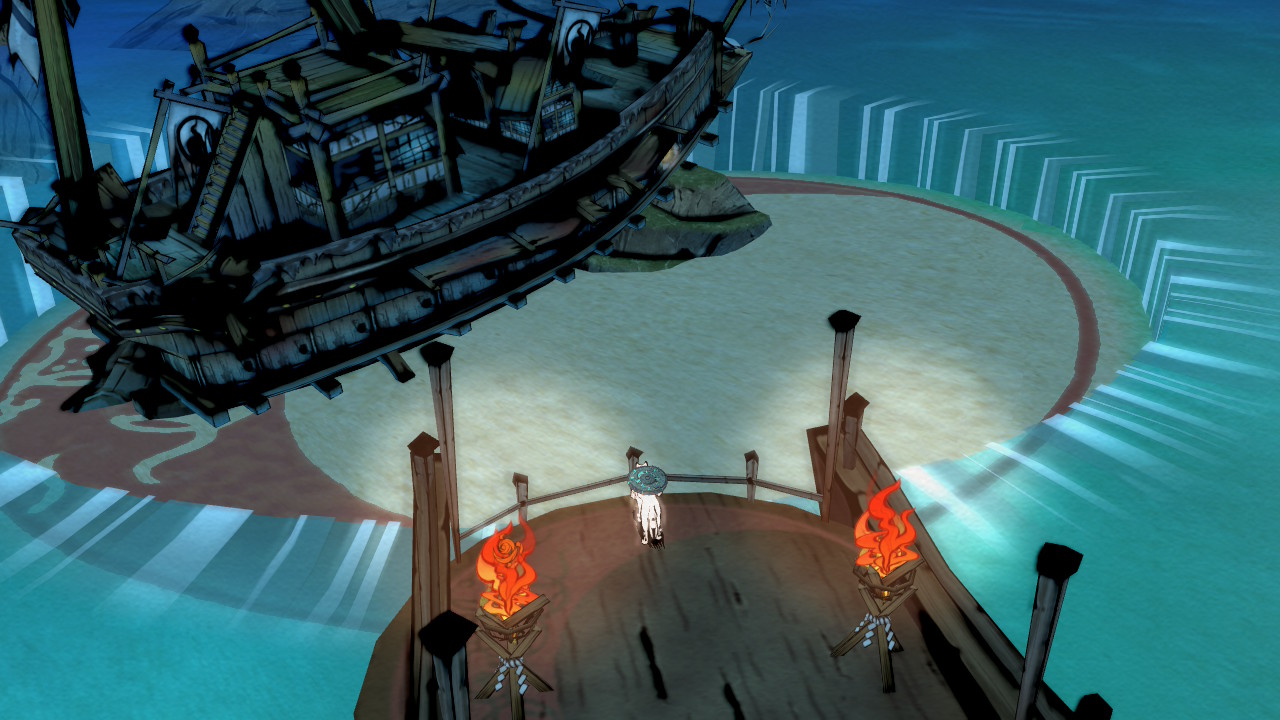
The rest of the game's mechanics are much more typical of a standard action/adventure game (think 3D Zelda); the only real thing of note is that Amaterasu is a wolf, and acts like one; your ability to interact with objects can be somewhat limited as a result. That said, your normal weapons (or "Divine Instruments", based on Japanese Imperial Regalia) behave like fairly normal weapons and are very fun to use; you can equip them in the Main or Sub slots, where they behave differently. The Main slot always uses the weapon for melee attacks, while the Sub slot is unique per weapon type - Reflectors act as a shield, Rosaries act as a ranged weapon (ie. semi-auto or shotgun), and the Glaive acts as a stationary charge weapon. I used a Reflector/Rosary combo for most of the game, but I finally realized how much fun it is to use a Glaive as the main weapon near the end and finished the game with the Thunder Edge; the sheer amount of burst damage you can do to anything is amazing to behold.
Really, there's only a small list of things holding the game back - most of them related to dissatisfactions I had with the game's mechanics. My biggest gripe is that the platforming sucks; the game doesn't give you a very good indicator of your horizontal positioning so I found it super easy to under- or over-shoot jumps, and you get stuck on platform edges (the game prevents you from accidentally falling down) which kills your speed when you're trying to go for longer jumps. Platforming isn't frequently required, but it's always a nightmare when there's a section that needs it. Beyond that, I'm not really a big fan of how you have to slowly build your run speed over time, because it effectively means you'll be shuffling around slowly most of the time when you lose sprint to pretty much anything. Using melee attacks in the overworld is also really awkward; Amaterasu does this really weird half-dash followed by a backwards springing motion that feels kind of janky and makes positioning difficult. Outside of those, it's really just a personal preference whether or not you like Issun and the other characters.
This game feels incredibly complete; given the scope of the game, it's impressive to me that nothing really sticks out to me as feeling particularly rushed or half-baked. Even the story is pretty much completely self-contained; this is a game that would really deserve a sequel (and is apparently finally getting one, according to a recent announcement) but I really don't think it needs one at all. I don't even think Okamiden was a necessary follow-up, but can't really say much there since I haven't actually played it. Even though this genre of game really isn't something I particularly like, I get the impression that my experience with this is sticking with me for a very long time.