Myst V: End of Ages
Playtime: 10.5 Hours
Finished 29 October 2025.Myst V is actually pretty well supported out of the box, at least as far as the Steam release goes. Resolution settings don't scale all the way up to 4K (3840x2160), but they go up to 1440p windowed, which worked well enough for me. From the in-game settings, the "Recommended Only" resolution option needs to be disabled to select non-4:3 resolutions. In general, the game ran fine with no weird lag, and without major stability issues outside of a couple crashes when using the photocrystal & journal.
The final Myst game closes out the saga by following up on a number of plot threads established in URU, effectively making this actually "Myst 6". Taking place far in the future of Myst 1 thru 4, Yeesha once again acts as your guide in starting your final quest, giving you a task to retrieve the sacred Bahro tablet, and to make a decision to decide the course of the D'ni and Bahro forever. As far as I understand, this was meant to bring a definitive end to the series after Ubisoft took the reins for Myst 3 & 4; Cyan decided to focus on development of URU, and it kind of shows that the plot in Myst V is likely spawned from ideas originally meant for URU before that game failed. Over the years, this has become the most universally disliked Myst game, and after playing through it, I can completely understand why.
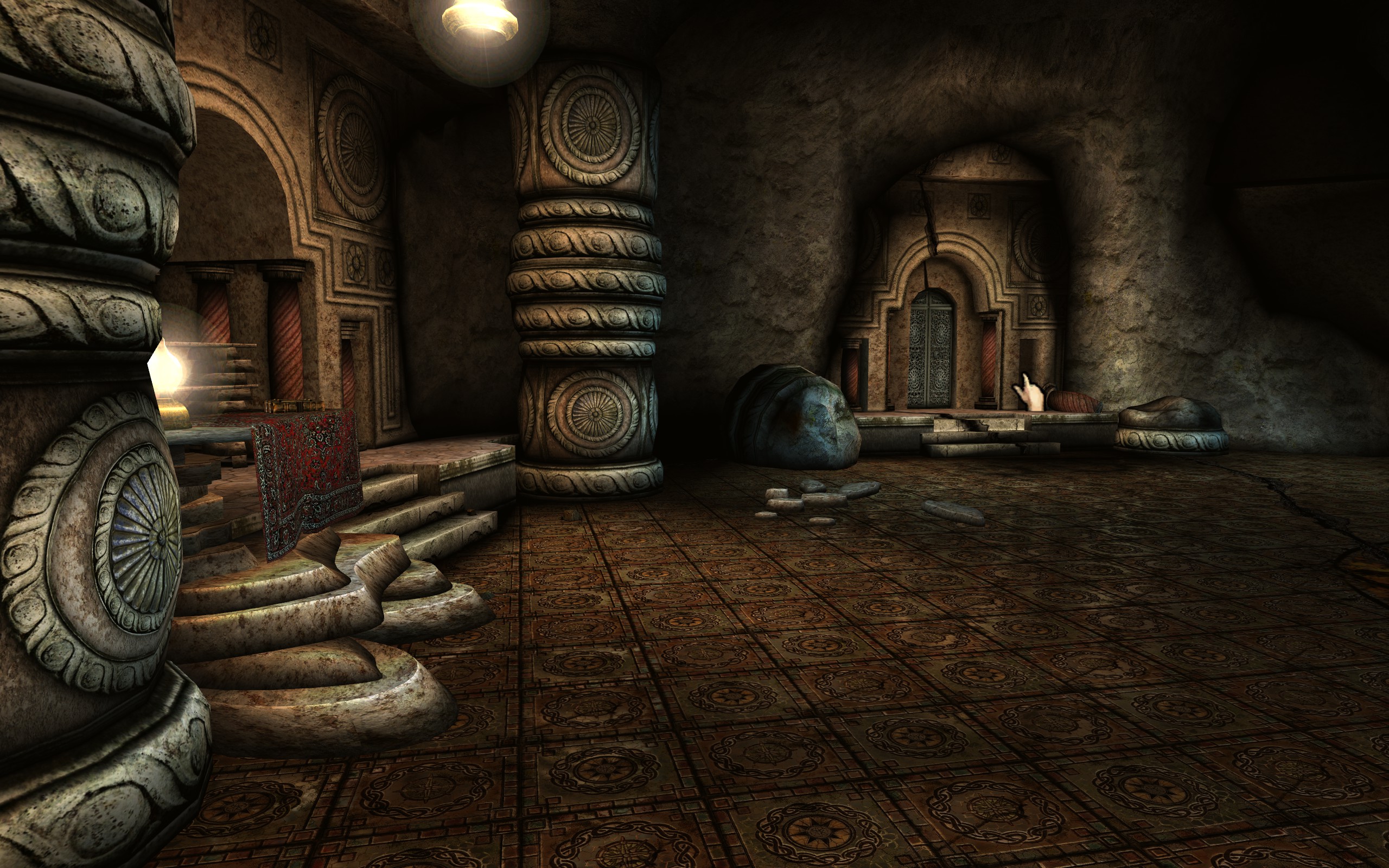
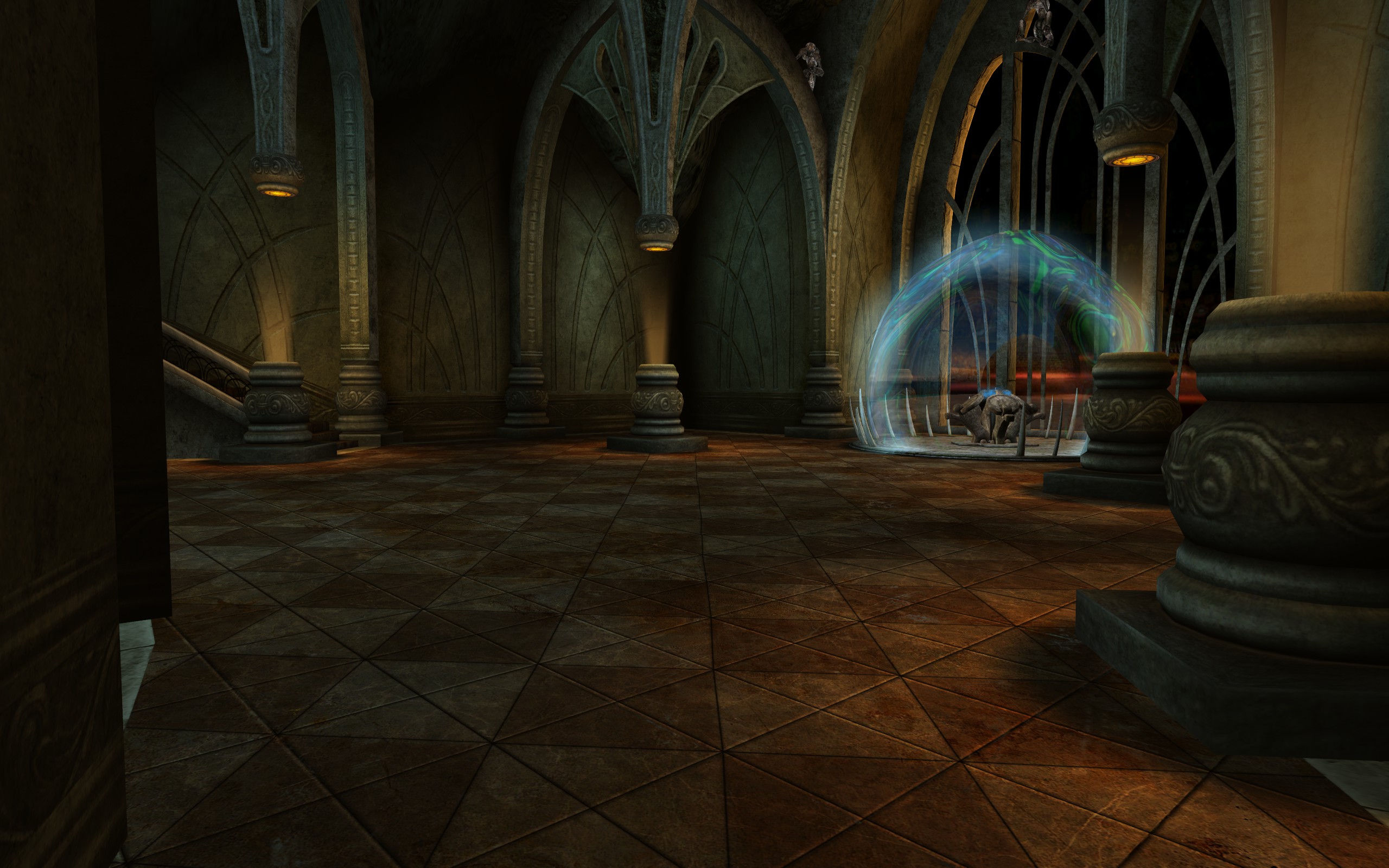
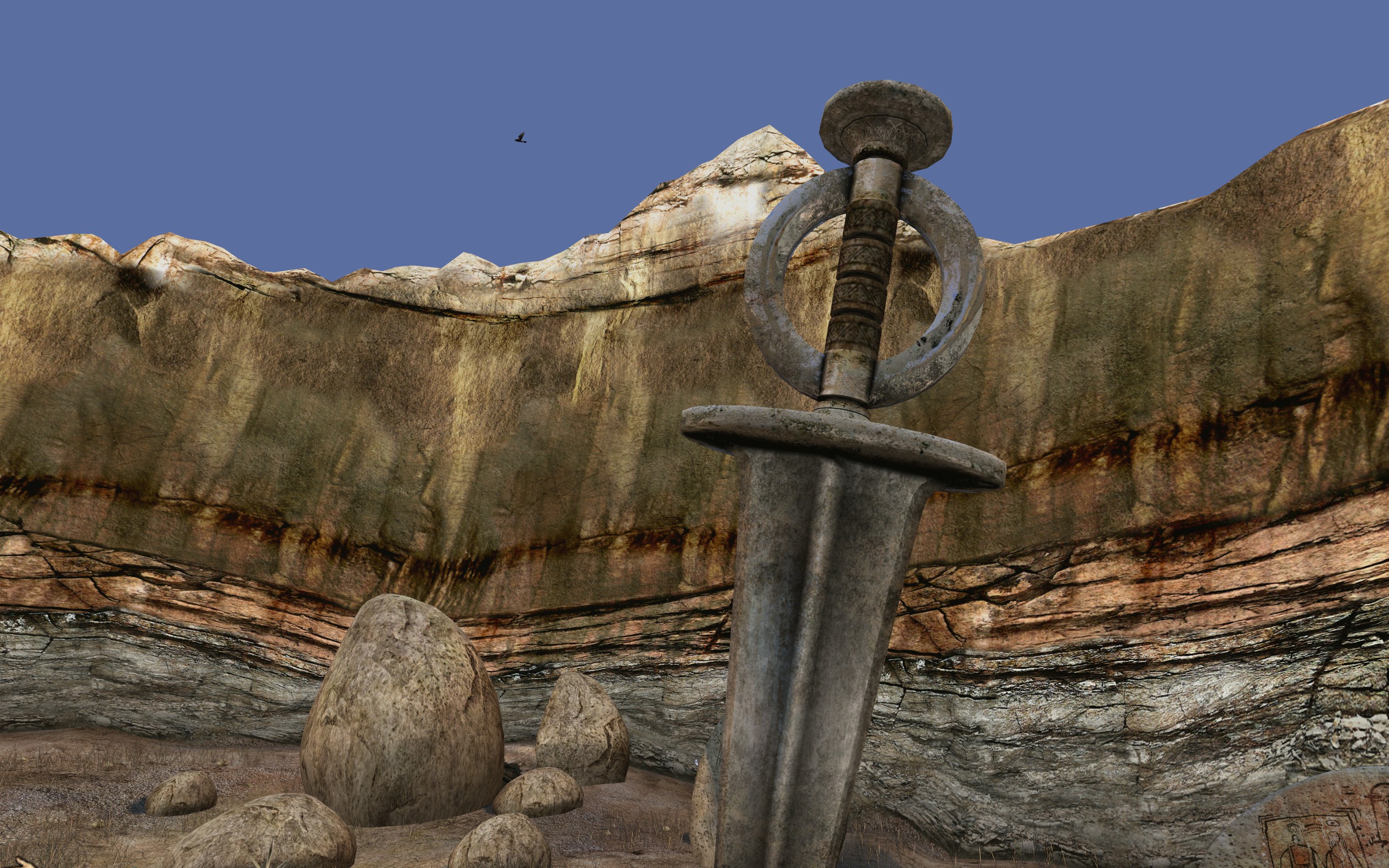
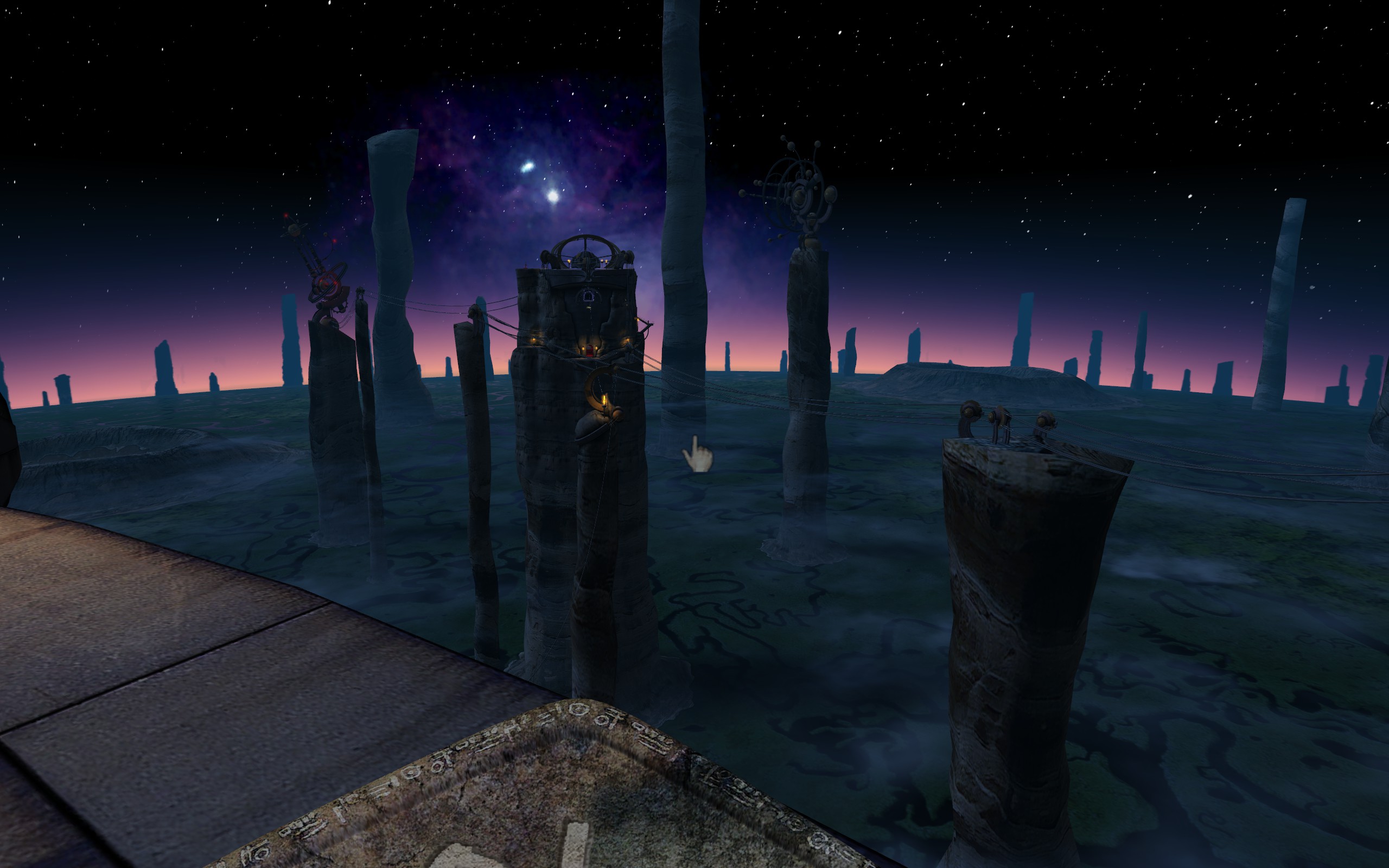
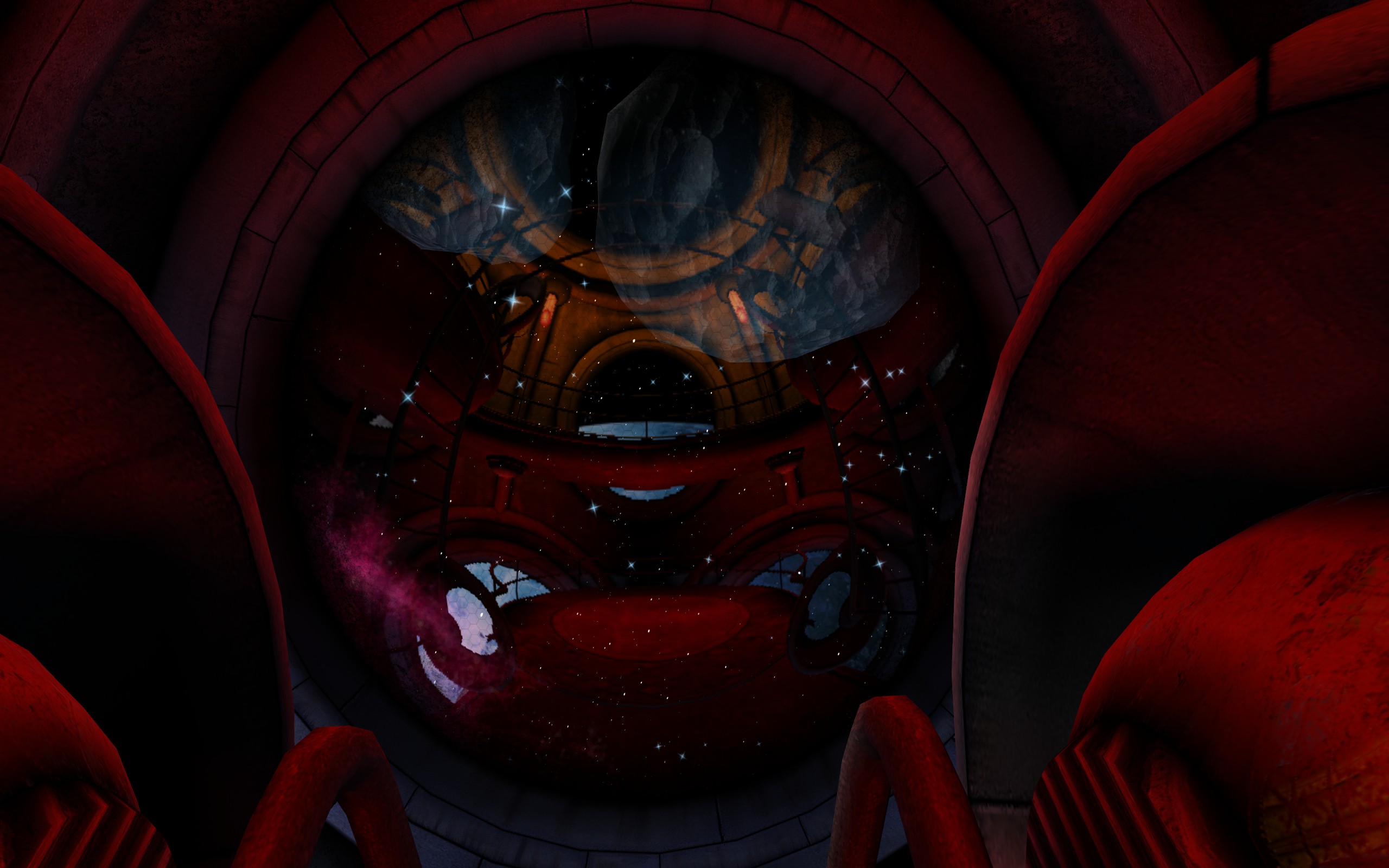
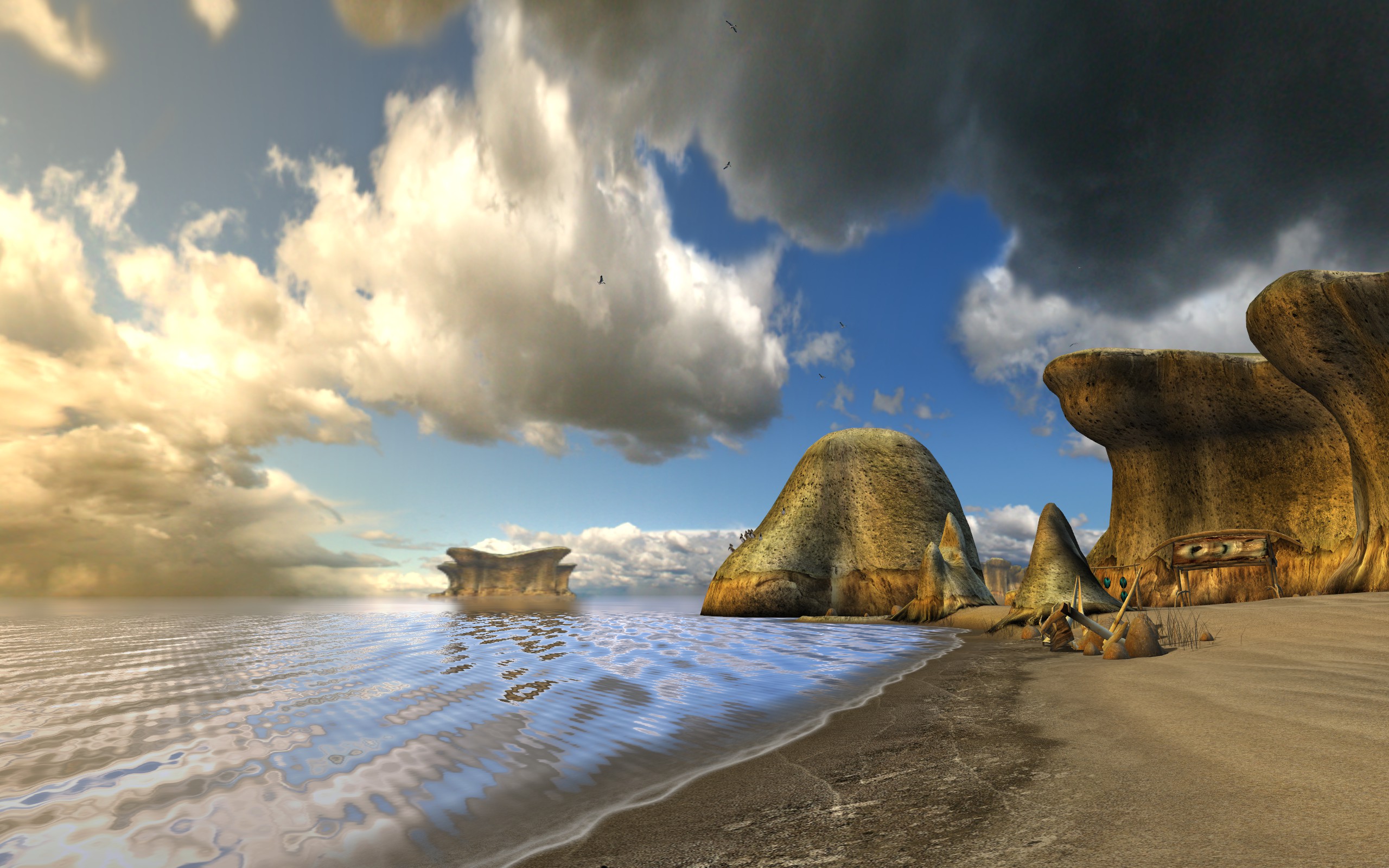
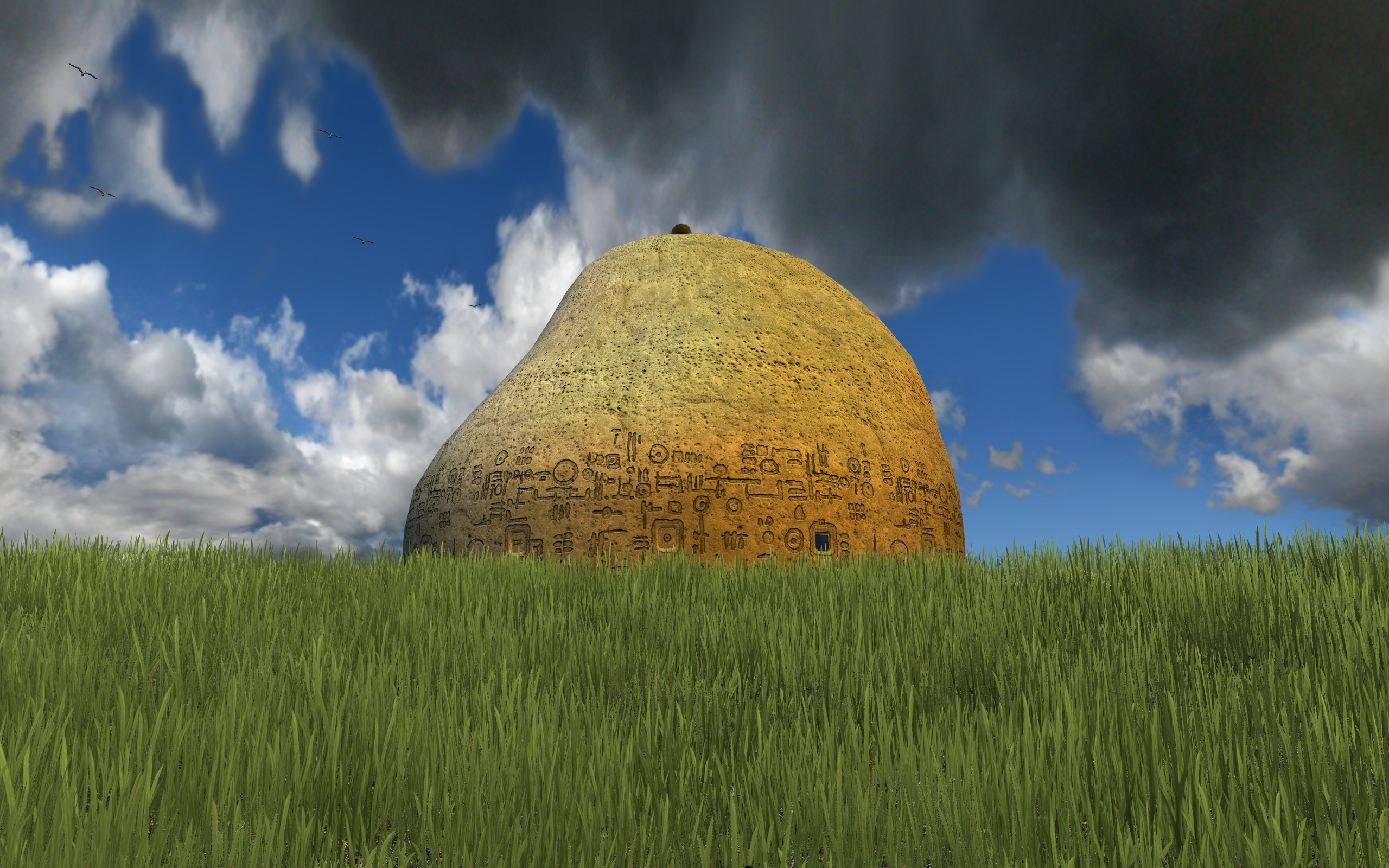
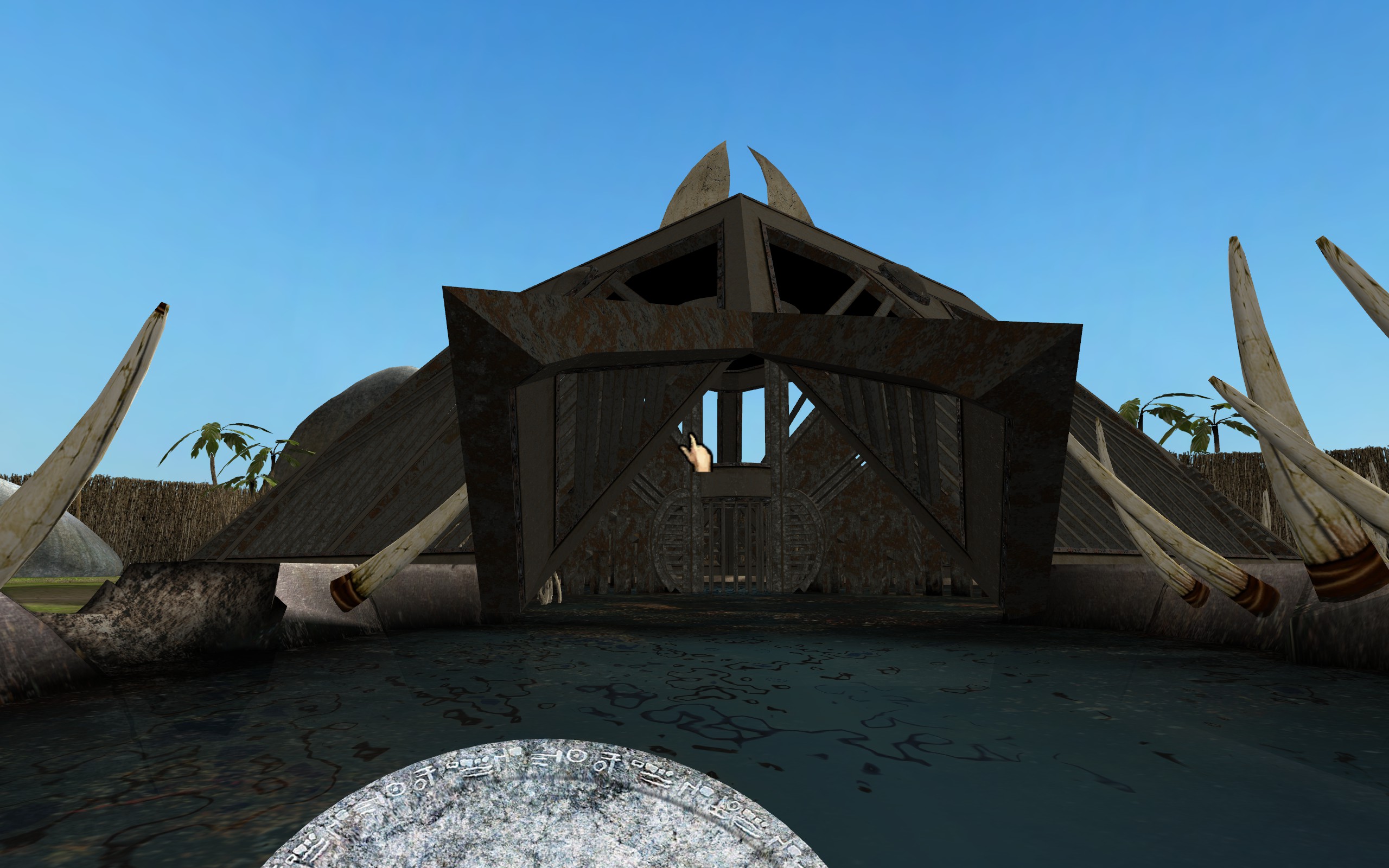
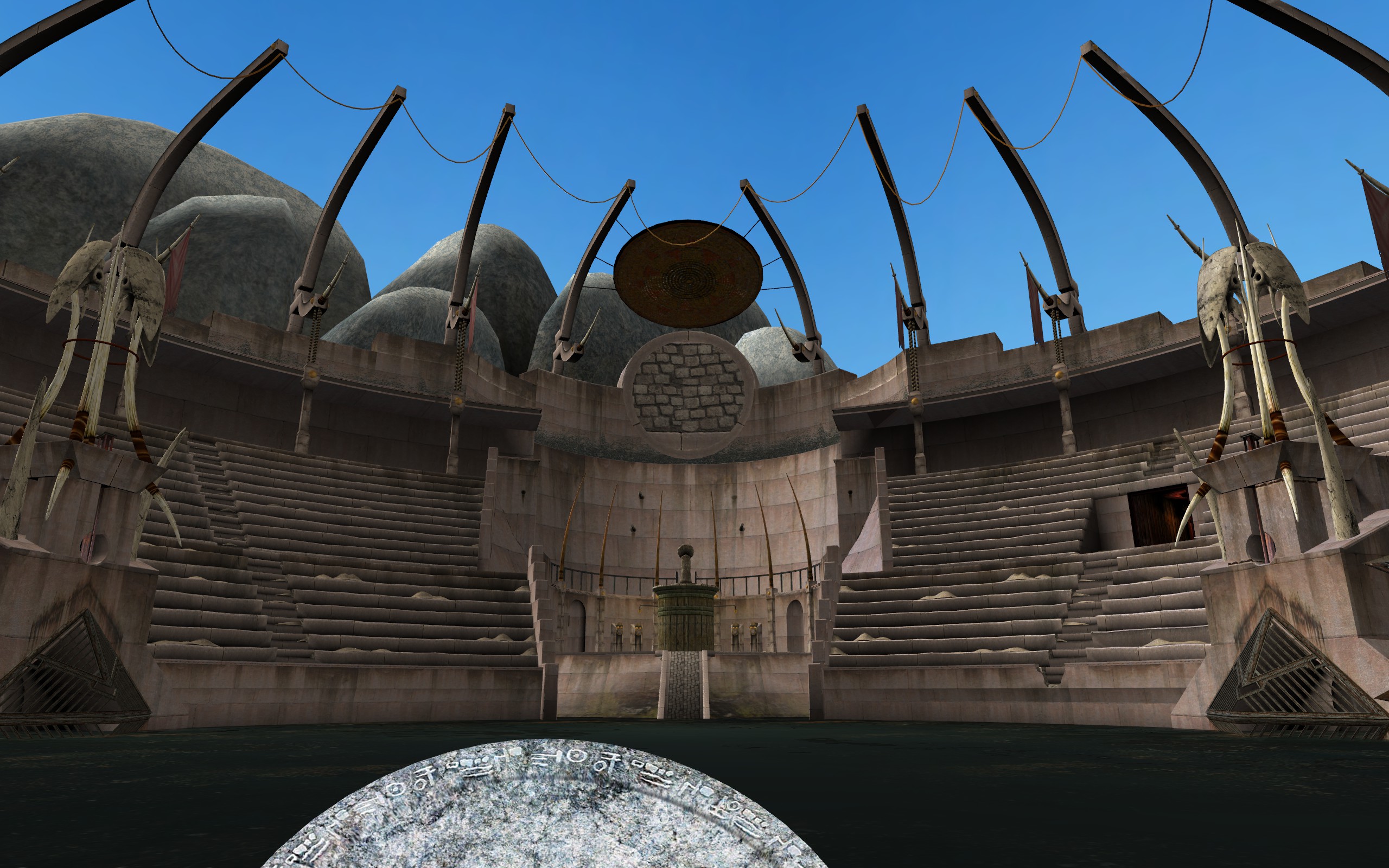
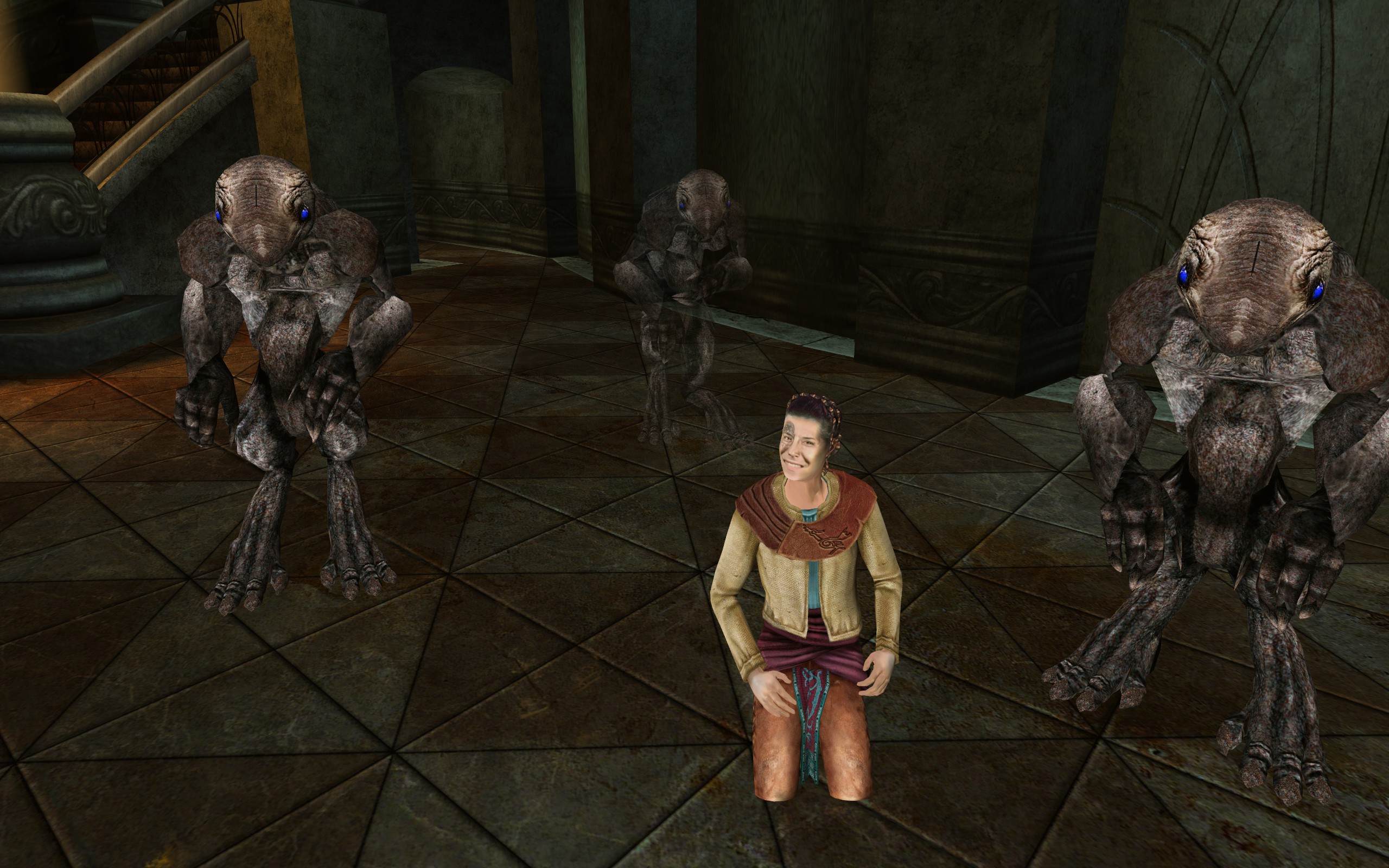
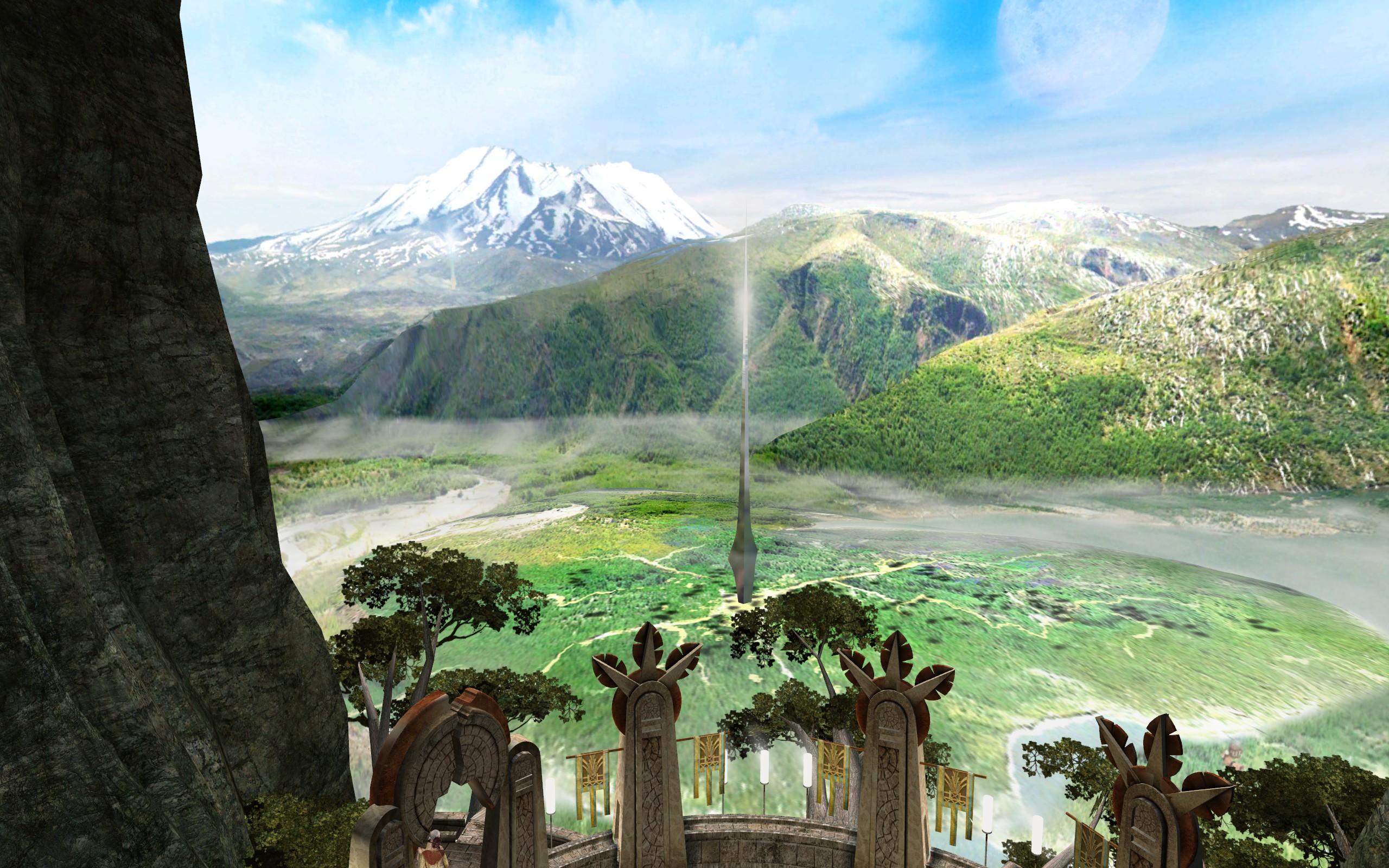
From a basic technical perspective, this game (and URU before it) managed to weather the transition between the pre-rendered scenenery of Myst & Riven to true 3D environments quite well. Obviously, it looks as good as ever - Cyan's prior experience with URU shows that they're very capable of making beautiful & striking scenery, even if the actual models & textures may not be up to par from a 2025 perspective. It's definitely noticeable that the character models are far more outdated (namely Yeesha and the Bahro, while Esher & Atrus look OK), and yet even those are still acceptable. The game performs quite well, though that's no surprise, and the only crashes I can remember came from using the photocrystal and save journal. The one persistent technical issue that bugged me throughout the game was a constant mouse "skipping" issue, where the game would occasionally (and randomly, from what I could tell) warp my cursor. This was especially frequent when trying to look around scenery, and made it almost seem like the cursor was trying to "lock" itself to certain objects in the environment or something, but happened even when I was using the Bahro slates (in which case it would ruin my drawing). This seems to be a known issue based on a number of forum posts online; it's just never been fixed. It's incredibly annoying and makes the game more frustrating to play, but thankfully doesn't make any part of the game unplayable.
Myst V also has a number of mechanical changes from the previous entries, largely due to the 3D world. Cyan bridged the gap somewhat between the original point-and-click systems and URU's direct control scheme by giving several options for basic navigation; of course, the original point-and-click style on a static scene is still there, alongside a free-look scheme with click-based movement (similar to Myst 3 & 4). However, Myst 5 is the first to add proper WASD movement for direct player control - an improvement on URU's janky tank control scheme. In fact, the entire world can be freely traversed in general, it's just that the point-and-click control schemes just add important invisible "waypoints" to the world that your character essentially "snaps" to. In my case, I ended up using the hybrid method since it felt the most natural at this point in the series; I liked how holding M1 down allowed you to move faster through the world. This was unfortunately very necessary, as a big issue with this game is that it involves an absurd amount of backtracking through slow animations and long corridors.
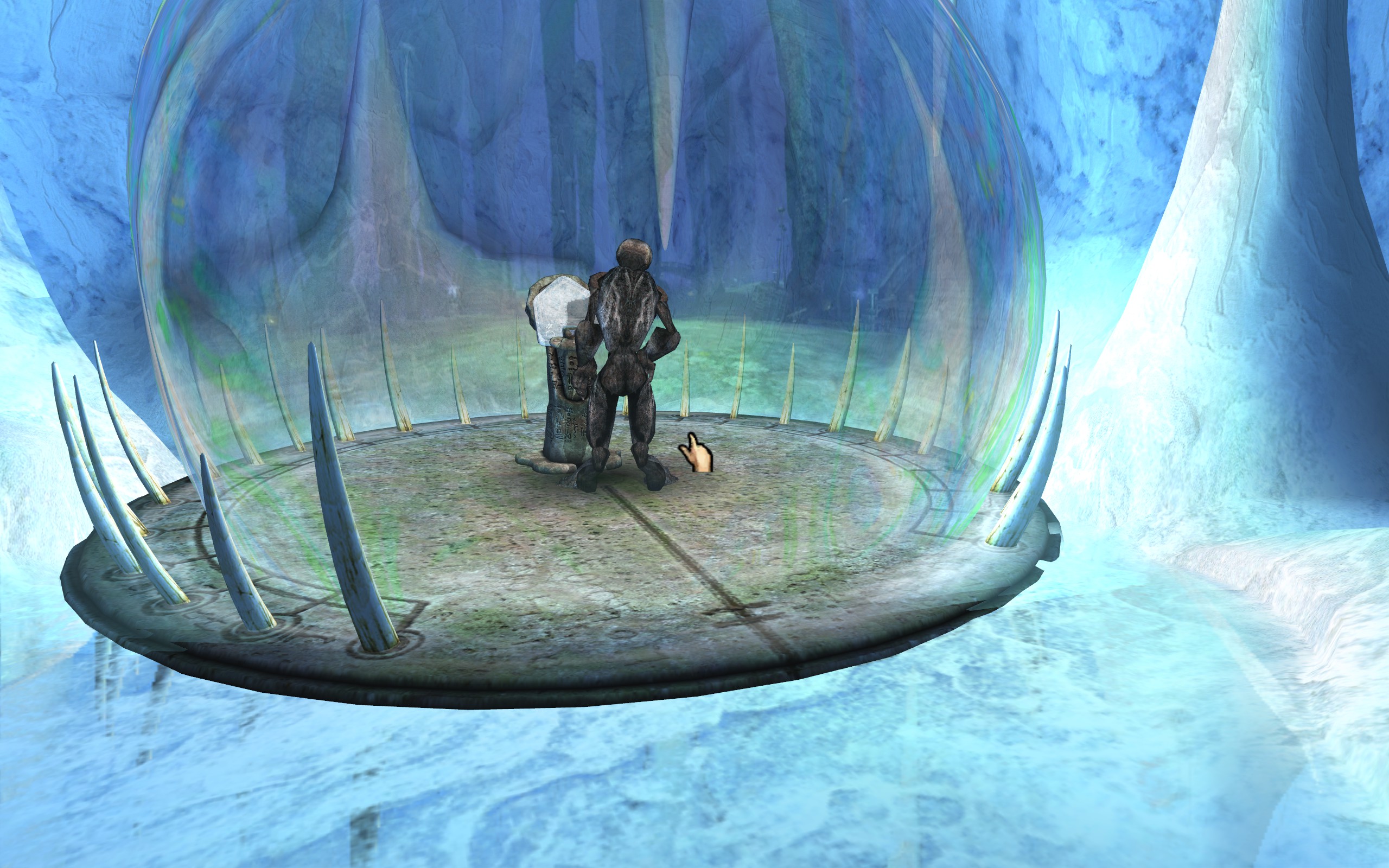
I'll get back to that in a moment, since it's first worth mentioning the Bahro Slates, which are the central puzzle mechanic of this game; the entire premise of the plot is that your character must guide each of 4 Bahro slates back to a central pedestal, in order to unlock the Bahro control tablet. This is the way it works within the game - you draw a symbol on it, then drop it on the ground. Once you step away, the Bahro act as hidden stewards who will warp in and perform a task defined by the symbol, if it is legible. Symbols used in this game either indicate various pedestals, to which the Bahro will take the slate and unlock the teleport for yourself, or Age powers which differ per location (summon rain, raise temperature, etc.). The concept of these slates isn't horrible in theory, and it's consistent with what was introduced back in URU.
However, the gameplay factor is sorely lacking. Firstly, the slate drawings themselves can be extremely fickle and detection is often poor. Anecdotally, one of the pedestal symbols took ~15 minutes of trying before the game finally managed to recognize it -- I almost gave up on the game at that point. Secondly, the age powers are very frequently one-and-done mechanics; cool concept, but none of them really explore the potential of the power. The exception is Laki-Ahn, where you had to call the windstorm twice - once for the sluice gate, the other for the final flag & symbol. But more importantly, consider that pretty much every action taken with the slate is slow or unnecessarily unwieldy: you need to draw a poorly-detected symbol with the mouse, then drop the slate, which involves a slow animation. You then need to step away for the Bahro to teleport in and execute the command, which is slow on its own, but you also need to make sure you're far enough away (else no Bahro) but not too far away or the Bahro will assume you abandoned it and take it back to spawn, forcing you to waste time walking or warping all the way back.
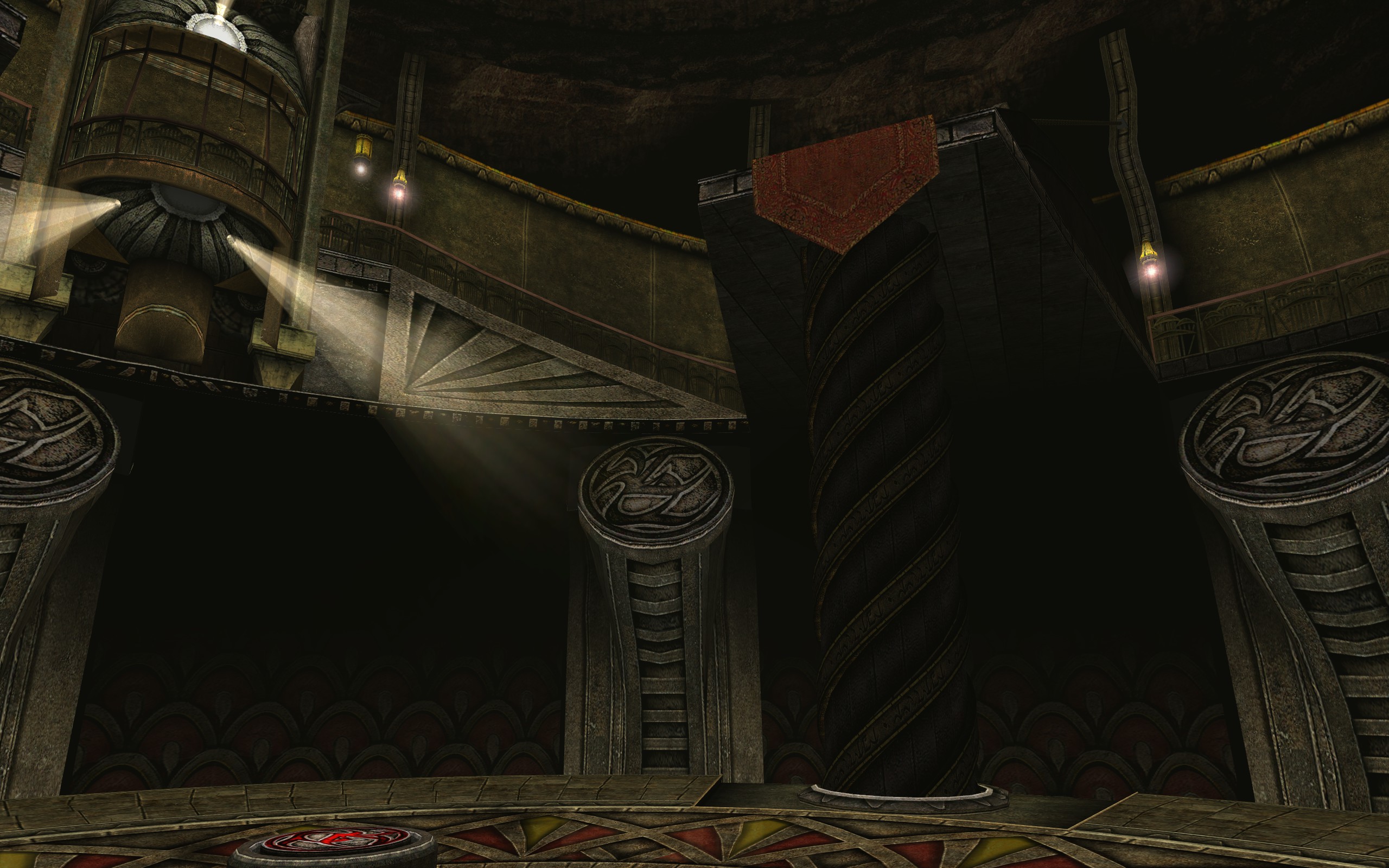
This kind of takes me down into the puzzle mechanics, which are obviously not starting on a positive first note from my comments above. Honestly, most of them tend to be fine, standard puzzles even if they might not be the most inspired. There are some really neat ideas though - I loved the Noloben standing stone puzzle where you had to infer a numbering system based on closed windows, and the final puzzle of that Age was a very cool idea (though it actually glitched out for me the first time I tried). The "weight" puzzle at the Laki'Ahn Coliseum is a really fun puzzle to figure out, and the point near the end of that age where you have to reference a journal to find the "Sit" Bahro command to have them hold down a button for an elevator was impressive, and made my note-taking feel a little less worthless for once. Using wind power to blow a flag into an open window for the final symbol was cool as well.
But the other side of the coin is that there are no shortage of terrible puzzles in this game. The heat puzzle on Taghira was annoying because the Age power doesn't last long enough for you to configure the dials properly, forcing you to use it multiple times for no real reason. The rest of that age was kind of boring though, so maybe it's fine that the only real puzzle of that entire age took a bit longer it should've. Toldelmer is where most of the garbage came to roost; that age is so heavily riddled with issues it boggles my mind. Firstly, this is where the slate detection issues occured (for one of the Pedestal symbols). Additionally, there is a "tram" system that initially has no power, but as it turns out, if you try turning the dial without power, it still drags it forward and backward by a tiny bit at a time! Since it's not visible early on in the Age (tram is at the other terminal), I experimented with it a lot, only to find out much later in the Age that I had to basically pull it back manually about 15 times (not an exaggeration) to bring it back to a state where I could interact with it. These are just a couple of examples, but the game is thoroughly riddled with small & large annoyances that just waste time on animations, resetting puzzles, or just about anything other than actually trying to solve the puzzles. The poor implementation of the slate mechanics really just amplify it the already-existing issues with the overall level design.
Beyond mechanical or visual changes, this story has some issues, but more critically, the way that it's told to you is very different. I always appreciated Myst's silent, player-directed story, encouraging players to read deeply of the journals to find bits and pieces of information, while giving you insight into the characters as the explore & discover the wonders or dangers of each Age. Perhaps this was not wholly intentional on the part of the original development teams, who may have limited voice acting due to a lack of disk space rather than a desire to achieve a particular atmosphere, but I see it as part of Myst's core identity. So I find it extremely surprising that Myst V decided to dispense with the vast majority of these insightful journals, leaving only one series of them behind in K'veer and throughout the rooms and corridors surrounding the Great Shaft. And rather than the inquisitive, investigative tone of the journals in previous games, these read as insane rambling with rare drawings and diagrams littered throughout, almost all of which are wholly useless. Atrus's journals in Myst were the diary of an explorer, Gehn's journals in Riven were of a vindictive alchemist searching for a lost art, Saavedro's in Exile of vengeance for his ruined Age, and even Achenar's journals in Revelation spoke to his redemption. Heck, even the URU journals provide some backstory for what you're doing out there with cell phones and stuff. Even on the off chance you actually need some information in this game, the exact solution is always given to you directly on a diagram or a piece of paper, completely divorced from the story or any background context.
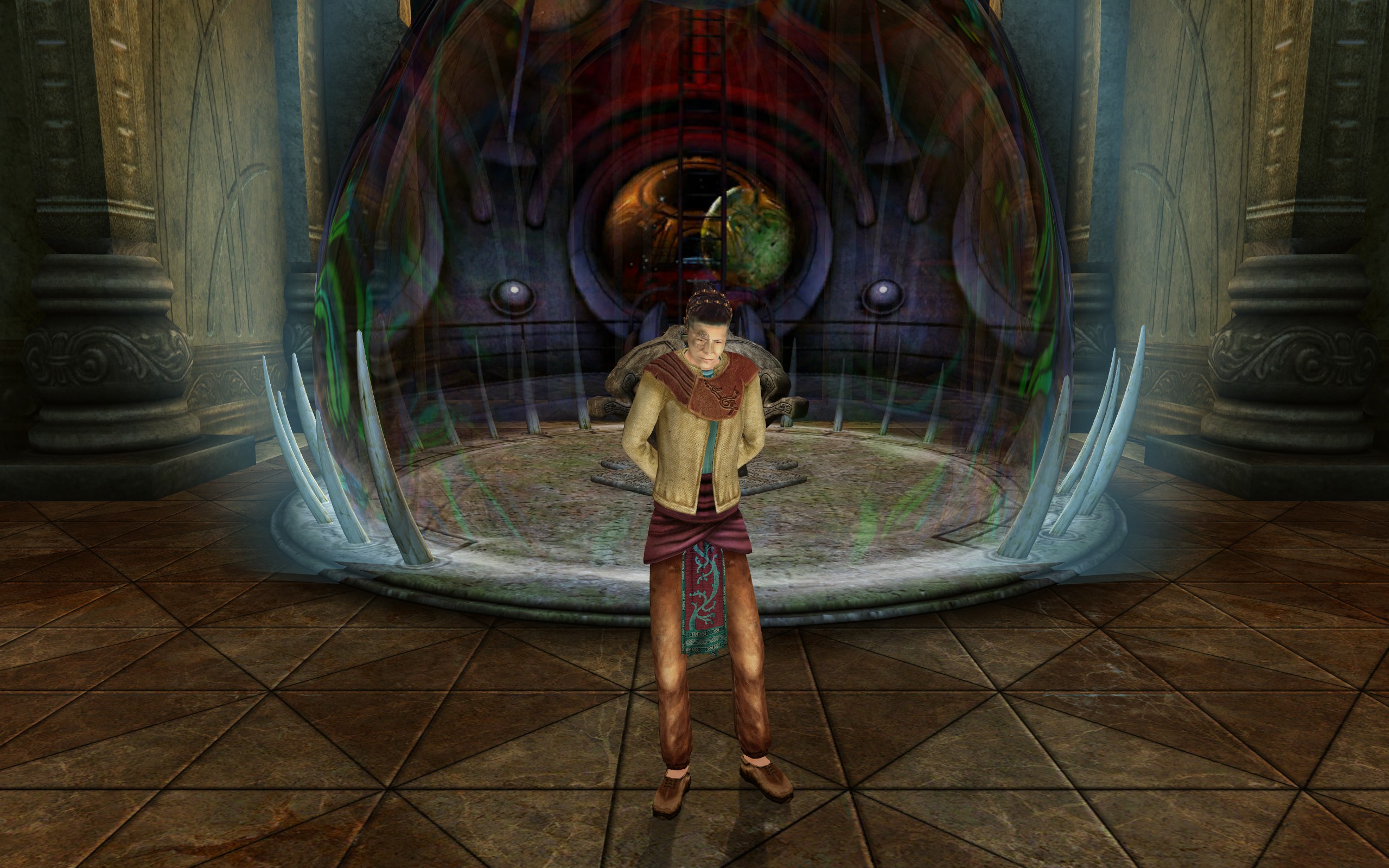
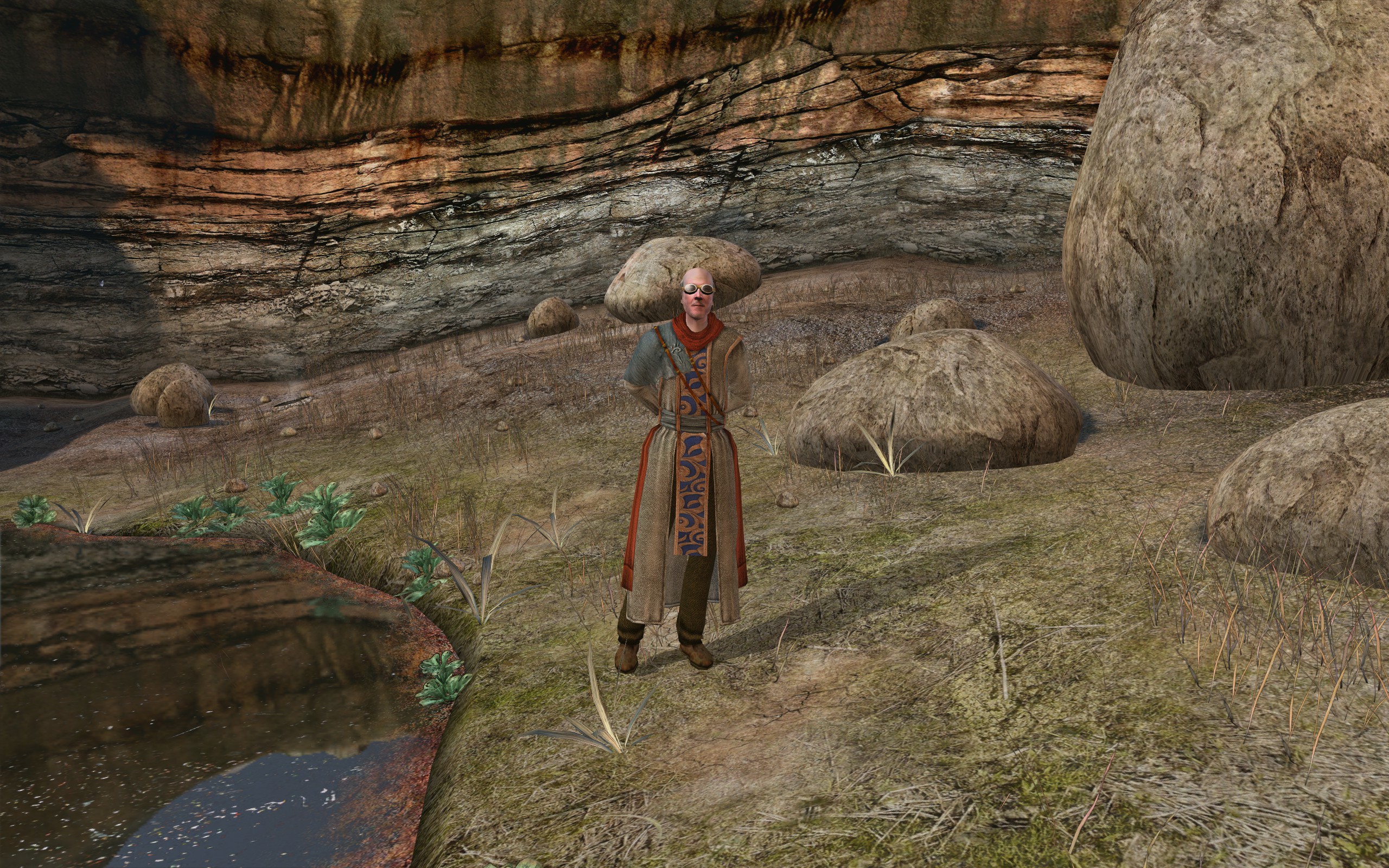
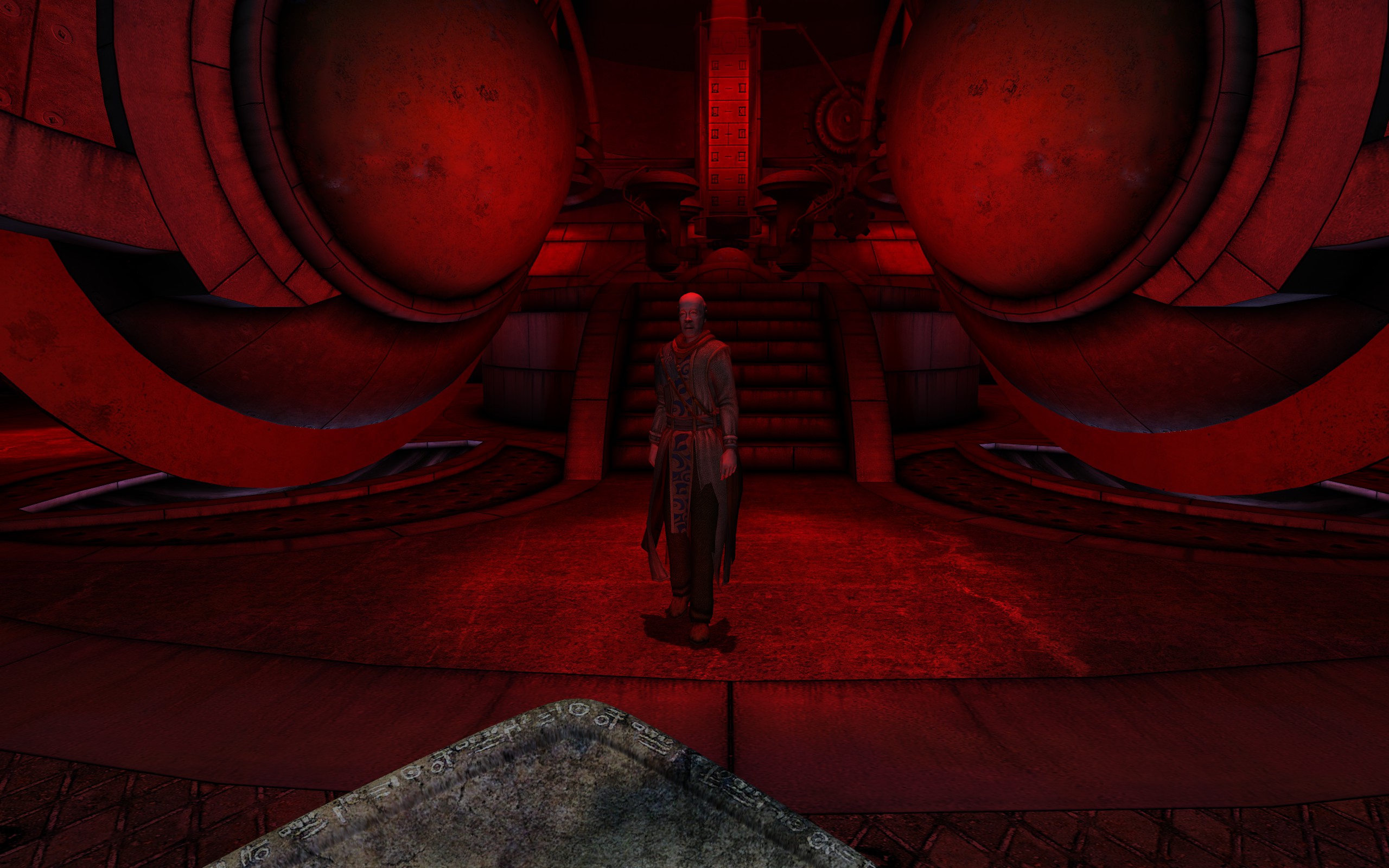
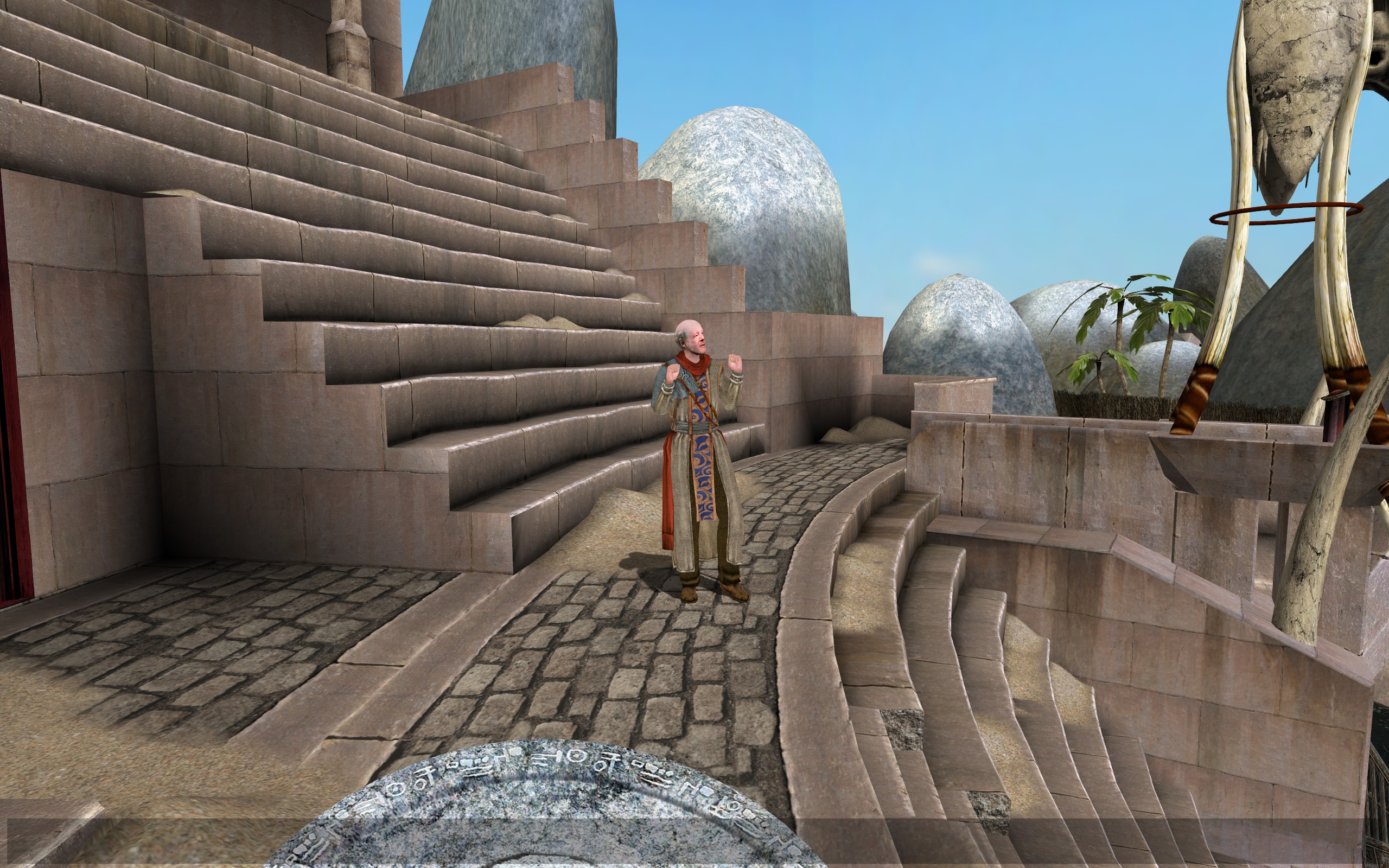
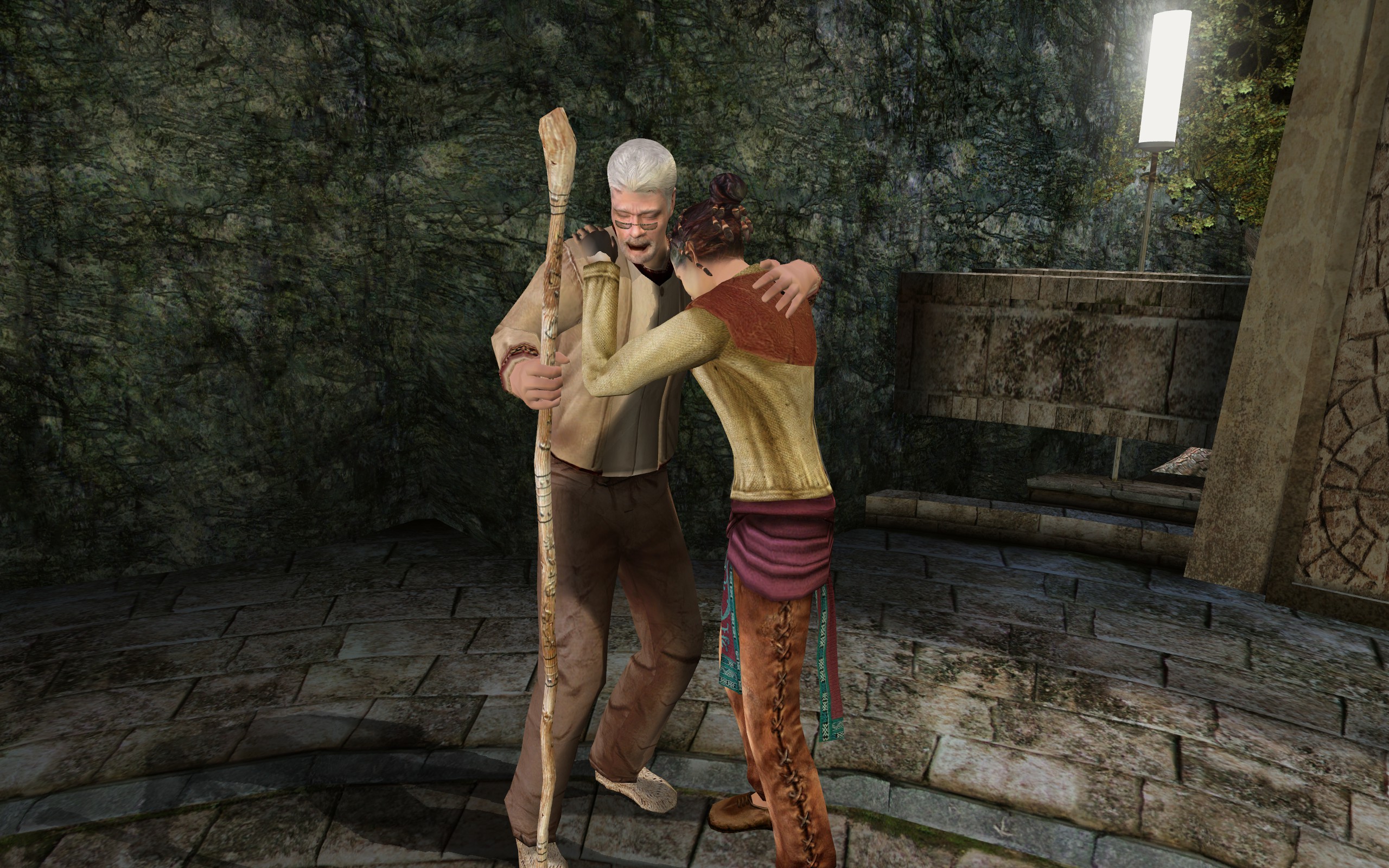
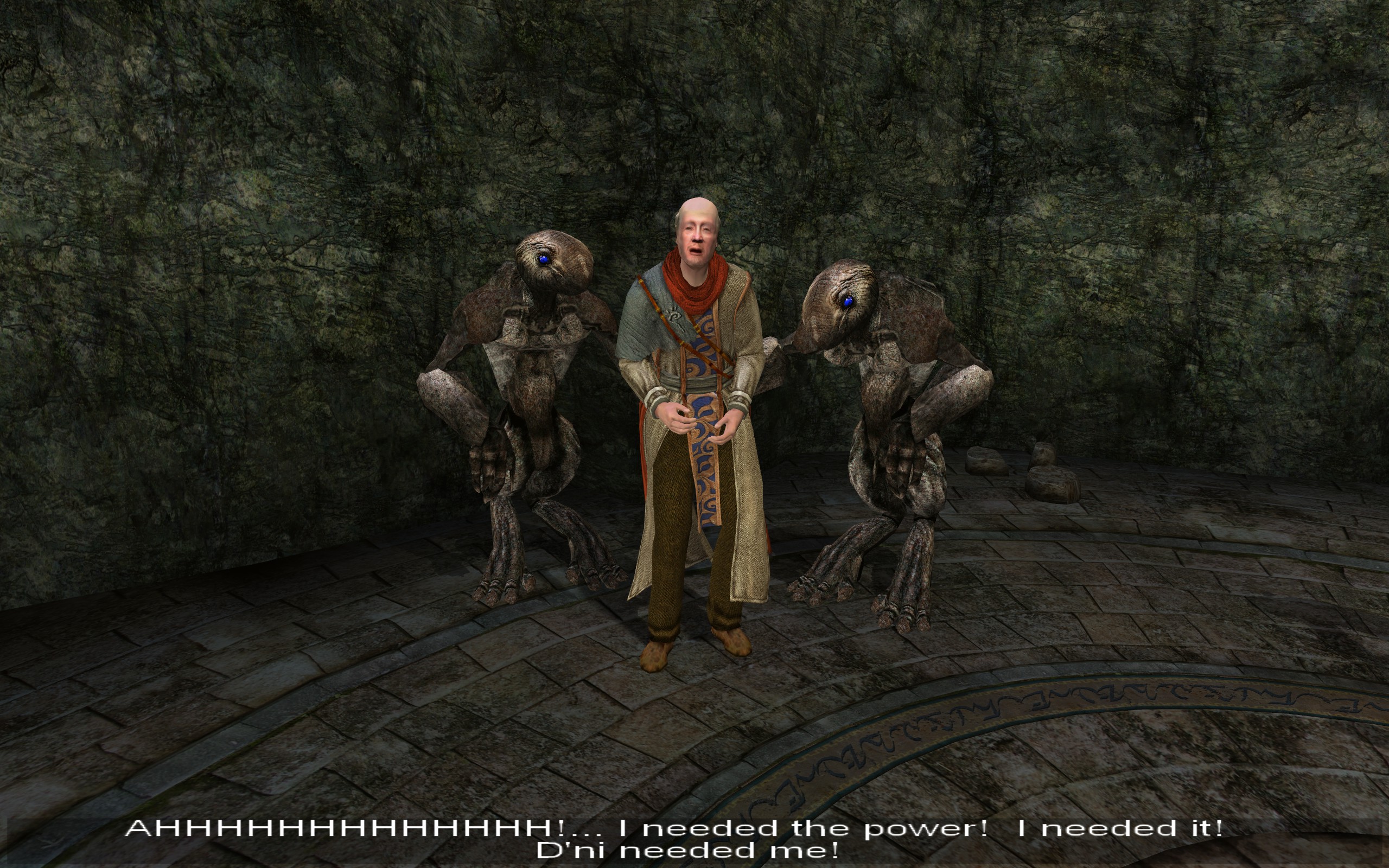
Much of this is done because they tried to make Myst V more "cinematic" instead, by shoehorning a character into every step of your journey! Esher, supposedly a surviving D'ni from before the Fall (remember, D'ni are very long-lived) basically acts as your tour guide the entire game. After pretty much every puzzle, and as soon as you walk into any new area, he magically appears and starts talking about stuff right in front of your face. It's worth noting that no technology in the series allows you to do this, not even the Relto pages! He basically stalks you the entire game, turning your journey into a series of opportunities for him to give the bigoted old man talk every 5 minutes, locking you into a minute or two of obnoxious interruptions and poor writing. Even if he wasn't incredibly obviously evil, treating the Bahro as less than dirt and practically begging for the tablet by the end, I'd never want anything to do with him.
Then again, the other side in Yeesha is not in a better state. As I've kind of already mentioned in URU, she's kind of turned into an insane druggie for some reason. In all fairness, she was just a child in Myst 4 so her character was not well-established, but she just keeps spouting a ton of mysticism talk, prophecies and other bullshit. There's no level-headed presence in this game that gives me a clear purpose or even a fundamental motivation for helping. Atrus, though never coming along with you, always seemed to have a clear picture of his goals. Obviously, he's made many mistakes along the way (which is where the Stranger comes into play), but you felt like you were helping a friend, someone who liked to learn and loved to teach. This game shoves a drug addict and a former Hitler Youth in your face and asks you to pick a side; why do I even care?
All of this kind of brings me down to my overall point concerning the last couple of games in the series; I think they started to feel some of the restrictions on the way the Ages & Books worked, so each the last 3 games tries to find some ways to circumvent or "reinvent" these for some reason. You don't even use a linking book at all in this game unless you go to Myst for the bad end, since the slates & Bahro teleport you everywhere. But even greater than that is this gradual shift from the relatively harder rules and "science" of this fictional universe, towards the prophetic and spiritual. Thinking back to Myst 1, Riven, or Exile, the conflicts were always very human and relatable; the setting was always what elevated the games beyond their basic premise. The Books and the Ages were well-defined concepts that existed within the world, and though simple in theory the amount of effort put into making ideas like the special ink, language, refinements of the "Art", differentiations between Descriptor & Linking books, etc. make them very believable.
Contrast that with the later games. URU and Myst V are just an incomprehensible mess of references to the Maker, the Grower, prophecies, destinies and other dumb shit. While Revelation has a relatable premise initially, it is the first to turn to mysticism by the end with all the talk about taking over the soul and other weird stuff in Sanctuary that's neither really explained nor explored to any real extent. I always see anything like this as a sign of a drought of ideas; if writers cannot think of a reasonable motivation for a character or cause of an event, these are convenient excuses to essentially say "it must be this way" in-universe. But I also see it as almost disrespectful of Myst's universe. The Art is not "magic", it's a very well-established mechanic of the world. The Relto books, Bahro shenanigans, etc. just overturn this to give free license for weird stuff that the characters and plots tell, explaining away random teleportation, destroying the core D'ni principles, etc. And for what?
As an individual game, I think Myst V is a pretty poor puzzle game, but it's not without its moments. A lot of the scenery is legitimately beautiful, as an example. But as the end of a series, especially one with such a storied history, it's a whimper to end an Age (heh). So much of what it attempts to do narratively are incredibly disrespectful of the previous games, yet the end result is just another mediocre entry in the series; perhaps the weakest of them all. I suppose I'm glad I saw the Myst games all the way through, but I can't say anything beyond Myst, Riven, or Exile is really worth experiencing twice.